
TL;DR

Get business pricing on monitors, keyboards and dev gear
- Business-only prices and quantity discounts
- Tax-exempt purchasing
- Multiple users, one account, clear invoices
Recent Coldcard hardware wallet vulnerabilities led to large Bitcoin thefts. While AI tools are claimed to have played a role, evidence suggests the breach was arithmetic, not AI-driven. The story highlights limits of AI in security detection.
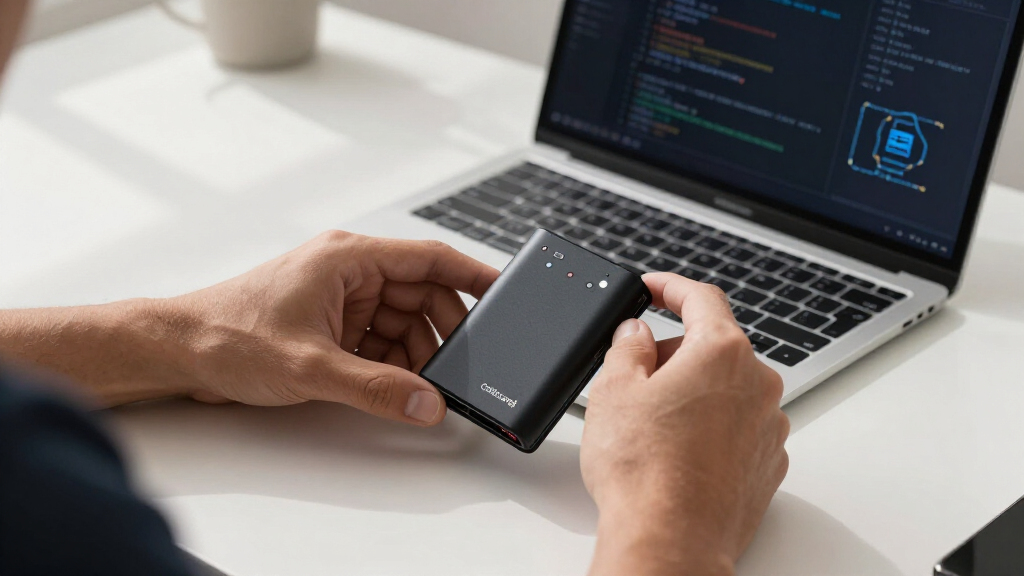
Recent security breaches involving Coldcard hardware wallets have resulted in the theft of over 1,816 BTC, roughly $116 million, with claims that AI models may have identified the underlying firmware flaw. However, investigators have not confirmed any direct link between AI tools and the breach, raising questions about the actual role of artificial intelligence in the incident.
The breach was traced back to a firmware vulnerability in Coldcard Mk3 devices, which, due to a software update in March 2021, reduced the randomness of seed generation from 128 bits to about 40 bits of entropy. This significant reduction made the private keys theoretically searchable through brute-force methods, enabling automated draining of wallets.
On July 30, 2023, a coordinated series of wallet drains occurred over a 41-minute window, involving more than 1,083 BTC being transferred out of hundreds of addresses. The operation exhibited patterns consistent with automated, precomputed key attacks rather than victims manually moving funds. The incident prompted widespread speculation, including claims that an AI model—specifically Kimi K3—had identified the vulnerability and facilitated the attack.
Coinkite, the maker of Coldcard, stated they cannot confirm how the flaw was discovered, emphasizing that there is no direct evidence linking AI models to the breach. The company noted it must assume an attacker used AI to analyze the firmware, but this remains unproven. Experts point out that the vulnerability was arithmetic in nature, and AI’s role in detecting it is not yet substantiated.
Implications of AI in Hardware Security Analysis
This incident underscores the current limits of AI in security vulnerability detection. Despite claims, AI tools like Kimi K3 have not demonstrated the ability to identify complex firmware flaws unprompted. The breach was primarily an arithmetic problem that could be brute-forced with specialized hardware, independent of AI assistance. The event highlights that AI’s role in security remains supportive rather than definitive, and overreliance on AI for vulnerability detection could lead to misplaced confidence.
As an affiliate, we earn on qualifying purchases.
Firmware Vulnerability and the Coldcard Incident Timeline
Coldcard wallets are designed for offline, cold storage of Bitcoin, with security relying heavily on the unpredictability of seed generation. In March 2021, a firmware update unintentionally weakened this security by reducing entropy, making seeds more predictable. The vulnerability was publicly known before the July breach, which involved automated draining of wallets over several waves. The incident follows a pattern of hardware security challenges and raises questions about firmware review processes.
As an affiliate, we earn on qualifying purchases.
Unconfirmed Role of AI in the Coldcard Breach
There is no definitive evidence linking AI models like Kimi K3 to the discovery or exploitation of the vulnerability. While claims suggest AI may have played a role, investigators have not confirmed any such involvement. The actual method of flaw detection remains unknown, and the attack’s arithmetic nature indicates that AI was likely not necessary for the breach.
firmware vulnerability detection tools
As an affiliate, we earn on qualifying purchases.
As an affiliate, we earn on qualifying purchases.
Future Steps in Hardware Wallet Security and AI Use
Researchers and manufacturers will likely review firmware security protocols and enhance testing procedures to prevent similar vulnerabilities. The role of AI in security analysis will be scrutinized further, with expectations that AI tools will be used more cautiously, emphasizing their supportive role rather than as primary detectors of flaws. Ongoing investigations aim to clarify the breach’s technical details and the potential use of AI in vulnerability discovery.
As an affiliate, we earn on qualifying purchases.
Key Questions
Did AI models like Kimi K3 directly cause the Coldcard security breach?
There is no confirmed evidence that AI models directly caused or discovered the vulnerability. The breach was arithmetic in nature and could be brute-forced with specialized hardware without AI assistance.
Can AI tools reliably detect hardware wallet vulnerabilities?
Current evidence suggests AI’s effectiveness in security detection is limited. While AI can assist in code analysis, it has not demonstrated the ability to independently identify complex firmware flaws.
What does this incident mean for the future of hardware wallet security?
This event highlights the importance of rigorous firmware review and testing. It also emphasizes that reliance solely on AI for security assessments is insufficient, and traditional methods remain crucial.
Will this lead to changes in how firmware updates are handled?
Likely yes. Manufacturers may implement stricter review processes and incorporate better testing to prevent unintentional security regressions in firmware updates.
Is the use of AI in security analysis safe and effective?
AI is a valuable supportive tool but should not be solely relied upon for critical security evaluations. Its capabilities are still evolving, and human oversight remains essential.
Source: ThorstenMeyerAI.com
Fall Picks
fall essentials
As an affiliate, we earn on qualifying purchases.