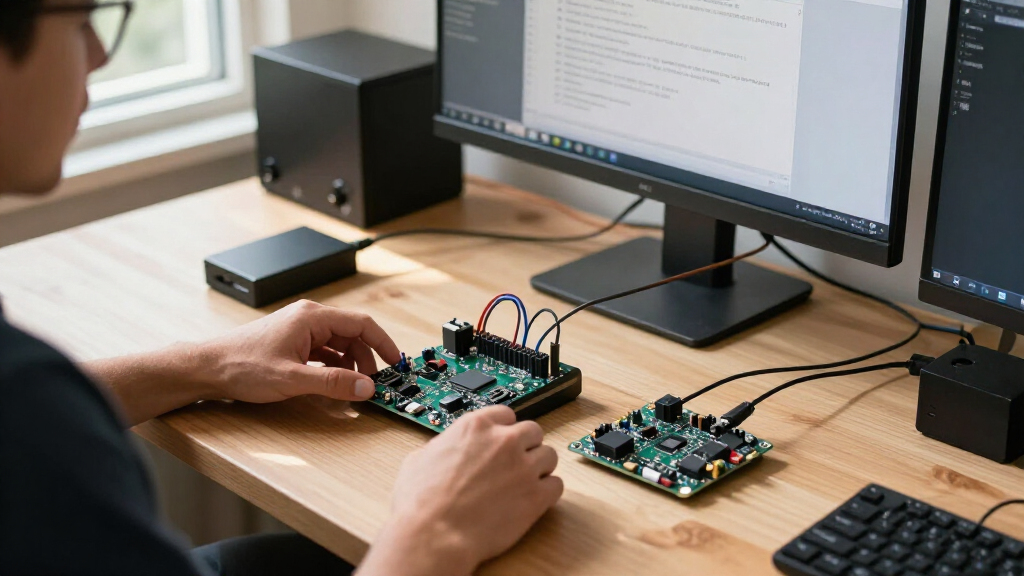
When the Raspberry Pi 5 leaves you wanting more raw compute or specific AI capabilities, the Orange Pi 5 Plus stands out as the best overall alternative, offering a powerful Rockchip RK3588 processor that outperforms the Pi in multi-core tasks. For those needing serious AI acceleration, the Orange Pi 6 is a standout choice thanks to its 45 TOPS of neural processing power, a feature the Pi lacks entirely. The main tradeoff you face in this category is software ecosystem maturity versus raw hardware specifications; Orange Pi boards often provide more horsepower for less money, but they may require more configuration effort. This roundup breaks down the top contenders to help you decide which board fits your project constraints.

Get business pricing on monitors, keyboards and dev gear
- Business-only prices and quantity discounts
- Tax-exempt purchasing
- Multiple users, one account, clear invoices
Key Takeaways
- The Orange Pi 5 Plus offers the best balance of connectivity and raw CPU power for general-purpose computing tasks.
- If your project relies on machine learning, the Orange Pi 6 provides significantly higher AI throughput than any Raspberry Pi model.
- RAM capacity varies widely across alternatives; 16GB options are available for heavy multitasking, unlike the standard 8GB ceiling of most competitors.
- Software support remains the primary differentiator; boards running Debian or Ubuntu offer easier migration from Raspberry Pi OS than niche distributions.
- Power requirements increase with performance; high-end alternatives often need dedicated cooling solutions that are not always included in the base kit.
| Orange Pi 5 Plus 6GB Rockchip RK3588 8 Core 64 Bit Single Board Computer |  | Best Overall for Connectivity | Processor: Rockchip RK3588, 8-core 64-bit; 4× Cortex-A76 up to 2.4GHz and 4× Cortex-A55 up to 1.8GHz | Memory: 6GB installed; product information also lists 4GB, 8GB, and 16GB LPDDR4/4x configurations | Graphics and AI: ARM Mali-G610 GPU; NPU rated up to 6 TOPS | VIEW LATEST PRICE | See Our Full Breakdown |
| Orange Pi 5 Single-Board Computer, 6GB RAM, Rockchip RK3588S, 2.4GHz |  | Best Compact Performance Pick | Processor: Rockchip RK3588S, 8-core 64-bit; 4× Cortex-A76 up to 2.4GHz and 4× Cortex-A55 up to 1.8GHz | Memory: 6GB installed; listing and description differ on RAM technology | Graphics and AI: ARM Mali-G610 GPU; NPU rated up to 6 TOPS | VIEW LATEST PRICE | See Our Full Breakdown |
| Orange Pi 5 Single-Board Computer, 6GB RAM, Rockchip RK3588S, 2.4GHz |  | Best for NVMe-Based Builds | Processor: Rockchip RK3588S, 8-core 64-bit; 4× Cortex-A76 up to 2.4GHz and 4× Cortex-A55 up to 1.8GHz | Memory: 6GB stated in title and product information; description also lists other configurations | Graphics and AI: ARM Mali-G610 GPU; NPU rated up to 6 TOPS | VIEW LATEST PRICE | See Our Full Breakdown |
| Orange Pi 6 Single-Board Computer, 8GB LPDDR5 RAM, 12-Core CIX Processor, 45 TOPS AI Compute, Cooling Fan |  | Best Premium AI and Expansion Board | Processor: CIX CD8180, 12-core 64-bit | Memory: 8GB LPDDR5 | AI compute: 28.8 TOPS NPU; 45 TOPS combined CPU, NPU, and GPU compute | VIEW LATEST PRICE | See Our Full Breakdown |
| Orange Pi 5 Plus Single-Board Computer, 4GB LPDDR4 RAM, Rockchip RK3588 |  | Best Plus-Model Entry Point | Processor: Rockchip RK3588, 8-core 64-bit, up to 2.4GHz | Memory: 4GB LPDDR4 | Graphics and AI: Arm Mali-G610 GPU; NPU rated up to 6 TOPS | VIEW LATEST PRICE | See Our Full Breakdown |
| Orange Pi 5 Plus Single-Board Computer, 16GB LPDDR4X |  | Best for Heavy Multitasking | Processor: Rockchip RK3588, 8-core (4x Cortex-A76, 4x Cortex-A55) | RAM: 16 GB LPDDR4X | Networking: 2x 2.5G Ethernet, M.2 E-Key for Wi-Fi/BT | VIEW LATEST PRICE | See Our Full Breakdown |
| Orange Pi 4 Pro 4GB LPDDR5 Single Board Computer |  | Best for AI and IoT Developers | Processor: Allwinner A733, 8-core (2x A76, 6x A55) | RAM: 4 GB LPDDR5 | AI Acceleration: 3 TOPS NPU | VIEW LATEST PRICE | See Our Full Breakdown |
| Orange Pi 5 Single-Board Computer, 4GB LPDDR4X RAM |  | Best Value Performance | Processor: Rockchip RK3588S, 8-core | RAM: 4 GB LPDDR4X | AI Acceleration: 6 TOPS NPU | VIEW LATEST PRICE | See Our Full Breakdown |
| Orange Pi 5B Single-Board Computer with 4GB RAM |  | Best Compact All-Rounder | Processor: Rockchip RK3588S, 8-core | RAM: 4 GB LPDDR4X | Storage: 32 GB eMMC, MicroSD Slot | VIEW LATEST PRICE | See Our Full Breakdown |
| Orange Pi 5 Plus Single Board Computer, 8GB RAM | | Best Balanced High-End Option | Processor: Rockchip RK3588, 8-core | RAM: 8 GB LPDDR4/4X | Networking: 2x 2.5G Ethernet, M.2 E-Key for Wi-Fi | VIEW LATEST PRICE | See Our Full Breakdown |
| Orange Pi 5 4GB Single Board Computer with Rockchip RK3588S | | Best Entry-Level Alternative | Processor: Rockchip RK3588S (8-core, 64-bit, 2.4GHz) | RAM: 4GB LPDDR4 | GPU: ARM Mali-G610 | VIEW LATEST PRICE | See Our Full Breakdown |
| Raspberry Pi 5 alternatife | Processor | Storage | Networking | Video |
|---|---|---|---|---|
| Orange Pi 5 Plus 6GB Rockchip | Rockchip RK3588, 8-core 64-bit; 4× Cortex-A76 up to 2.4GHz and 4× Cortex-A55 up to 1.8GHz | MicroSD slot, eMMC socket, and M.2 M-Key PCIe 3.0 x4 NVMe slot | 2× 2.5GbE | — |
| Orange Pi 5 Single-Board Compu | Rockchip RK3588S, 8-core 64-bit; 4× Cortex-A76 up to 2.4GHz and 4× Cortex-A55 up to 1.8GHz | 16MB QSPI NOR flash, microSD slot, and M.2 PCIe 2.0 M-Key socket | 10/100/1000Mbps Ethernet | HDMI 2.1 up to 8K at 60Hz; USB-C DisplayPort 1.4 |
| Orange Pi 5 Single-Board Compu | Rockchip RK3588S, 8-core 64-bit; 4× Cortex-A76 up to 2.4GHz and 4× Cortex-A55 up to 1.8GHz | 16MB QSPI NOR flash, microSD slot, and M.2 M-Key PCIe 2.0 socket | Gigabit Ethernet | HDMI 2.1 up to 8K at 60Hz; USB-C DisplayPort 1.4; dual MIPI D-PHY output |
| Orange Pi 6 Single-Board Compu | CIX CD8180, 12-core 64-bit | — | Dual 2.5GbE | — |
| Orange Pi 5 Plus Single-Board | Rockchip RK3588, 8-core 64-bit, up to 2.4GHz | 16MB QSPI NOR flash, microSD up to 128GB, eMMC socket, and M.2 NVMe slot | 2× 2.5GbE | — |
| Orange Pi 5 Plus Single-Board | Rockchip RK3588, 8-core (4x Cortex-A76, 4x Cortex-A55) | M.2 NVMe Slot, eMMC Socket | 2x 2.5G Ethernet, M.2 E-Key for Wi-Fi/BT | 2x HDMI Output, 1x HDMI Input |
| Orange Pi 4 Pro 4GB LPDDR5 Sin | Allwinner A733, 8-core (2x A76, 6x A55) | M.2 NVMe Slot, MicroSD, eMMC option | — | — |
| Orange Pi 5 Single-Board Compu | Rockchip RK3588S, 8-core | M.2 PCIe 2.0 Slot, MicroSD | Gigabit Ethernet (No Wi-Fi) | HDMI 2.1 (8K@60Hz) |
| Orange Pi 5B Single-Board Comp | Rockchip RK3588S, 8-core | 32 GB eMMC, MicroSD Slot | — | HDMI 2.1, DisplayPort 1.4 |
| Orange Pi 5 Plus Single Board | Rockchip RK3588, 8-core | M.2 NVMe Slot, eMMC Socket | 2x 2.5G Ethernet, M.2 E-Key for Wi-Fi | 2x HDMI Out, 1x HDMI In |
| Orange Pi 5 4GB Single Board C | Rockchip RK3588S (8-core, 64-bit, 2.4GHz) | — | — | — |
More Details on Our Top Picks
Orange Pi 5 Plus 6GB Rockchip RK3588 8 Core 64 Bit Single Board Computer
I’d put the Orange Pi 5 Plus 6GB at the top for buyers who need a Pi 5 alternative that can act as more than a small desktop. Its dual 2.5GbE ports, HDMI input, two HDMI outputs, and full 40-pin header suit network appliances, video projects, and embedded builds that would need extra hardware on simpler boards. The RK3588 combines four Cortex-A76 and four Cortex-A55 cores, with a 6-TOPS NPU for supported edge workloads. Compared with the standard Orange Pi 5, this Plus model brings more networking and expansion; the Orange Pi 6 offers newer, stronger AI and storage options, but asks for a higher-power USB-C PD supply. The tradeoff here is setup complexity: wireless modules and eMMC storage are not included, and the many interfaces reward users comfortable with Linux board configuration.
Pros:- Dual 2.5GbE ports suit router, firewall, and multi-network projects.
- HDMI input plus multiple display outputs support flexible video setups.
- M.2 NVMe and eMMC expansion give storage choices beyond microSD.
- RK3588 CPU, Mali-G610 graphics, and 6-TOPS NPU provide headroom for varied workloads.
Cons:- Wi-Fi and Bluetooth require a separately acquired M.2 E-Key module.
- The power supply and eMMC module are not included, adding setup requirements.
- The extensive interface set can make configuration more involved than on the standard Orange Pi 5.
Best for: Makers building network appliances, multi-display systems, or video-processing projects who want dual 2.5GbE and broad expansion.
Not ideal for: Beginners seeking a ready-to-use desktop or anyone who needs onboard Wi-Fi, Bluetooth, or included eMMC storage.
- Processor:Rockchip RK3588, 8-core 64-bit; 4× Cortex-A76 up to 2.4GHz and 4× Cortex-A55 up to 1.8GHz
- Memory:6GB installed; product information also lists 4GB, 8GB, and 16GB LPDDR4/4x configurations
- Graphics and AI:ARM Mali-G610 GPU; NPU rated up to 6 TOPS
- Display:2× HDMI 2.1 outputs up to 8K at 60Hz; HDMI input up to 4K at 60Hz; USB-C DisplayPort up to 8K at 30Hz
- Networking:2× 2.5GbE
- Storage:MicroSD slot, eMMC socket, and M.2 M-Key PCIe 3.0 x4 NVMe slot
- Expansion and USB:40-pin GPIO; 2× USB 3.0 and 2× USB 2.0
- Operating systems:Orange Pi OS, Android 12, Debian 11, and Ubuntu 22.04
Our verdict“Choose this board if connectivity and video I/O matter more than a simple, ready-to-run setup.”
Orange Pi 5 Single-Board Computer, 6GB RAM, Rockchip RK3588S, 2.4GHz
The Orange Pi 5 6GB makes sense when you want RK3588S-class processing in a compact 100 × 62 mm board, without the larger Orange Pi 5 Plus’s extensive networking and video connections. Its four Cortex-A76 cores and four Cortex-A55 cores, paired with Mali-G610 graphics and an NPU rated up to 6 TOPS, give it room for desktop experiments and supported AI tasks. M.2 storage expansion is a useful step up from relying only on a microSD card. Compared with the Plus, though, this model has just Gigabit Ethernet, fewer USB ports, and a 26-pin GPIO header rather than 40 pins. I’d pick it for a compact build where compute matters more than multi-gigabit networking. The product listing also conflicts on RAM technology, so buyers should verify the exact memory specification before planning around it.
Pros:- Eight-core RK3588S processor balances high-performance and efficiency cores.
- M.2 PCIe socket supports NVMe storage expansion.
- HDMI 2.1 output supports resolutions up to 8K at 60Hz.
- Small 100 × 62 mm board fits space-constrained builds.
Cons:- Gigabit Ethernet is slower and less flexible than the Plus model’s dual 2.5GbE.
- The 26-pin GPIO header offers fewer connections than the Orange Pi 5 Plus 40-pin header.
- Listing information conflicts on whether the installed RAM is LPDDR5 or LPDDR4/4x.
Best for: Compact-system builders and hobbyists who want an eight-core board with NVMe support but do not need dual 2.5GbE.
Not ideal for: Network appliance developers needing multiple high-speed Ethernet ports, or users who depend on a full 40-pin GPIO header.
- Processor:Rockchip RK3588S, 8-core 64-bit; 4× Cortex-A76 up to 2.4GHz and 4× Cortex-A55 up to 1.8GHz
- Memory:6GB installed; listing and description differ on RAM technology
- Graphics and AI:ARM Mali-G610 GPU; NPU rated up to 6 TOPS
- Storage:16MB QSPI NOR flash, microSD slot, and M.2 PCIe 2.0 M-Key socket
- Video:HDMI 2.1 up to 8K at 60Hz; USB-C DisplayPort 1.4
- Networking:10/100/1000Mbps Ethernet
- USB and GPIO:1× USB 3.0, 2× USB 2.0, USB-C, and 26-pin GPIO header
- Dimensions and power:100 × 62 mm; 5V at 4A
Our verdict“Choose this compact Orange Pi 5 when you want strong processing and NVMe storage but can do without the Plus model’s extra I/O.”
Orange Pi 5 Single-Board Computer, 6GB RAM, Rockchip RK3588S, 2.4GHz
This listing describes another Orange Pi 5 6GB, so its core appeal is much like the other RK3588S board in this group: fast eight-core processing, Mali-G610 graphics, and a 6-TOPS NPU in a compact form. I’d give it the Best for NVMe-Based Builds role because the stated M.2 PCIe 2.0 socket lets a project use SSD storage instead of treating a microSD card as its main drive. That can help when a system handles larger files or frequent writes. Against the Orange Pi 5 Plus 6GB, it gives up dual 2.5GbE, HDMI input, and a 40-pin header; against the Orange Pi 6, it has fewer AI and storage resources. The description also mentions multiple RAM configurations despite a 6GB title, so confirm the shipped configuration and board revision before purchase.
Pros:- RK3588S combines four Cortex-A76 cores and four Cortex-A55 cores.
- M.2 PCIe 2.0 socket supports NVMe SSD expansion.
- 6-TOPS NPU and Mali-G610 graphics add acceleration options.
- HDMI 2.1 output supports up to 8K at 60Hz.
Cons:- Only Gigabit Ethernet, unlike the Orange Pi 5 Plus’s dual 2.5GbE.
- 26-pin GPIO provides fewer expansion connections than the Plus model.
- Product information is inconsistent about available RAM configurations.
Best for: Developers assembling a compact Linux or Android system that needs NVMe storage and does not require multi-gigabit networking.
Not ideal for: Buyers who need clearly documented memory configuration, extensive GPIO, or dual 2.5GbE for networking projects.
- Processor:Rockchip RK3588S, 8-core 64-bit; 4× Cortex-A76 up to 2.4GHz and 4× Cortex-A55 up to 1.8GHz
- Memory:6GB stated in title and product information; description also lists other configurations
- Graphics and AI:ARM Mali-G610 GPU; NPU rated up to 6 TOPS
- Storage:16MB QSPI NOR flash, microSD slot, and M.2 M-Key PCIe 2.0 socket
- Video:HDMI 2.1 up to 8K at 60Hz; USB-C DisplayPort 1.4; dual MIPI D-PHY output
- Networking:Gigabit Ethernet
- Expansion:26-pin GPIO header; 1× USB 3.0 and 2× USB 2.0
- Dimensions and power:100 × 62 mm; 5V at 4A
Our verdict“Pick this Orange Pi 5 if NVMe expansion and compact dimensions matter more than the Plus model’s richer I/O.”
Orange Pi 6 Single-Board Computer, 8GB LPDDR5 RAM, 12-Core CIX Processor, 45 TOPS AI Compute, Cooling Fan
The Orange Pi 6 is the performance-first choice here, not a like-for-like substitute for a basic Raspberry Pi 5 project. Its 12-core CIX CD8180, 8GB LPDDR5, hardware ray-tracing graphics, and 45 TOPS of combined AI compute target robotics, vision, and heavier edge workloads. Two PCIe 4.0 x4 M.2 slots also give it more room for fast storage than either Orange Pi 5 variant, while dual 2.5GbE suits systems moving substantial data. The tradeoff is a more demanding build: it needs a compatible 65W or 100W USB-C PD supply, and Wi-Fi/Bluetooth require a separate module. Compared with the Orange Pi 5 Plus 6GB, this board brings much more AI and storage headroom, but it is a larger, higher-power platform that can be excessive for simple GPIO projects.
Pros:- 12-core processor and 28.8-TOPS NPU support demanding edge workloads.
- Two PCIe 4.0 x4 M.2 slots allow substantial high-speed storage expansion.
- Dual 2.5GbE supports fast wired networking and data transfer.
- Broad OS support includes Debian, Ubuntu, Android, Windows, ROS2, and OpenHarmony.
Cons:- Requires a compatible 65W or 100W USB-C PD power supply.
- Wi-Fi and Bluetooth module is not included.
- Its performance and power requirements are excessive for many basic Pi-style projects.
Best for: Robotics, computer-vision, and edge-AI developers who need high compute capacity, dual 2.5GbE, and multiple NVMe drives.
Not ideal for: Beginners, low-power projects, and users seeking a simple replacement board with minimal setup and power requirements.
- Processor:CIX CD8180, 12-core 64-bit
- Memory:8GB LPDDR5
- AI compute:28.8 TOPS NPU; 45 TOPS combined CPU, NPU, and GPU compute
- Graphics:Integrated GPU with hardware ray-tracing support
- Storage expansion:2× M.2 KEY-M 2280 PCIe 4.0 x4 slots; TF card slot; 64Mbit SPI flash
- Networking:Dual 2.5GbE
- Display and camera:DisplayPort 1.4 up to 4K at 120Hz; HDMI 2.0 and eDP up to 4K at 60Hz; 2× 4-lane MIPI CSI
- Power and dimensions:65W or 100W USB-C PD; 90 × 90 mm
Our verdict“Choose the Orange Pi 6 for demanding AI and multi-drive projects, not for a modest low-power Raspberry Pi replacement.”
Orange Pi 5 Plus Single-Board Computer, 4GB LPDDR4 RAM, Rockchip RK3588
The Orange Pi 5 Plus 4GB keeps the Plus board’s defining advantage—dual 2.5GbE, HDMI input, and broad expansion—while pairing the RK3588 with a smaller memory allocation. That makes it a useful alternative to the standard Orange Pi 5 when a project depends on multiple network ports or video capture, but does not need the extra RAM found in the 6GB Orange Pi 5 Plus. The 4GB LPDDR4 configuration is the main constraint: it leaves less room for memory-heavy desktop use, containers, or larger workloads than the 6GB version. Like that model, this board supports NVMe and optional eMMC, while Wi-Fi and Bluetooth need a separate module. I’d choose it for an appliance or embedded build centered on connectivity, not as the strongest general-purpose desktop in this lineup.
Pros:- Dual 2.5GbE is well suited to router and network appliance projects.
- HDMI input supports capture-oriented and video-processing builds.
- M.2 NVMe and eMMC sockets offer flexible storage expansion.
- 40-pin GPIO and multiple USB ports support a wide range of peripherals.
Cons:- 4GB RAM provides less headroom than the 6GB Orange Pi 5 Plus.
- Wi-Fi and Bluetooth require a separate M.2 E-Key module.
- A 5V, 4A power supply is specified and is not listed as included.
Best for: Makers building a network appliance, video-input project, or embedded system who value Plus-model I/O over extra memory.
Not ideal for: Users running memory-heavy desktop workloads, several containers, or applications that benefit from more than 4GB RAM.
- Processor:Rockchip RK3588, 8-core 64-bit, up to 2.4GHz
- Memory:4GB LPDDR4
- Graphics and AI:Arm Mali-G610 GPU; NPU rated up to 6 TOPS
- Storage:16MB QSPI NOR flash, microSD up to 128GB, eMMC socket, and M.2 NVMe slot
- Display and video input:2× HDMI 2.1 outputs up to 8K at 60Hz; HDMI input up to 4K at 60Hz; USB-C DisplayPort up to 8K at 30Hz
- Networking:2× 2.5GbE
- Expansion and USB:40-pin GPIO; 2× USB 3.0, 2× USB 2.0, and USB-C
- Operating systems and power:Orange Pi OS, Ubuntu, Debian, Armbian, Linux, and Android; USB-C, 5V at 4A
Our verdict“Choose this model when you need the Plus board’s networking and video interfaces but can work within 4GB of RAM.”
Orange Pi 5 Plus Single-Board Computer, 16GB LPDDR4X
This board stands out for its 16GB of LPDDR4X RAM, doubling the capacity found in the standard Orange Pi 5. For buyers running virtual machines, large databases, or multiple Docker containers, this memory headroom is the primary differentiator. The Rockchip RK3588 processor is identical to its smaller siblings, so raw CPU speed is similar, but the Plus model offers superior I/O with dual 2.5G Ethernet ports and an HDMI input for signal capture. However, this power comes with bulk; it is physically larger and draws more power than the compact Orange Pi 5. It is not the best choice if you need a tiny device for a smart home hub, but it is the strongest option for desktop-class workloads.
Pros:- 16GB RAM allows for heavy multitasking and virtualization
- Dual 2.5G Ethernet ports enable high-speed networking and routing
- Includes a dedicated HDMI input for video capture projects
- Power supply is included in the box, reducing setup friction
Cons:- Wi-Fi and Bluetooth modules are not included and must be purchased separately
- Larger form factor limits use in compact enclosures
- No storage included; NVMe or eMMC must be bought separately
Best for: Developers running virtual machines, home server enthusiasts needing high RAM, and users requiring dual high-speed network interfaces.
Not ideal for: Compact DIY projects or battery-powered devices, as it is physically large and power-hungry compared to smaller boards.
- Processor:Rockchip RK3588, 8-core (4x Cortex-A76, 4x Cortex-A55)
- RAM:16 GB LPDDR4X
- Networking:2x 2.5G Ethernet, M.2 E-Key for Wi-Fi/BT
- Video:2x HDMI Output, 1x HDMI Input
- Storage:M.2 NVMe Slot, eMMC Socket
- USB:2x USB 3.0, 2x USB 2.0
- OS Support:Ubuntu, Debian, Android, Orange Pi OS
Our verdict“Choose this if you need maximum RAM and high-speed networking for a home server or desktop replacement.”
Orange Pi 4 Pro 4GB LPDDR5 Single Board Computer
This model carves out a niche by integrating Wi-Fi 6 and Bluetooth 5.4 directly onto the board, unlike the Orange Pi 5 Plus which requires separate modules. While its Allwinner A733 processor is slightly slower than the RK3588 found in the Orange Pi 5, the inclusion of a 3 TOPS NPU makes it superior for lightweight machine learning tasks like object detection. The use of LPDDR5 memory provides better bandwidth efficiency, which is critical for IoT applications running on constrained power budgets. It is a more specialized tool than the general-purpose Pi 5 series, aimed at developers who need wireless connectivity and AI acceleration out of the box without adding dongles or hats.
Pros:- Built-in Wi-Fi 6 and Bluetooth 5.4 eliminate the need for extra modules
- 3 TOPS NPU accelerates AI inference for cameras and sensors
- LPDDR5 memory offers better power efficiency than LPDDR4X
- Compact size fits easily into IoT enclosures
Cons:- Allwinner processor is less powerful than the Rockchip RK3588
- Only 4GB RAM limits heavy multitasking capabilities
- Software support for Allwinner chips can be less mature than Rockchip
Best for: IoT developers building smart cameras, robotics projects requiring wireless AI inference, and users who want built-in Wi-Fi 6.
Not ideal for: Users needing maximum CPU performance or heavy desktop multitasking, as the Allwinner chip lags behind the RK3588.
- Processor:Allwinner A733, 8-core (2x A76, 6x A55)
- RAM:4 GB LPDDR5
- AI Acceleration:3 TOPS NPU
- Wireless:Wi-Fi 6, Bluetooth 5.4 (Built-in)
- Ethernet:Gigabit with PoE support
- Storage:M.2 NVMe Slot, MicroSD, eMMC option
- Dimensions:89 x 56 mm
Our verdict“The ideal choice for IoT and AI projects where built-in wireless and dedicated NPU performance matter more than raw CPU speed.”
Orange Pi 5 Single-Board Computer, 4GB LPDDR4X RAM
The Orange Pi 5 serves as the direct, more affordable rival to the Raspberry Pi 5, offering the RK3588S processor at a lower entry point. It matches the flagship’s CPU architecture and 6 TOPS NPU capability but strips away the dual 2.5G Ethernet and HDMI input found on the Orange Pi 5 Plus. This board is perfect for users who want high-end performance without paying for enterprise-grade networking features. The tradeoff is connectivity; it lacks built-in Wi-Fi, requiring a USB adapter or M.2 module, which adds cost and clutter. For pure compute power per dollar, it outperforms the Raspberry Pi 5, but it requires more assembly effort to become a functional desktop.
Pros:- High-performance RK3588S CPU at a lower entry price
- Integrated 6 TOPS NPU for AI workloads
- Supports 8K video output via HDMI 2.1
- M.2 PCIe interface allows for fast NVMe storage upgrades
Cons:- No built-in Wi-Fi or Bluetooth; requires external modules
- Only 4GB RAM may limit heavy multitasking
- Single Gigabit Ethernet port limits high-bandwidth networking
Best for: Budget-conscious makers who want flagship CPU performance and are willing to add their own Wi-Fi adapter.
Not ideal for: Users who need plug-and-play wireless connectivity or dual Ethernet ports for network routing.
- Processor:Rockchip RK3588S, 8-core
- RAM:4 GB LPDDR4X
- AI Acceleration:6 TOPS NPU
- Video:HDMI 2.1 (8K@60Hz)
- Networking:Gigabit Ethernet (No Wi-Fi)
- Storage:M.2 PCIe 2.0 Slot, MicroSD
- USB:4x USB Ports (Mixed 2.0/3.0)
Our verdict“The best balance of price and performance for users who prioritize CPU speed over integrated connectivity.”
Orange Pi 5B Single-Board Computer with 4GB RAM
The Orange Pi 5B refines the formula of the standard Orange Pi 5 by integrating Wi-Fi 6 and Bluetooth 5.3 directly onto the board. This makes it a more complete package than the base model, which forces users to hunt for wireless dongles. It retains the RK3588S processor and 6 TOPS NPU, ensuring it handles modern Linux distributions and AI tasks with ease. However, the included 32GB eMMC is slow compared to NVMe solutions, and the 4GB RAM cap remains a bottleneck for heavy workloads. It is the best choice for those who want a compact, wireless-ready device that is smaller and cleaner than the larger Orange Pi 5 Plus.
Pros:- Built-in Wi-Fi 6 and Bluetooth 5.3 for clutter-free setup
- Includes 32GB eMMC storage for out-of-the-box booting
- Compact 62x100mm form factor fits tight spaces
- Strong RK3588S performance with 6 TOPS AI acceleration
Cons:- 32GB eMMC storage is slow and limited in capacity
- 4GB RAM is insufficient for heavy multitasking or VMs
- Requires a specific 5V/4A power supply
Best for: Users building compact media centers or smart home hubs who want built-in Wi-Fi and Bluetooth.
Not ideal for: Power users needing more than 4GB RAM or fast storage, as the eMMC is slower than NVMe.
- Processor:Rockchip RK3588S, 8-core
- RAM:4 GB LPDDR4X
- Storage:32 GB eMMC, MicroSD Slot
- Wireless:Wi-Fi 6, Bluetooth 5.3
- Video:HDMI 2.1, DisplayPort 1.4
- Dimensions:62 x 100 mm
- AI Acceleration:6 TOPS NPU
Our verdict“A polished, compact alternative for users who want wireless connectivity without the bulk of the Plus model.”
Orange Pi 5 Plus Single Board Computer, 8GB RAM
This variant of the Orange Pi 5 Plus hits a sweet spot with 8GB of RAM, avoiding the diminishing returns of the 16GB model while providing ample headroom for most desktop tasks. It offers the same robust I/O as its larger sibling, including dual 2.5G Ethernet and an HDMI input, which are absent in the standard Orange Pi 5. The RK3588 processor ensures top-tier performance, but like all Orange Pi devices, it demands separate storage and wireless modules. This board is for users who want the premium connectivity features of the Plus series but don’t need the extreme memory capacity of the 16GB version, offering a more cost-effective entry into high-end SBC territory.
Pros:- 8GB RAM balances performance and cost effectively
- Dual 2.5G Ethernet ports for high-speed networking
- HDMI input allows for video capture and streaming
- M.2 NVMe slot enables fast storage expansion
Cons:- Wi-Fi and Bluetooth modules are not included
- No storage included; requires buying NVMe or eMMC separately
- Larger size than the compact Pi 5B
Best for: Home theater PC builders and general desktop users who need dual Ethernet and HDMI input but don’t need 16GB RAM.
Not ideal for: Users on a strict budget who don’t need dual Ethernet or HDMI input, as the standard Pi 5 is cheaper.
- Processor:Rockchip RK3588, 8-core
- RAM:8 GB LPDDR4/4X
- Networking:2x 2.5G Ethernet, M.2 E-Key for Wi-Fi
- Video:2x HDMI Out, 1x HDMI In
- AI Acceleration:6 TOPS NPU
- Storage:M.2 NVMe Slot, eMMC Socket
- USB:2x USB 3.0, 2x USB 2.0, 2x USB-C
Our verdict“The most versatile high-end option for users who need premium I/O without the premium price of 16GB RAM.”
Orange Pi 5 4GB Single Board Computer with Rockchip RK3588S
This model stands out as the most accessible entry point into the high-performance Rockchip RK3588 ecosystem. Compared to the Orange Pi 5 Plus 6GB, this 4GB variant offers the same potent 8-core processor and 6 TOPS NPU for AI tasks but at a lower hardware barrier. It supports 8K video output via HDMI 2.1, making it capable of driving high-resolution displays without external dongles. However, the tradeoff is clear: while the Plus models often include more ports or higher RAM, this board relies on the M.2 PCIe 2.0 interface for storage expansion, which bottlenecks speed compared to PCIe 3.0 or 4.0 standards found in premium alternatives. For developers who need raw compute power without the premium price tag of the 16GB models, this board delivers significant value, though it lacks the Wi-Fi 6 and Bluetooth 5.4 connectivity seen in the Orange Pi 4 Pro, requiring external adapters for modern wireless needs.
Pros:- High-performance 8-core processor with dedicated NPU for AI tasks
- Supports 8K video output and multi-screen display capabilities
- Expandable storage via M.2 PCIe 2.0 interface for NVMe SSDs
- Broad software compatibility including Android 12 and Debian 11
Cons:- Customs clearance fees are not covered by the seller
- Strict return policy with potential restocking fees for opened or damaged items
- Limited to PCIe 2.0 speeds for storage expansion
Best for: Hobbyists and developers seeking high CPU performance and AI capabilities without paying for excessive RAM or premium connectivity features.
Not ideal for: Users requiring fast internal storage speeds or built-in modern wireless connectivity like Wi-Fi 6.
- Processor:Rockchip RK3588S (8-core, 64-bit, 2.4GHz)
- RAM:4GB LPDDR4
- GPU:ARM Mali-G610
- NPU:6 Tops computing power
- Storage Interface:M.2 PCIe 2.0 (NVMe SSD support)
- Video Output:HDMI 2.1 (8K), USB-C (DP1.4)
- Operating Systems:Orange Pi OS, Android 12, Debian 11
Our verdict“This is the smart choice for budget-conscious builders who prioritize CPU and AI power over storage speed and wireless features.”
How We Picked
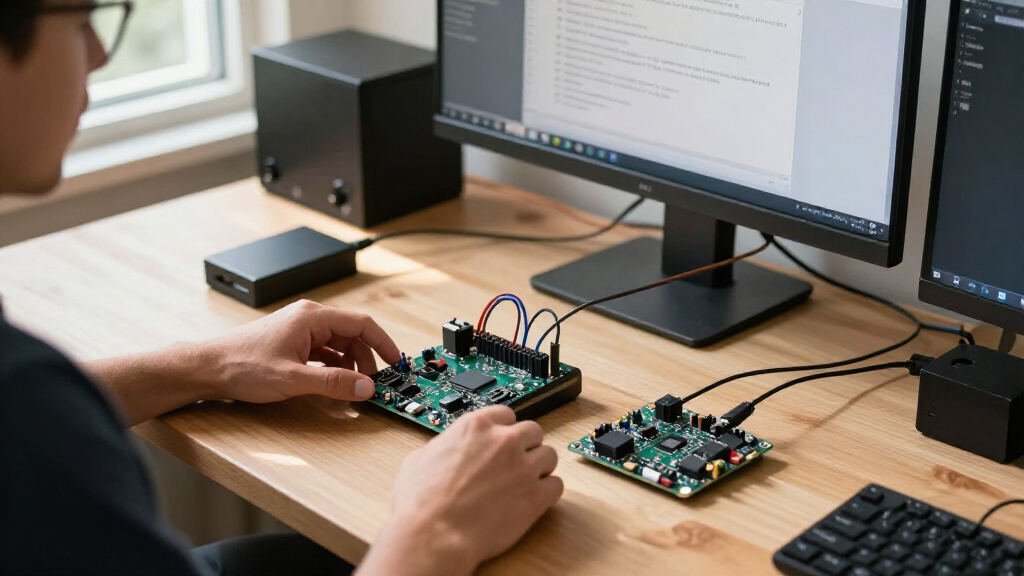
I evaluated these single-board computers based on three core pillars: computational performance, AI capability, and peripheral connectivity. Since many users switch from Raspberry Pi due to performance bottlenecks, I prioritized boards with newer architecture cores, such as the Rockchip RK3588 and CIX processors, which offer superior multi-threading and clock speeds. I also weighed the presence of dedicated NPU units, recognizing that modern projects increasingly demand local AI inference that traditional CPUs struggle to deliver efficiently.
Value and usability were secondary filters. I examined the ease of obtaining operating system images, the availability of GPIO headers for hardware interfacing, and the thermal management solutions included or required. Boards that demanded obscure software builds or lacked clear documentation were ranked lower than those with robust community support and standard Linux compatibility. This approach ensures that the recommendations are not just fast on paper but practical for real-world deployment.
Factors to Consider When Choosing Best Raspberry Pi 5 Alternatives
Choosing a Raspberry Pi alternative is not just about swapping one board for another; it requires understanding how different architectures handle your specific workload. The following factors will help you navigate the technical specifications and avoid common pitfalls when migrating away from the Raspberry Pi ecosystem.
CPU Architecture and Core Count
While the Raspberry Pi 5 uses an Arm Cortex-A76, many alternatives here utilize the Rockchip RK3588 or newer CIX processors. These chips often feature heterogeneous computing, mixing high-performance cores with efficiency cores. This design allows the board to handle bursty workloads like video encoding or compilation more efficiently than the Pi. However, ensure your software is compatible with the specific instruction set extensions of these chips, as some legacy code may require recompilation. Multi-core performance is generally higher in these alternatives, making them better suited for running multiple Docker containers or lightweight desktop environments simultaneously.
AI Acceleration and NPU Capabilities
One of the biggest reasons to switch is the lack of a dedicated Neural Processing Unit (NPU) in standard Raspberry Pi models. Boards like the Orange Pi 6 offer up to 45 TOPS (trillion operations per second), enabling real-time object detection or natural language processing locally. If your project involves computer vision or edge AI, this hardware acceleration can reduce latency and power consumption drastically compared to CPU-only inference. Check if the board supports RKNN or other vendor-specific frameworks, as moving from PyTorch or TensorFlow may require model conversion steps that add development time.
Memory Bandwidth and Capacity
Standard Raspberry Pi 5 models cap at 8GB of LPDDR4X RAM. Alternatives in this list offer up to 16GB of LPDDR4X or even LPDDR5, which provides higher bandwidth and lower latency. This is critical if you plan to run virtual machines, large databases, or heavy browser sessions. LPDDR5 specifically offers better power efficiency and speed, which can translate to smoother performance under load. Ensure your OS image supports the specific memory type, as mismatched firmware can lead to instability or reduced performance.
Software Ecosystem and Driver Support
The Raspberry Pi benefits from a massive, well-documented software ecosystem. Alternatives often rely on vendor-provided images for Debian, Ubuntu, or Android, which may lag behind upstream releases. Before buying, verify that the board has active community support for your preferred OS. Hardware acceleration for video decoding and encoding is another area where support varies; some boards offer excellent GPU drivers while others may default to software rendering, killing performance for media projects. Always check the vendor’s wiki for the latest kernel patches and driver availability.
Thermal Management and Power Delivery
High-performance chips generate more heat. While the Raspberry Pi 5 runs relatively cool, alternatives like the Orange Pi 5 Plus can throttle without adequate cooling. Many of these boards require active fans or large passive heatsinks to maintain boost clocks. Power delivery is also stricter; some boards require PD 3.0 adapters with specific voltage profiles. Inadequate power supply can cause shutdowns during peak load. Budget for a proper case with airflow or a dedicated cooling solution if you plan to run the board 24/7 or under sustained load.
Frequently Asked Questions
Can I run Raspberry Pi OS on these alternatives?
Generally, no. Raspberry Pi OS is specifically compiled and optimized for the Broadcom BCM2711 and BCM2712 chips. While you can install standard Debian or Ubuntu images provided by the board manufacturers, they will not have the same out-of-the-box GPIO libraries or software compatibility. You may need to rewrite scripts that rely on RPi.GPIO to use libraries like WiringOP or libgpiod, which are common on these alternative platforms.
Do these boards support the same HATs and add-ons as the Raspberry Pi?
Most of these alternatives follow the standard 40-pin GPIO header layout, so physically, many HATs will fit. However, electrical compatibility is not guaranteed. Some HATs rely on specific I2C addresses or SPI clock speeds that may differ on Rockchip or Allwinner platforms. Always check the datasheet for voltage levels (3.3V vs 5V) and pinout mappings. Active electronics with complex drivers often fail to work without significant software modification.
Is the software support for AI models better on Orange Pi than Raspberry Pi?
For dedicated AI tasks, yes. The Orange Pi 6 and other boards with NPUs offer hardware acceleration that the Raspberry Pi 5 lacks. This means models can run much faster and with lower power consumption. However, the software stack is less mature. You may need to convert models to RKNN format, which adds a step to your workflow. If you stick to CPU-only inference, the Raspberry Pi’s community support might still be easier to navigate.
Which alternative is best for retro gaming emulation?
The Orange Pi 5 Plus or Orange Pi 5 are excellent choices for retro gaming due to the Rockchip RK3588‘s powerful GPU and video decoding capabilities. They can handle systems up to N64, Dreamcast, and even some PS2 emulation better than the Raspberry Pi 5. However, setting up a dedicated gaming OS like RetroPie or Lakka may require community-built images, as official support is often limited to general-purpose Linux distributions.
Why are some Orange Pi models cheaper than others with similar specs?
Price differences usually reflect the amount of RAM, storage type (eMMC vs. SD card only), and included accessories. A model with 4GB RAM will be cheaper than one with 16GB. Additionally, boards without built-in Wi-Fi or Bluetooth modules, or those that exclude the power supply, are priced lower. Always check what is in the box; a cheap board might require extra purchases for a working setup, negating the initial savings.
Conclusion
Choosing the right Raspberry Pi 5 alternative depends on your specific technical needs and tolerance for software configuration. If you want the best overall performance for general computing, the Orange Pi 5 Plus offers the most balanced package of CPU power and connectivity. For those focused on AI and machine learning, the Orange Pi 6 is the clear winner due to its massive NPU throughput. Beginners looking for a smoother transition should stick to models with Ubuntu or Debian support and avoid niche distributions. If budget is your primary constraint, the Orange Pi 5 with 4GB RAM provides excellent value for light desktop tasks. For heavy multitasking and server applications, the 16GB Orange Pi 5 Plus is the premium choice that justifies the higher cost through future-proofing.