
Automated software testing tools range from hands-on guides to broader frameworks for building and managing automated test programs. My best overall pick is Hands-On Automated Testing with Playwright, which focuses on creating fast, maintainable tests for modern web apps. Ultimate Selenium WebDriver for Test Automation is a standout for teams committed to Java and Selenium, while Automated Software Test Pipelines suits readers focused on continuous validation. The tradeoff is focus: a practical framework guide can help with implementation, while management, AI, and pipeline titles address different parts of the testing lifecycle. Read on for the full comparison and help matching each resource to your goals.

Get business pricing on monitors, keyboards and dev gear
- Business-only prices and quantity discounts
- Tax-exempt purchasing
- Multiple users, one account, clear invoices
Key Takeaways
- Playwright-focused books lead for modern web testing: the hands-on guide centers on building and scaling tests, while the AI-focused Playwright title adds a newer automation angle.
- Selenium remains the more specialized path: its titles target Java, WebDriver, Grid, and beginner learning, making them better fits for teams already invested in that ecosystem.
- Several titles address strategy rather than framework setup: books on test automation management, performance, pipelines, and tool development serve readers shaping a wider program.
- AI coverage is a distinct learning track, not a substitute for fundamentals: the AI and machine-learning title and the AI-driven Playwright book address different levels of the testing stack.
- Language and scope matter as much as tool choice: the Chinese Edition and GUI- or API-specific books serve narrower needs than general web-testing guides.






| automated software testing tool | Format | Subject |
|---|---|---|
| Automated Testing Framework | Book | Automated testing frameworks |
| Automated Software Testing Too | Book | Automated software testing |
| Automated Testing Unleashed: A | Book | API automated testing |
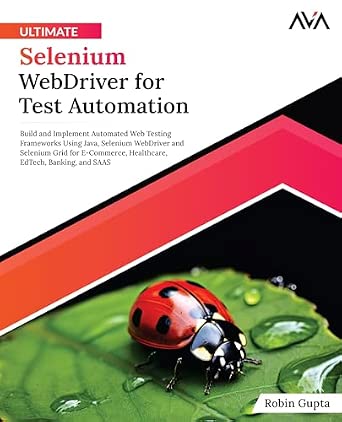
| Ultimate Selenium WebDriver fo | Book | Automated web testing frameworks |
| Playwright Test Automation wit | Book | Test automation with AI |
| Automating Software Tests Usin | Book | — |
| Effective Software Test Automa | Book | — |
| Hands-On Automated Testing wit | Book | — |
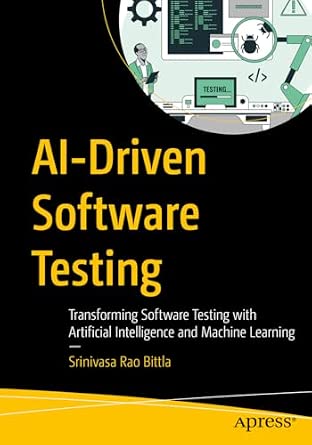
| AI-Driven Software Testing: Tr | Book | — |
| Automated Testing Unleashed: W | Book | — |
| Software Testing with Selenium | Book | Automated software testing |
| Automated Software Test Pipeli | Book | Automated software test pipelines |
| Automated Software Testing: In | Book | Automated software testing |
| Effective GUI Testing Automati | Book | GUI testing automation |
More Details on Our Top Picks
Automated Testing Framework, Second Edition
Automated Testing Framework, Second Edition is the broadest framework-focused choice in this group. Its stated coverage of design, implementation, best practices, and strategy suits readers who need to think beyond individual test scripts and plan a reusable testing approach. Compared with Ultimate Selenium WebDriver for Test Automation, it appears less tied to one programming language or web-testing stack, which may make its guidance relevant across a wider range of projects. The tradeoff is that the available description names no specific tools or detailed examples, so readers seeking step-by-step Selenium or Playwright instruction may get more direction from those focused books. I’d choose it for framework concepts, not as a reference for a particular tool’s commands.
Pros:- Covers automated testing framework design and implementation
- Includes testing best practices and strategies
- Focuses on improving testing efficiency and effectiveness
Cons:- The available description does not identify specific tools or programming languages
- The depth and format of practical examples are not specified
Best for: Test leads and developers who need guidance on planning and implementing reusable automated testing frameworks across projects.
Not ideal for: Readers who need tool-specific tutorials, code samples, or detailed instructions for Selenium, Playwright, or API testing.
- Format:Book
- Edition:Second Edition
- Subject:Automated testing frameworks
- Coverage:Framework design and implementation
- Additional topics:Best practices, tools, and strategies
- Stated focus:Improving software testing efficiency and effectiveness
Our verdict“Choose this book for broad framework guidance, but pick a tool-specific title if you need hands-on implementation instructions.”
Automated Software Testing Tools and Practical Techniques (Chinese Edition)
Automated Software Testing Tools and Practical Techniques (Chinese Edition) is the clearest fit here for readers seeking practical automation techniques in Chinese. Its description emphasizes tools and approaches for improving testing efficiency, giving it a more applied angle than Automated Testing Framework, Second Edition, whose stated focus is framework design and strategy. That distinction makes this book a possible starting point for developers and testers who want technique-oriented material rather than a framework-planning overview. The limits are equally relevant: the available information does not name the tools, explain the book’s technical depth, or detail its examples. Compared with the API-specific Automated Testing Unleashed: API Automated Testing, it also offers no stated specialty for readers targeting a particular testing layer.
Pros:- Presents practical techniques for automated testing
- Focuses on improving testing efficiency
- Aims at both software developers and testers
Cons:- The available description does not identify specific tools or platforms
- The depth, examples, and organization of the material are not specified
Best for: Chinese-reading software developers and testers looking for practical automated testing techniques and efficiency-focused guidance.
Not ideal for: Readers who need an English-language resource, a clearly identified tool tutorial, or detailed information about the book’s examples and technical scope.
- Format:Book
- Edition language:Chinese
- Subject:Automated software testing
- Coverage:Tools and practical techniques
- Stated focus:Improving testing efficiency
- Intended readers:Software developers and testers
Our verdict“Pick this title if you read Chinese and want technique-oriented automation guidance, but choose a specialized book for a named tool or testing area.”
Automated Testing Unleashed: API Automated Testing – The Complete Handbook Volume 3
Automated Testing Unleashed: API Automated Testing – The Complete Handbook Volume 3 is the most focused option in this batch: its subject is API test automation, rather than general framework design or browser-based testing. The description promises techniques and best practices for testers and developers seeking automation skills, making it a closer match for teams validating service endpoints than Ultimate Selenium WebDriver for Test Automation, which centers on web testing with Java and Selenium. That specialization is its main advantage, but it also narrows its usefulness: readers building browser suites or seeking broad framework guidance may be better served by the Selenium book or Automated Testing Framework, Second Edition. The available details do not name API tools, languages, or example projects, so buyers should not assume a particular stack is covered.
Pros:- Concentrates on API test automation
- Covers API testing techniques and best practices
- Aims at both testers and developers building automation skills
- Part of the Automated Testing Unleashed series
Cons:- The available description does not name specific API tools or programming languages
- The technical level and practical example coverage are not detailed
Best for: Developers and QA testers who specifically need guidance on automating API tests and want a subject-focused handbook.
Not ideal for: Readers seeking browser UI automation, a named API-testing tool tutorial, or introductory material with a confirmed beginner-friendly approach.
- Format:Book
- Series:Automated Testing Unleashed
- Volume:Volume 3
- Subject:API automated testing
- Coverage:API testing techniques and best practices
- Intended readers:Testers and developers
Our verdict“Choose this volume for API-focused automation guidance; select the Selenium title for browser testing or a broader framework book for cross-tool planning.”
Ultimate Selenium WebDriver for Test Automation: Build and Implement Automated Web Testing Frameworks Using Java, Selenium WebDriver and Selenium Grid for E-Commerce, Healthcare, EdTech, Banking, and SAAS
Ultimate Selenium WebDriver for Test Automation is the most stack-specific choice here, pairing Java with Selenium WebDriver and Selenium Grid to address automated web testing frameworks. That makes it a more direct match for teams already committed to Selenium than Playwright Test Automation with AI, which targets Playwright and AI, or the broader Automated Testing Framework, Second Edition. Its industry examples—e-commerce, healthcare, EdTech, banking, and SaaS—may help readers connect framework decisions to familiar application settings. The tradeoff is that its value depends on a Java-and-Selenium environment; it is not presented as a cross-platform survey or an API testing guide. The description also does not specify code depth or project prerequisites, so newer testers may want to check those details before choosing it.
Pros:- Covers Java, Selenium WebDriver, and Selenium Grid
- Focuses on building and implementing web testing frameworks
- Includes examples framed around several industries
- Targets both testers and developers
Cons:- Its guidance is centered on a Java and Selenium stack
- The available description does not detail code samples, prerequisites, or project exercises
Best for: QA engineers and Java developers building or scaling browser-based test frameworks with Selenium WebDriver and Selenium Grid.
Not ideal for: Teams standardizing on Playwright, readers focused on API automation, or beginners who need confirmed prerequisite guidance and detailed examples.
- Format:Book
- Primary language:Java
- Automation framework:Selenium WebDriver
- Grid technology:Selenium Grid
- Subject:Automated web testing frameworks
- Industry examples:E-commerce, healthcare, EdTech, banking, and SaaS
Our verdict“Choose this book when your web automation stack is Java and Selenium; skip it if your team is building with Playwright or prioritizes API tests.”
Playwright Test Automation with AI: Build a Production-Grade Test Automation Framework Using AI
Playwright Test Automation with AI targets readers building modern web test frameworks around Playwright and AI, setting it apart from the Java-and-Selenium focus of Ultimate Selenium WebDriver for Test Automation. Its production-grade framing makes it relevant to developers and testers thinking about reliability and scale, while the AI angle may appeal to teams exploring how AI fits into automation work. The available description, however, does not explain which AI methods, tools, or technical examples the book covers. That leaves more uncertainty than with the clearly named Selenium stack, and readers without prior Playwright or AI familiarity may find the material harder to follow. I’d favor it when Playwright is already part of the team’s toolkit, not as a first introduction to automated testing.
Pros:- Focuses on Playwright-based test automation
- Addresses building a production-grade framework
- Combines web testing automation with an AI focus
- Aims at developers and testers
Cons:- The available description does not detail AI tools, methods, or technical examples
- May require prior knowledge of Playwright and AI
- Its framework guidance is tied to Playwright rather than Selenium
Best for: Developers and test engineers with Playwright familiarity who want to build scalable web automation frameworks and explore AI-related approaches.
Not ideal for: Newcomers who need foundational instruction, teams using Selenium or another browser stack, and buyers seeking clearly specified AI tools or code examples.
- Format:Book
- Automation framework:Playwright
- Subject:Test automation with AI
- Coverage:Building a test automation framework
- Stated framework goal:Production-grade
- Intended readers:Developers and testers
- Prerequisite noted:Prior knowledge of Playwright and AI may be required
Our verdict“Choose this for a Playwright-based team exploring AI in framework development, but look elsewhere for beginner instruction or a clearly documented tool walkthrough.”
Automating Software Tests Using Selenium
Automating Software Tests Using Selenium is the most direct choice here for readers who want to build a foundation around Selenium rather than explore automation in general. Its coverage of techniques, practical examples, and best practices can help testers turn repetitive browser checks into a more consistent process. Compared with Hands-On Automated Testing with Playwright, this book centers on Selenium, which may suit teams already invested in that ecosystem but offers less guidance for readers starting fresh with Playwright. The supplied information flags a limitation around newer Selenium versions, so readers should verify that examples match their current stack. No accompanying code repository is mentioned, which may make it harder to reproduce examples or adapt them into a working project. I’d choose it for Selenium-focused learning, not as a current-version reference.
Pros:- In-depth coverage of Selenium automation techniques
- Practical examples and best-practice guidance
- Addresses both beginner and experienced tester audiences
Cons:- The supplied description flags limited detail on newer Selenium versions
- No accompanying code repository is mentioned
- Its Selenium focus is less suitable for teams standardizing on Playwright
Best for: Testers and developers learning Selenium automation or strengthening an existing Selenium-based web testing workflow
Not ideal for: Teams adopting Playwright or readers who need confirmed coverage of newer Selenium versions and downloadable example code
- Format:Book
- Primary subject:Automated software testing
- Automation framework:Selenium
- Topics:Automation techniques, best practices, and tools
- Example content:Practical examples
- Intended audience:Beginners and experienced testers
Our verdict“Choose this for Selenium-centered learning, but look to Hands-On Automated Testing with Playwright for a modern Playwright-focused path.”
Effective Software Test Automation: Developing an Automated Software Testing Tool
Effective Software Test Automation takes a broader, tool-development angle: it focuses on strategies for creating automated testing tools rather than teaching one named browser framework. That makes it a useful fit for developers and test leads deciding how automation should work within their own process. Compared with Automating Software Tests Using Selenium, it is less tied to a specific technology, but the supplied description also points to fewer detailed implementation examples. Readers looking for copyable code or a step-by-step framework build may find the discussion too theoretical. Its stated emphasis on improving testing efficiency can help frame design decisions, though buyers should not expect the narrow, hands-on Playwright guidance offered by Hands-On Automated Testing with Playwright. I’d rank it for planning and tool-building concepts, not rapid framework setup.
Pros:- Focuses on developing automated software testing tools
- Offers practical strategy for improving testing efficiency
- A framework-neutral subject can apply across different technology stacks
Cons:- The supplied description notes limited technical implementation examples
- Its theoretical emphasis may not satisfy readers seeking step-by-step instruction
- Does not identify a specific framework or tool for hands-on practice
Best for: Test leads and software developers planning custom automation tooling or evaluating how automation can fit their testing process
Not ideal for: Readers who need detailed implementation walkthroughs, runnable code, or instruction centered on a specific framework
- Format:Book
- Primary subject:Automated software testing
- Focus:Developing an automated software testing tool
- Topics:Strategies and techniques for test automation
- Stated outcome:Improving testing efficiency and effectiveness
- Intended audience:Software testers and developers
Our verdict“Pick this for automation planning and tool-development concepts, not for a code-heavy introduction to a particular framework.”
Hands-On Automated Testing with Playwright: Create Fast, Reliable, and Scalable Tests for Modern Web Apps with Microsoft’s Automation Framework
Hands-On Automated Testing with Playwright is the clearest practical pick in this group for readers automating modern web applications. Its focus on creating fast, reliable, and scalable tests points toward the day-to-day needs of web teams: tests that can grow with an app without becoming a fragile maintenance burden. Compared with Automating Software Tests Using Selenium, it centers on Playwright rather than Selenium, so the better choice depends on the framework a team plans to support. The supplied description presents hands-on guidance, but also says readers need some web development and testing-framework knowledge; this is not positioned as a zero-background introduction. No specific editions, code repository, or other technical details are provided, so buyers should not assume those are included. For a framework-focused web testing book, it is the strongest match here.
Pros:- Focused instruction for Playwright web automation
- Emphasizes reliable and scalable test creation
- Targets modern web application testing
- Hands-on orientation distinguishes it from strategy-led options
Cons:- Requires some web development and testing-framework knowledge
- The supplied data lists no specific technical features beyond its subject and focus
- Playwright-specific guidance may not fit teams standardized on Selenium
Best for: Web developers and test engineers with basic testing knowledge who are building or scaling Playwright coverage for modern web apps
Not ideal for: Complete beginners without web development or testing-framework experience, or teams committed to Selenium-based automation
- Format:Book
- Primary subject:Automated software testing
- Framework:Playwright
- Framework provider:Microsoft
- Application focus:Modern web applications
- Testing goals:Fast, reliable, and scalable tests
- Prerequisite knowledge:Some web development and testing-framework knowledge
Our verdict“Choose this if you already know the basics and want practical Playwright guidance for modern web applications.”
AI-Driven Software Testing: Transforming Software Testing with Artificial Intelligence and Machine Learning
AI-Driven Software Testing is the most forward-looking subject in this set, examining how artificial intelligence and machine learning can affect testing processes. It suits readers who want to understand the direction of automation beyond conventional framework instruction. Compared with Hands-On Automated Testing with Playwright, which is tied to a named tool and modern web-app test creation, this book appears more exploratory and technology-wide. That breadth is also its main limitation: the supplied description does not identify detailed techniques, implementation steps, or specific tools, so readers seeking immediately usable automation code may get more practical direction from the Playwright book. The available information also says little about the book’s technical scope. I’d treat it as an introduction to AI and ML applications in testing, not a replacement for established framework training.
Pros:- Focuses on AI and machine learning applications in software testing
- Addresses emerging approaches beyond conventional framework instruction
- Relevant to developers and testers interested in automation
Cons:- The supplied description gives no detailed specifications or feature list
- Specific tools and implementation examples are not identified
- Less directly actionable for framework setup than Hands-On Automated Testing with Playwright
Best for: Test engineers, developers, and QA leaders exploring where AI and machine learning may fit into software testing automation
Not ideal for: Practitioners seeking a named framework, implementation walkthroughs, or verified hands-on code examples
- Format:Book
- Primary subject:AI-driven software testing
- Technologies discussed:Artificial intelligence and machine learning
- Application area:Software testing processes
- Stated focus:AI-driven testing techniques and applications
- Intended audience:Software developers and testers interested in automation
Our verdict“Choose this to explore AI and machine learning in testing, but pair it with framework-specific material for practical automation work.”
Automated Testing Unleashed: Web Automated Testing, Volume 2
Automated Testing Unleashed: Web Automated Testing, Volume 2 is aimed at professionals seeking broad web automation coverage and testing strategy rather than instruction tied to a named framework. Its place in a series suggests a substantial treatment of the subject, while the supplied description specifically highlights techniques and best practices. Compared with Hands-On Automated Testing with Playwright, it appears less focused on a single modern tool and more suited to readers who want a wider view of web testing. That distinction matters: the description does not name tools or provide specific features, so buyers who need a concrete Playwright or Selenium workflow may prefer a framework-specific book. The available details also do not establish what volume two adds beyond its web focus. I’d choose it for professional-level breadth, with the caveat that tool-specific depth is unclear.
Pros:- Dedicated to web automated testing
- Covers techniques and best practices for testing professionals
- Part of the Automated Testing Unleashed series
- Offers a broader subject focus than the Playwright-specific book
Cons:- The supplied description names no specific tools or technical features
- The scope and contents unique to Volume 2 are not detailed
- May be less immediately actionable than framework-specific guidance in Hands-On Automated Testing with Playwright
Best for: Experienced testing professionals seeking broad web automation techniques and best-practice guidance
Not ideal for: Newcomers or practitioners who need explicit instructions for a named tool such as Playwright or Selenium
- Format:Book
- Series:Automated Testing Unleashed
- Volume:Volume 2
- Primary subject:Web automated testing
- Topics:Testing techniques and best practices
- Intended audience:Testing professionals
Our verdict“Pick this for broad professional web-testing guidance, but choose a framework-specific title when you need tool-level implementation help.”
Software Testing with Selenium Automated Testing Tool: Selenium Book for Beginners
This book is the most approachable choice here for readers who want to start writing automated tests with Selenium. Its beginner-focused explanation of core concepts and practical examples can help a learner move from testing ideas to a first working browser test. Compared with Ultimate Selenium WebDriver for Test Automation, which targets framework building with Java and Selenium Grid, this title appears better suited to learning fundamentals than designing a larger test system. That narrower scope is also its main limit: it does not promise advanced techniques or detailed troubleshooting, so readers may outgrow it when tests become flaky or need to scale. I’d choose it as an entry point, not as a reference for an experienced automation engineer.
Pros:- Introduces essential Selenium testing concepts
- Beginner-oriented coverage lowers the barrier to starting browser automation
- Practical examples connect concepts to implementation
Cons:- Does not cover advanced testing techniques in depth
- Limited troubleshooting guidance may leave readers without help when tests fail unpredictably
Best for: New QA learners or developers who want an introductory, example-led path into Selenium browser testing.
Not ideal for: Experienced automation engineers seeking advanced framework patterns, scaling guidance, or detailed debugging help.
- Format:Book
- Subject:Automated software testing
- Primary tool:Selenium
- Audience:Beginners
- Coverage:Fundamental concepts and practical implementation
- Examples:Practical examples included
Our verdict“Choose this book to learn Selenium fundamentals through examples, but pick a framework-focused guide when you need advanced implementation advice.”
Automated Software Test Pipelines: Continuous Validation, Regression Detection, and Reliability-Focused Development
This title shifts the focus from individual test scripts to the pipeline around them: continuous validation, regression detection, and reliability-minded development. That makes it a stronger fit for teams trying to shape how automated checks support delivery than for someone looking for a Selenium or GUI tutorial. Compared with Automated Software Testing: Introduction, Management, and Performance, it foregrounds pipeline workflows and regression control, while the latter offers broader coverage of testing management and performance. The tradeoff is a lack of named tools and concrete technical details in the available description, which may make it harder to translate strategy directly into a particular CI setup. I’d shortlist it for team-level process thinking, not as a step-by-step implementation manual.
Pros:- Centers on continuous validation across test workflows
- Treats regression detection as a reliability practice
- Addresses automated testing strategies for software development teams
Cons:- The supplied description names no specific tools or technical implementation details
- The workflow and reliability focus may be too advanced for readers new to software testing
Best for: Software teams and test leads designing continuous validation and regression-detection practices across a delivery pipeline.
Not ideal for: Beginners or practitioners who need tool-specific setup instructions, code examples, or a hands-on CI configuration guide.
- Format:Book
- Subject:Automated software test pipelines
- Core focus:Continuous validation
- Regression coverage:Regression detection
- Development approach:Reliability-focused development
- Intended audience:Software development teams
Our verdict“Choose this for pipeline and regression strategy; skip it if your immediate need is tool-specific setup or beginner instruction.”
Automated Software Testing: Introduction, Management, and Performance
Among these four books, this is the broadest option for readers who need to connect automation fundamentals with team management and performance concerns. Its scope makes it useful to engineers and managers weighing how automated testing fits into a larger quality process, rather than only learning one test tool. Compared with Automated Software Test Pipelines, it takes a wider view of management and performance instead of centering on continuous validation and regression detection. That breadth is valuable for planning, but the supplied description does not promise detailed implementation examples or name specific tools, so readers seeking code they can adapt may find it abstract. The available product details also do not identify an edition or publication date, limiting how much I can infer about the currency of its technical guidance.
Pros:- Combines foundational automation concepts with management strategy
- Addresses performance considerations alongside testing processes
- Relevant to both software engineers and testing managers
Cons:- The supplied description indicates limited technical implementation examples
- No edition or publication date is provided, making the age of guidance unclear
Best for: QA managers, test leads, and software engineers who need a broad view of automation concepts, team practices, and performance considerations.
Not ideal for: Readers who want hands-on code examples, current tool-specific instructions, or a focused guide to a single automation framework.
- Format:Book
- Subject:Automated software testing
- Coverage:Introduction, management, and performance
- Intended readers:Software engineers and managers
- Implementation examples:Detailed examples not specified in the supplied description
- Edition or publication date:Not specified
Our verdict“Pick this for a broad management-and-process perspective, not for detailed instructions on building tests with a specific tool.”
Effective GUI Testing Automation: Developing an Automated GUI Testing Tool
This is the most specialized pick in the group: it focuses on automating graphical user interface tests and developing a GUI testing tool. That focus suits developers and testers who need to improve repeatability for interface checks, rather than readers seeking broad testing management or pipeline strategy. Compared with Software Testing with Selenium Automated Testing Tool: Selenium Book for Beginners, it is oriented around GUI automation and tool development, while the Selenium title presents itself as a beginner introduction to a particular browser-testing tool. The product description does not identify specific technologies or technical prerequisites, so it is difficult to judge how directly its methods map to a modern stack. Its technical emphasis may also make it a less comfortable starting point for newcomers.
Pros:- Concentrates on GUI test automation rather than general testing theory
- Covers strategies for developing an automated GUI testing tool
- Targets improved efficiency and accuracy in interface testing
Cons:- The supplied description provides no specific technical specifications or named tools
- Its tool-development focus may be too technical for beginners
Best for: Developers and QA engineers tasked with automating GUI checks or exploring how to develop a tool for interface testing.
Not ideal for: First-time testers who need a gentle introduction, or teams looking for named framework instructions and current tool-specific examples.
- Format:Book
- Subject:GUI testing automation
- Core focus:Developing an automated GUI testing tool
- Intended audience:Developers and testers
- Stated outcome:Improved testing efficiency and accuracy
- Specific technologies:Not specified in the supplied description
Our verdict“Choose this for a focused GUI automation and tool-development perspective, but look elsewhere for beginner guidance or concrete framework setup.”

How We Picked
I compared these 14 resources by how directly their stated subject helps a reader select, build, or manage automated software tests. The ranking favors practical, clearly scoped learning for common implementation needs, followed by specialized resources for Selenium, APIs, GUI testing, pipelines, AI, and program management. I also weighed the likely reader fit implied by each title, including whether it targets beginners, framework builders, or people responsible for broader testing practices.
Because this lineup consists of books and learning resources rather than software platforms, I did not treat them as interchangeable tools or claim hands-on product performance. A focused Playwright implementation guide ranks ahead for readers seeking a current web-testing path; Selenium titles rank well for Java and established WebDriver workflows. Strategy and specialist books remain valuable, but their narrower audience places them below general implementation guides for most buyers. Readers should check the edition, programming language, and actual contents before choosing.
Factors to Consider When Choosing Automated Software Testing Tools
Choose a learning resource by the problem you need to solve, not just by the framework named on its cover. These books differ in audience, scope, and level: some teach implementation, while others address test strategy, pipelines, or specialized testing areas.
Match the framework to your application and existing stack
Start with the technology your team already supports and the kind of application you need to test. A Selenium resource is a more natural fit when your work depends on Java, WebDriver, or an established Selenium Grid setup; a Playwright guide is aimed at modern web-app testing. A common mistake is choosing a framework because it is fashionable, then underestimating the cost of migrating tests, skills, and CI configuration. If you are evaluating a new stack, compare how each framework fits your browser coverage, language preferences, and deployment workflow. A book can teach a framework, but it cannot remove the maintenance cost of adopting it.
Decide whether you need implementation help or test-program guidance
Some readers need working examples for writing and organizing tests; others need help deciding what to automate and how to manage the results. Practical guides such as the Playwright and Selenium titles focus more directly on framework use, while management, performance, and pipeline books address larger process questions. Buying an implementation manual when your main challenge is unreliable ownership or unclear release gates may leave the real problem untouched. Conversely, a strategy-focused book may feel too abstract if you need to create your first test suite. Identify the decision you need to make next, then select a resource with that scope.
Check prerequisites before choosing a beginner-oriented title
A book labeled for beginners may still assume comfort with programming, command-line tools, or web development basics. Before buying, check whether the material names a language such as Java and whether it expects familiarity with test design or CI systems. A mismatch can turn a useful framework introduction into a frustrating setup exercise. If you are new to automation, prioritize clear foundational explanations and examples you can run, rather than a guide that races toward advanced architecture. Experienced developers may prefer a focused reference that skips material they already know.
Treat AI testing as an addition to sound test design
AI-oriented testing resources can help readers explore new ways to generate, maintain, or analyze tests, but the label alone does not tell you how much practical guidance a book provides. Look for a clear connection between AI techniques and a defined testing workflow, rather than assuming AI will replace test planning or debugging. A frequent buying mistake is selecting an AI title before establishing reliable assertions, test data, and failure triage. If your team is still building core automation skills, learn those foundations first or pair AI material with a framework guide. Choose AI-focused reading when experimentation with those techniques is a real project need.
Narrow the scope when your testing need is specialized
API, GUI, and pipeline testing each have different constraints, so a specialist resource may offer more relevant direction than a broad automation overview. An API book will not necessarily teach browser workflows, and a GUI-focused title may not address service-level validation. Before choosing a narrower guide, confirm that the subject matches the failure modes your team is trying to reduce. Also check whether the book addresses integration with the rest of your test suite; isolated examples can be hard to apply in a production workflow. Pay for depth only when that specialty is central to your work.
Verify language, edition, and expected shelf life
Language and publication details can determine whether a resource is usable for your team. The Chinese Edition is a specific language choice, while framework guides can age as APIs and recommended practices change. Check the edition and table of contents for the versions, tools, and examples covered before relying on a book for current implementation decisions. A foundational text on test strategy may stay useful longer than step-by-step instructions tied to a changing framework release. For fast-moving topics, use the book to build concepts and confirm current syntax in the framework’s official documentation.
Frequently Asked Questions
Which resource should I choose if my team has not selected a browser automation framework?
First list your team’s programming languages, browser requirements, and current CI setup; those constraints matter more than a title’s popularity. The Playwright books suit readers exploring that framework for modern web apps, while the Selenium titles speak to Java and WebDriver workflows. If you are still comparing frameworks, avoid treating a single book as a neutral comparison because each is written around its named approach. Use a focused guide to assess implementation effort, then validate the choice against your actual application and team skills. You may need to read only the relevant chapters before committing to a broader migration.
Should a beginner start with a Selenium book or a Playwright book?
Choose based on the framework your project is likely to use and how much programming background you already have. The Selenium book explicitly aimed at beginners may be a fit for someone learning that ecosystem, while the hands-on Playwright guide is geared toward building tests for modern web apps. Neither framework label guarantees a gentle introduction, so check prerequisites and sample material for assumptions about coding and command-line use. If you have no programming experience, learn basic coding and test concepts alongside the framework material. If you already code, prioritize examples that match your application type.
Is an AI-focused testing book a good first purchase for an automation team?
Usually, it makes more sense after your team understands test design, assertions, and how to investigate failures. AI-oriented material can expand how you approach automation, but it does not remove the need for reliable test data or clear expectations about application behavior. The AI-driven testing title takes a broader view of artificial intelligence and machine learning, while the AI-focused Playwright book ties that topic to a specific web-testing framework. Pick based on whether you need broad concepts or framework-level application. If the team lacks basic automation practices, start there and return to AI techniques when you can evaluate their results.
Do I need a separate book for API, GUI, and browser testing?
Not every team needs three separate guides, but these areas involve different test boundaries and failure patterns. A browser automation book may help with end-to-end user flows without giving enough detail on API checks or GUI-specific tool development. Start by identifying where your current test coverage is weakest and whether the same framework can address that gap. A specialist title is useful when the area is a regular part of your work, not merely because it appears in your testing stack. For a small team, a general framework guide plus official documentation may be more practical than buying several narrowly focused books at once.
How can I tell whether a testing book is current enough to follow?
Check the edition, publication details, examples, and named framework versions before using a book as a step-by-step implementation source. Testing principles and management ideas may remain useful longer than instructions tied to a framework’s APIs or tooling. For changing frameworks, compare code examples with current official documentation and treat discrepancies as a sign to verify the workflow before adopting it. Pay attention to whether the book explains concepts or depends heavily on exact commands and screenshots. This approach lets you use older material for durable ideas without assuming every technical detail is still current.
Conclusion
Best overall: I would start with Hands-On Automated Testing with Playwright if the goal is practical web-test implementation. Best value: for a reader who wants one clearly scoped learning path rather than several specialist books, the strongest value is the guide that matches the team’s existing framework and language; Selenium teams should favor the Java/WebDriver material, while Playwright teams should choose a Playwright title. Best for beginners: the Selenium beginner book is the most explicitly positioned for newcomers to that ecosystem, provided its prerequisites fit. Best premium-level depth: readers building a larger testing program should look to the pipeline or management-focused titles for concerns beyond writing tests. Best for specific needs: choose the API, GUI, AI, or Chinese-language resource only when that specialty directly matches your work. My final advice is to buy for your next concrete testing decision, not for the broadest title.