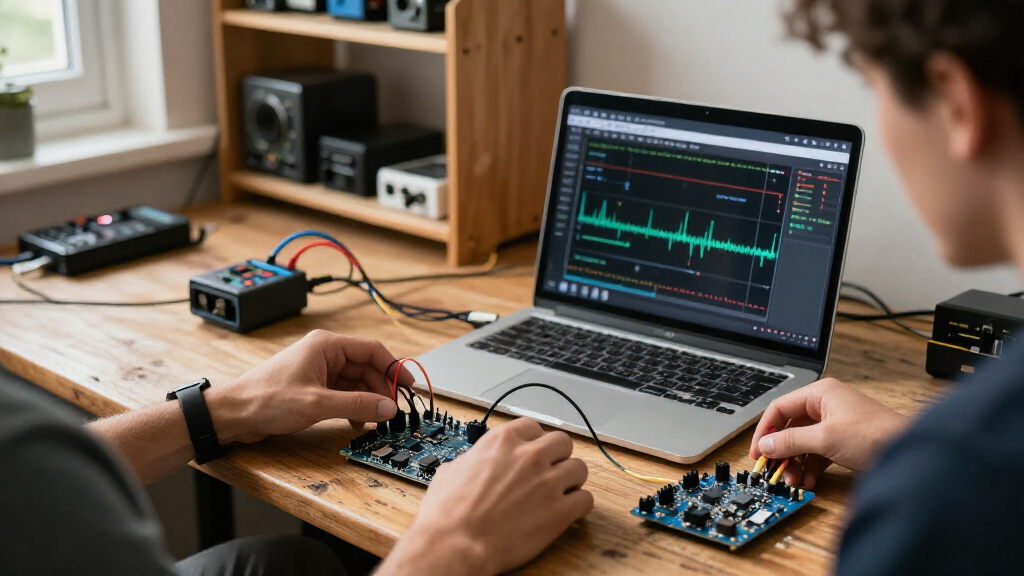
USB logic analyzers range from simple eight-channel tools for basic digital signals to 32-channel models built for bus-heavy debugging. My best overall pick is the DreamSourceLab DSLogic U3Pro16, which offers a strong balance of channel capacity and performance; the DSLogic U3Pro32 stands out when you need more channels, while the Saleae Logic Pro 8 is the premium choice for buyers prioritizing a polished analysis workflow. The main tradeoffs are channel count, sampling capability, software support, and setup complexity—and headline sample-rate figures alone do not tell the whole story. I compare all 14 options by how well they fit different debugging needs, not just by their specifications. Continue reading for the full breakdown and a guide to choosing the right USB logic analyzer.

Get business pricing on monitors, keyboards and dev gear
- Business-only prices and quantity discounts
- Tax-exempt purchasing
- Multiple users, one account, clear invoices
Key Takeaways
Channel count is a major dividing line: the DSLogic U3Pro32 and InnoMaker LA5032 offer 32-channel options, while several compact 8-channel picks suit simpler projects with fewer signals to monitor.
High advertised sample rates are not directly comparable: the ALIENTEK DL16 Plus lists 500 MHz and the BINGOX lists 400 MHz, but buyers should check how those figures relate to channel count, capture depth, and supported signal conditions.
The lineup has distinct tiers: basic 24 MHz eight-channel models target entry-level protocol and timing checks, while 16- and 32-channel devices offer more room for complex interfaces and parallel buses.
Software and workflow can outweigh raw specifications: Saleae Logic Pro 8 is the premium workflow-oriented option, whereas lower-cost analyzer families may appeal more to buyers comfortable verifying software compatibility and setup details.
There are repeat models and overlapping families: DSLogic Plus appears twice in the supplied list, so buyers should confirm the exact listing and included accessories rather than assume the two entries differ.
| DreamSourceLab DSLogic U3Pro16 16-Channel USB Logic Analyzer |  | Best for High-Speed 16-Channel Work | Channels: 16 digital channels | Maximum sampling rate: 1 GHz | Onboard memory: 2 Gbits DDR3 | VIEW LATEST PRICE | See Our Full Breakdown |
| ALIENTEK DL16 Plus USB Logic Analyzer, 16 Channels, 500 MHz Sample Rate |  | Best for Protocol Coverage | Channels: 16 | Maximum sample rate: 500 MHz | Interface: USB 2.0 | VIEW LATEST PRICE | See Our Full Breakdown |
| DSLogic Plus 16-Channel USB Logic Analyzer |  | Best Balanced Choice | Channels: 16 | Buffer-mode sampling rate: Up to 400 MHz | Stream-mode sampling rate: Up to 100 MHz | VIEW LATEST PRICE | See Our Full Breakdown |
| DreamSourceLab DSLogic U3Pro32 32-Channel USB Logic Analyzer | 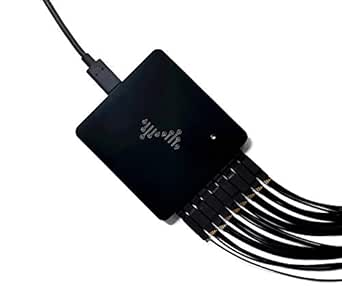 | Best for Wide Digital Buses | Channels: 32 | Maximum sampling rate: 1 GHz | Onboard memory: 2 Gbits DDR3 | VIEW LATEST PRICE | See Our Full Breakdown |
| innomaker LA1010 16-Channel USB Logic Analyzer, 100 MHz |  | Best for Straightforward Protocol Debugging | Input channels: 16 | Sampling rate: 100 MHz per channel | Supported protocols: More than 30 | VIEW LATEST PRICE | See Our Full Breakdown |
| DSLogic Plus 16-Channel USB Logic Analyzer |  | Best for High-Speed, Flexible Captures | Channels: 16 | Maximum sampling rate: 400 MHz in buffer mode | Onboard memory: 256 Mbits SDRAM | VIEW LATEST PRICE | See Our Full Breakdown |
| HiLetgo 8-Channel USB Logic Analyzer, 24 MHz |  | Best for Basic Protocol Debugging | Channels: 8 | Maximum sampling rate: 24 MHz | Supported protocols: UART, I²C, SPI | VIEW LATEST PRICE | See Our Full Breakdown |
| BINGOX 16-Channel USB Logic Analyzer, 400 MHz |  | Best for Included Probe Accessories | Channels: 16 | USB interface: USB 2.0 High-Speed, USB Type-C | Buffer mode rates: 400 MHz at 4 channels; 200 MHz at 8; 100 MHz at 16 | VIEW LATEST PRICE | See Our Full Breakdown |
| Comidox USB Logic Analyzer, 24 MHz, 8-Channel |  | Best for Software Flexibility | Channels: 8 digital channels | Maximum sampling rate: 24 MHz per channel | Input voltage compatibility: 5 V, 3.3 V, 2.5 V, 2.0 V | VIEW LATEST PRICE | See Our Full Breakdown |
| KeeYees 24 MHz 8-Channel USB Logic Analyzer with Test Clips |  | Best for Color-Coded Clip Probing | Channels: 8 | Frequency: 24 MHz | Connector: USB Type-A | VIEW LATEST PRICE | See Our Full Breakdown |
| InnoMaker LA5032 32-Channel USB Logic Analyzer |  | Best for High-Channel-Count Captures | Channels: 32 | Maximum sampling rate: 500 MHz | Glitch detection: 6.25 ns | VIEW LATEST PRICE | See Our Full Breakdown |
| Innomaker LA2016 16-Channel USB Logic Analyzer, 200 MHz |  | Best All-Around Midrange Pick | Channels: 16 | Maximum sampling rate: 200 MHz | Memory: 1 Gbit | VIEW LATEST PRICE | See Our Full Breakdown |
| LONELY BINARY 8-Channel 24 MHz USB Logic Analyzer Kit |  | Best Starter Kit for Breadboards | Channels: 8 | Maximum sampling rate: 24 MHz | Supported protocols: I2C, SPI, UART | VIEW LATEST PRICE | See Our Full Breakdown |
| Saleae Logic Pro 8-Channel Logic Analyzer, Black |  | Best for Mixed Digital and Analog Analysis | Inputs: 8 digital/analog | Digital sample rate: Up to 500 MS/s | Analog sample rate: Up to 50 MS/s | VIEW LATEST PRICE | See Our Full Breakdown |
| USB logic analyzer | Channels | Maximum sampling rate |
|---|---|---|
| DreamSourceLab DSLogic U3Pro16 | 16 digital channels | 1 GHz |
| ALIENTEK DL16 Plus USB Logic A | 16 | — |
| DSLogic Plus 16-Channel USB Lo | 16 | — |
| DreamSourceLab DSLogic U3Pro32 | 32 | 1 GHz |
| innomaker LA1010 16-Channel US | — | — |
| DSLogic Plus 16-Channel USB Lo | 16 | 400 MHz in buffer mode |
| HiLetgo 8-Channel USB Logic An | 8 | 24 MHz |
| BINGOX 16-Channel USB Logic An | 16 | — |
| Comidox USB Logic Analyzer | 8 digital channels | 24 MHz per channel |
| KeeYees 24 MHz 8-Channel USB L | 8 | — |
| InnoMaker LA5032 32-Channel US | 32 | 500 MHz |
| Innomaker LA2016 16-Channel US | 16 | 200 MHz |
| LONELY BINARY 8-Channel 24 MHz | 8 | 24 MHz |
| Saleae Logic Pro 8-Channel Log | — | — |
More Details on Our Top Picks
DreamSourceLab DSLogic U3Pro16 16-Channel USB Logic Analyzer
The DSLogic U3Pro16 is the strongest fit here when high-speed capture matters more than having the largest channel count. Its 1 GHz maximum sampling rate, 2 Gbits of onboard memory, and both buffer and streaming modes give engineers options for short, fast events and longer recordings. The tradeoff is that the headline rate is channel-dependent: buffer mode reaches 1 GHz on eight channels, while all 16 channels top out at 500 MHz. Compared with the DSLogic Plus, it offers substantially higher sampling rates and more onboard memory; compared with the U3Pro32, it gives up half the channels but can be a more focused choice for 16-line buses. DSView runs on Windows, macOS, and Linux. I’d skip it if your work rarely needs fast captures, since its advanced headroom may go unused.
Pros:- Up to 1 GHz sampling in supported channel configurations
- Buffer and stream modes serve both fast events and long captures
- 2 Gbits of onboard DDR3 memory
- DSView supports Windows, macOS, and Linux and includes protocol decoders
Cons:- At 16 active channels, the listed buffer-mode maximum is 500 MHz
- Stream-mode rate drops to 125 MHz with all 16 channels enabled
Best for: Engineers debugging fast digital buses who need 16 channels, cross-platform protocol decoding, and both buffered and long streaming captures.
Not ideal for: Hobbyists working mainly with low-speed signals or buyers who need more than 16 inputs; its high-rate performance also falls as more channels are enabled.
- Channels:16 digital channels
- Maximum sampling rate:1 GHz
- Onboard memory:2 Gbits DDR3
- Interface:USB 3.0 Type-C
- Stream-mode sample depth:Up to 16G samples
- Buffer-mode rates:1 GHz at 8 channels; 500 MHz at 16 channels
- Threshold adjustment:0.1-step increments
- Software compatibility:Windows, macOS, and Linux
Our verdict“Choose the U3Pro16 for demanding 16-channel work where fast sampling and flexible capture modes matter more than channel count.”
ALIENTEK DL16 Plus USB Logic Analyzer, 16 Channels, 500 MHz Sample Rate
The ALIENTEK DL16 Plus is a practical pick for users who want broad protocol-decoder coverage and a sturdy enclosure in a 16-channel analyzer. Its support for more than 120 protocols is the clearest distinction from the DSLogic Plus, which lists nearly 100, and the included large and small test hooks give buyers flexibility when probing different connection points. The stated 500 MHz maximum is competitive with the DSLogic Plus’s 400 MHz buffer-mode ceiling, but the listing does not spell out how that rate changes with active channel count. I’d also treat the memory figures cautiously: the title says 3.5 Gbits, while the description gives a maximum hardware storage depth of 1G. USB 2.0 is another constraint beside the faster USB 3.0 interface on the U3Pro16. This suits decoder-heavy bench work better than buyers seeking clearly documented capture limits.
Pros:- More than 120 protocol decoders listed
- Multiple trigger and acquisition modes
- All-metal CNC enclosure
- Includes large and small test hooks
Cons:- Conflicting memory claims: 3.5 Gbits in the title versus 1G maximum hardware storage depth in the description
- Uses USB 2.0 rather than the USB 3.0 interface found on the DSLogic U3Pro models
- The listing does not clarify how the 500 MHz maximum changes with channel count
Best for: Bench technicians and embedded developers who value a wide selection of protocol decoders, multiple acquisition and trigger modes, and both small and large test hooks.
Not ideal for: Buyers who need unambiguous memory specifications, USB 3.0 connectivity, or published channel-by-channel sampling limits.
- Channels:16
- Maximum sample rate:500 MHz
- Interface:USB 2.0
- Protocol support:More than 120 protocols
- Memory information:Title lists 3.5 Gbits; description lists 1G maximum hardware storage depth
- PWM output:2 channels, adjustable from 1 Hz to 20 MHz
- Supported platforms:Windows, Ubuntu, and Mac
- Included accessories:Large and small test hooks
Our verdict“Pick the DL16 Plus if decoder breadth and included probe-hook sizes outweigh the uncertainty in its memory and channel-rate details.”
DSLogic Plus 16-Channel USB Logic Analyzer
The DSLogic Plus balances speed, channel count, and capture flexibility without reaching for the U3Pro16’s much higher rates. It provides 400 MHz buffer capture and real-time streaming up to 100 MHz, so users can choose between short, faster acquisitions and longer recordings. Its 16G stream-mode depth is useful for extended captures, but that figure does not apply to buffer mode, which is capped at 256M. Compared with the innomaker LA1010, it offers a higher stated buffer sampling rate and both capture modes; the LA1010 is the simpler option if 100 MHz is enough. Compared with the U3Pro16, the DSLogic Plus costs performance headroom, but still includes adjustable thresholds, shielded wires, and 16 test hooks. I’d choose it for varied everyday debugging, not for the fastest signals.
Pros:- Offers both buffer and real-time stream capture modes
- Buffer-mode sampling reaches 400 MHz
- Adjustable thresholds from 0 to 5 V in 0.1 V steps
- Includes shielded wires and 16 test hooks
Cons:- Stream-mode sampling is limited to 100 MHz
- The 16G sample depth applies to stream mode; buffer mode is capped at 256M
- USB 2.0 Type-C is slower than the USB 3.0 interface on the U3Pro16
Best for: Embedded developers who need 16 channels, occasional fast buffered captures, long stream recordings, and software support across major desktop operating systems.
Not ideal for: Engineers working with very fast signals or those who need the 16G depth in buffer mode; the higher-speed U3Pro16 offers more headroom.
- Channels:16
- Buffer-mode sampling rate:Up to 400 MHz
- Stream-mode sampling rate:Up to 100 MHz
- Sampling depth:Up to 16G in stream mode; up to 256M in buffer mode
- Onboard memory:256 Mbits SDRAM
- Interface:USB 2.0 Type-C
- Threshold range:0–5 V in 0.1 V steps
- Supported operating systems:Windows, macOS, and Linux
Our verdict“Choose the DSLogic Plus for mixed everyday debugging when two capture modes matter more than leading-edge sampling speed.”
DreamSourceLab DSLogic U3Pro32 32-Channel USB Logic Analyzer
For debugging wide parallel interfaces or monitoring several digital buses at once, the DSLogic U3Pro32 earns its place through 32 inputs and a 1 GHz peak sampling rate. It shares the U3Pro16’s USB 3.0 Type-C connection, 2 Gbits of DDR3 memory, and dual capture approach, but doubles the channel count. That breadth comes with a clear rate compromise: buffer mode reaches 250 MHz across 32 channels, and stream mode falls to 50 MHz at that channel count. The U3Pro16 is the better fit if 16 channels cover the job and higher per-channel rates matter; the U3Pro32 makes more sense when dropping signals would undermine the capture. DSView supports Windows, macOS, and Linux with nearly 100 protocol decoders. I’d pass if most projects use only a few lines, since the extra channels won’t offset the lower all-channel rates.
Pros:- 32 digital channels for wide or multi-bus captures
- Sampling reaches 1 GHz in supported channel configurations
- Offers both stream and buffer capture modes
- DSView runs on Windows, macOS, and Linux and supports nearly 100 protocol decoders
Cons:- At 32 channels, buffer-mode sampling is limited to 250 MHz
- At 32 channels, stream-mode sampling is limited to 50 MHz
- Streaming transfers captured data to PC memory in real time
Best for: Engineers debugging wide parallel buses or monitoring multiple digital interfaces simultaneously who need up to 32 inputs in one capture.
Not ideal for: Users who generally capture 16 or fewer lines at the highest available rates; the U3Pro16 has higher listed rates with all of its channels active.
- Channels:32
- Maximum sampling rate:1 GHz
- Onboard memory:2 Gbits DDR3
- Interface:USB 3.0 Type-C
- Maximum stream sample depth:16G samples
- Stream-mode rates:1 GHz at 3 channels; 500 MHz at 6; 250 MHz at 12; 100 MHz at 30; 50 MHz at 32
- Buffer-mode rates:1 GHz at 8 channels; 500 MHz at 16; 250 MHz at 32
- Threshold adjustment:Adjustable in 0.1 steps
- Operating systems:Windows, macOS, and Linux
Our verdict“Choose the U3Pro32 when capturing all 32 lines matters more than maintaining the U3Pro16’s stronger rates at full channel use.”
innomaker LA1010 16-Channel USB Logic Analyzer, 100 MHz
The innomaker LA1010 keeps the job focused: it captures 16 digital inputs at up to 100 MHz per channel and uses KingstVIS software to display and decode signals. Support for more than 30 protocols, including I2C, SPI, UART, and CAN, covers many common embedded projects without the higher sampling ceiling of the DSLogic Plus or either U3Pro model. That makes the LA1010 a sensible choice when the target signals fit its rate and the goal is routine communication debugging, not high-speed timing analysis. It also works with Windows, macOS, and Linux and draws 0.5 watts. The tradeoff is that waveform viewing and analysis depend on a connected computer and software. Compared with the DSLogic Plus, it gives up buffer-versus-stream flexibility and faster buffer capture, so users with demanding or varied capture needs should step up.
Pros:- Captures 16 digital channels simultaneously
- Supports more than 30 protocols, including I2C, SPI, UART, and CAN
- Compatible with Windows, macOS, and Linux
- Portable design with 0.5-watt power consumption
Cons:- Sampling is limited to 100 MHz per channel, below the DSLogic Plus’s 400 MHz buffer-mode maximum
- Waveform display and analysis require a computer and KingstVIS software
Best for: Students, makers, and embedded developers who mainly decode common serial protocols on 16 lines and whose signals stay within 100 MHz.
Not ideal for: Engineers investigating faster timing events or buyers who want standalone waveform viewing; the DSLogic Plus and U3Pro models offer more capture headroom and mode flexibility.
- Input channels:16
- Sampling rate:100 MHz per channel
- Supported protocols:More than 30
- Computer interface:USB 2.0
- Software:KingstVIS
- Compatible operating systems:Windows, macOS, and Linux
- Power consumption:0.5 watts
- Weight:0.28 kg
Our verdict“Choose the LA1010 for portable, computer-based decoding of common digital protocols when 100 MHz is sufficient.”
DSLogic Plus 16-Channel USB Logic Analyzer
The DSLogic Plus earns this role by pairing 16 channels with two capture modes: buffer mode reaches 400 MHz on four channels, while stream mode can record long captures at lower rates. That flexibility makes it a stronger fit for mixed debugging work than the 24 MHz HiLetgo and Comidox analyzers, which suit simpler UART, I²C, and SPI checks but lack comparable speed and channel capacity. Its 256 Mbits of onboard memory, adjustable thresholds, shielded fly wires, and aluminum case support a more capable bench setup. The tradeoff is that the headline rate falls as more channels are active, and stream-mode rates also vary by channel count. You’ll need DSView software, though it supports Windows, macOS, and Linux.
Pros:- Offers both stream and buffer capture modes
- Reaches 400 MHz in buffer mode with four active channels
- Provides adjustable thresholds in 0.1-step increments
- Includes shielded fly wires and an aluminum case
Cons:- Maximum sampling rate decreases as more channels are used
- Requires DSView software for operation
Best for: Embedded developers who need to inspect many digital lines and switch between fast, short captures and longer streamed sessions.
Not ideal for: Beginners seeking a simple plug-and-play protocol viewer, or anyone who needs the maximum sampling rate across all 16 channels.
- Channels:16
- Maximum sampling rate:400 MHz in buffer mode
- Onboard memory:256 Mbits SDRAM
- USB interface:USB 2.0 Type-C
- Stream mode depth:Up to 16G samples
- Buffer mode rates:400 MHz at 4 channels; 200 MHz at 8; 100 MHz at 16
- Software compatibility:Windows, macOS, Linux
- Dimensions and weight:3.11 × 2.91 × 0.35 inches; 1 pound
Our verdict“Choose the DSLogic Plus if you need 16-channel flexibility and high-speed captures, and can work within mode-dependent sampling limits.”
HiLetgo 8-Channel USB Logic Analyzer, 24 MHz
The HiLetgo is a straightforward choice for basic serial-bus troubleshooting: it captures eight channels at up to 24 MHz and supports UART, I²C, and SPI. Its stated input levels cover common 2.0 V to 5 V systems, which gives it broader stated voltage coverage than a tool limited to 3.3 V logic. Compared with the Comidox CP317, the capture specifications are similar, but the Comidox names Saleae Logic and PulseView compatibility, while the HiLetgo listing leaves its software and operating-system support unspecified. That omission makes setup less certain for buyers who already have a preferred workflow. It also isn’t recommended for 1.8 V systems, so this is best kept to common voltage levels and modest-speed debugging.
Pros:- Captures eight signals simultaneously
- Supports sampling rates up to 24 MHz
- Lists compatibility with 2.0 V, 2.5 V, 3.3 V, and 5 V systems
- Includes a USB cable and Dupont cable
Cons:- 1.8 V system compatibility is not recommended
- Software and operating-system support are not specified
- Its 24 MHz ceiling is modest beside the DSLogic Plus
Best for: Hobbyists and repairers who need an eight-channel analyzer for UART, I²C, or SPI work on 2.0 V to 5 V boards.
Not ideal for: Developers debugging 1.8 V hardware or buyers who need confirmed software and operating-system compatibility before purchasing.
- Channels:8
- Maximum sampling rate:24 MHz
- Supported protocols:UART, I²C, SPI
- Input voltage range:-0.5 V to 5.25 V
- Input high voltage:2.0 V to 5.25 V
- Input impedance:1 MΩ || 10 pF typical
- Connectivity:USB Type-A
- Included accessories:USB cable and Dupont cable
Our verdict“Pick the HiLetgo for basic eight-channel serial debugging on common logic levels, but choose the Comidox if named software support matters more.”
BINGOX 16-Channel USB Logic Analyzer, 400 MHz
The BINGOX offers a capable 16-channel feature set with USB-C connectivity, adjustable thresholds, and included shielded wires and test hooks. Its mode-dependent capture figures closely match the DSLogic Plus: both reach 400 MHz on four channels in buffer mode and list 20 MHz across all 16 channels in stream mode. The BINGOX stands out for its supplied probe accessories and broad stated input range, while the DSLogic Plus provides clearer dimensions and a named DSView software workflow. BINGOX lists Windows, macOS, and Linux support, but its dimension figures conflict between product sections, and its 250 kΩ input impedance is worth checking against the circuit under test. Treat the peak rate as a limited-channel setting, not a full-channel guarantee.
Pros:- Captures up to 16 digital signals
- Offers adjustable thresholds from 0 V to 5 V in 0.1 V steps
- Includes four groups of shielded wires and 16 test hooks
- Lists compatibility with Windows, macOS, and Linux
Cons:- Sampling rate depends on channel count and capture mode
- Published dimensions differ between product sections
- 250 kΩ input impedance may affect suitability for some signal sources
Best for: Embedded and FPGA developers who want a 16-channel analyzer with supplied test hooks and shielded leads for bench debugging.
Not ideal for: Buyers who need consistent published physical specifications or who expect 400 MHz capture while using all 16 channels.
- Channels:16
- USB interface:USB 2.0 High-Speed, USB Type-C
- Buffer mode rates:400 MHz at 4 channels; 200 MHz at 8; 100 MHz at 16
- Stream mode rates:100 MHz at 3 channels; 50 MHz at 6; 25 MHz at 12; 20 MHz at 16
- Hardware memory:256 Mbits
- Maximum signal frequency:100 MHz
- Input voltage:-30 V to +30 V
- Included accessories:Four groups of shielded wires, USB cable, 16 test hooks, user manual
Our verdict“Choose the BINGOX if the included probe kit and 16-channel capacity suit your bench, but verify the capture mode and physical details before relying on its headline specifications.”
Comidox USB Logic Analyzer, 24 MHz, 8-Channel
The Comidox earns its place through a useful pairing: eight channels at 24 MHz and named support for both Saleae Logic Analyzer software and PulseView. That software detail makes it an easier choice to evaluate than the HiLetgo, which leaves its software compatibility unspecified. It also supports UART, SPI, and I²C decoding and includes ten Dupont wires, so a buyer can start probing common serial buses without assembling a separate lead set. Against the more capable DSLogic Plus, though, the Comidox is limited to eight channels and a much lower sampling rate; it is aimed at routine protocol checks, not fast or dense captures. Its stated 1.5 V logic threshold and lack of recommended 1.8 V support also call for care when matching it to a board.
Pros:- Supports Saleae Logic Analyzer software and PulseView
- Decodes UART, SPI, and I²C
- Captures eight channels at up to 24 MHz
- Includes a USB cable and ten Dupont wires
Cons:- Limited to eight channels and 24 MHz
- 1.8 V system use is not recommended
- Requires basic electronics knowledge and hands-on probing
Best for: Makers and technicians who want an affordable-style eight-channel tool with stated Saleae Logic and PulseView compatibility for common serial protocols.
Not ideal for: Engineers debugging high-speed buses, needing more than eight channels, or working with 1.8 V logic as a standard signal level.
- Channels:8 digital channels
- Maximum sampling rate:24 MHz per channel
- Input voltage compatibility:5 V, 3.3 V, 2.5 V, 2.0 V
- Input voltage range:0–5.5 V
- Logic threshold:1.5 V
- Input impedance:1 MΩ || 10 pF typical
- Software compatibility:Saleae Logic Analyzer software, PulseView
- Included items:USB cable and 10 Dupont wires
Our verdict“Choose the Comidox for common serial-bus debugging when its stated software compatibility matters more than the extra speed and channels of the DSLogic Plus.”
KeeYees 24 MHz 8-Channel USB Logic Analyzer with Test Clips
The KeeYees is the most accessories-focused option here: its kit includes 12 test hook clips in six colors, making it easier to keep several connections distinguishable while probing an eight-channel board. Like the Comidox and HiLetgo, it is limited to 24 MHz and eight channels, so it fits routine UART, IIC, SPI, RS232, and 1-Wire work rather than fast parallel capture. The Comidox has clearer named compatibility with Saleae Logic and PulseView; KeeYees instead points buyers toward compatible software such as sigrok. That can suit open-source workflows, but buyers must confirm their software setup. Its listed maximum voltage is 5 V, so it is a less suitable match for signals outside that range.
Pros:- Includes 12 test hook clips in six colors
- Supports UART, IIC, SPI, RS232, and 1-Wire debugging
- Compatible with open-source software such as sigrok
- USB Type-A connection suits computers with standard USB-A ports
Cons:- Limited to eight channels and a listed 24 MHz frequency
- Protocol analysis depends on compatible software setup
- Maximum listed voltage is 5 V
Best for: Hobbyists who regularly probe several low-speed digital lines and value a supplied set of color-coded test hooks.
Not ideal for: Users who need more than eight channels, higher-speed capture, or confirmed software compatibility beyond the general sigrok reference.
- Channels:8
- Frequency:24 MHz
- Connector:USB Type-A
- Maximum voltage:5 V
- Supported protocols:UART, IIC, SPI, RS232, 1-Wire
- Compatible software:Compatible logic analyzer software, including sigrok
- Included test clips:12 clips in six colors
- Included cable:USB cable
Our verdict“Pick the KeeYees for low-speed debugging where organized clip leads matter more than named software support or higher capture performance.”
InnoMaker LA5032 32-Channel USB Logic Analyzer
When a capture needs to cover many buses or parallel signals at once, the LA5032’s 32 synchronous channels give it a clear role in this lineup. Its stated 500 MHz maximum sampling rate, 6.25 ns glitch detection, and deep capture capacity are aimed at work where timing detail and long recordings matter. It also decodes more than 20 protocols and adds a PWM generator, a useful extra for stimulus-and-observe workflows. Compared with the 16-channel Innomaker LA2016, this model offers twice the channels and a higher stated rate, but its memory figures need careful interpretation: the listing gives both 10G samples per channel and 5 Gbit hardware memory. It is a wired, computer-dependent instrument, so buyers seeking a simple portable starter kit should look at the LA2016 instead.
Pros:- Captures 32 synchronous digital channels at a stated rate up to 500 MHz.
- Glitch detection is specified at 6.25 ns.
- Decodes more than 20 protocols and supports Windows, macOS, and Linux.
- Includes a 0.1–20 MHz PWM generator and connection accessories.
Cons:- Requires a wired connection to a computer.
- The stated 10G samples per channel and 5 Gbit hardware memory figures may be difficult to reconcile.
- Its channel count and feature set may be excessive for routine I2C, SPI, or UART troubleshooting.
Best for: Engineers debugging FPGA, ARM, or MCU systems with many synchronous digital lines and a need for broad protocol decoding.
Not ideal for: Beginners or users capturing only a few low-speed buses who prefer a clearly specified, straightforward USB-powered setup.
- Channels:32
- Maximum sampling rate:500 MHz
- Glitch detection:6.25 ns
- Sample depth:10G samples per channel
- Hardware memory:5 Gbit
- Protocol decoding:More than 20 protocols, including MIPI DSI LP, I2C, SPI, UART, CAN, and JTAG
- PWM generator:0.1–20 MHz
- Compatibility:Windows, macOS, Linux
Our verdict“Choose the LA5032 when 32-channel coverage and high-speed capture matter more than a simple, clearly specified setup.”
Innomaker LA2016 16-Channel USB Logic Analyzer, 200 MHz
The LA2016 balances channel count and bench practicality: 16 inputs can cover several related signals, while its 200 MHz maximum rate and 1 Gbit memory suit a broad range of embedded debugging. Its software supports more than 20 protocol decoders, and the USB-powered kit includes probes and hook clips, reducing the extra setup needed for common board work. Compared with the 32-channel LA5032, it gives up half the channels and a higher stated sampling ceiling, but the LA2016 is the more modest choice for routine MCU, SPI, I2C, or UART captures. The 8-channel LONELY BINARY kit includes a wider assortment of adapters, though it is limited to 24 MHz; the LA2016 is better suited when capture speed and channel count take priority. Check operating-system requirements before buying: listed Windows support ends at Windows 10.
Pros:- Captures 16 digital signals simultaneously at up to 200 MHz.
- Decodes more than 20 protocols, including I2C, SPI, UART, CAN, and JTAG.
- USB bus-powered and compatible with Windows, macOS, and Linux.
- Includes test wires, 20 hook clips, and a USB cable.
Cons:- Listed Windows compatibility ends at Windows 10.
- Requires a computer to operate.
- Its 200 MHz ceiling and 16-channel count fall below the LA5032 for demanding, wide captures.
Best for: Embedded developers who need 16 channels, broad protocol decoding, and a ready-to-connect USB kit for everyday board debugging.
Not ideal for: Users on newer Windows versions who need confirmed current support, or engineers whose work requires more than 200 MHz sampling or over 16 channels.
- Channels:16
- Maximum sampling rate:200 MHz
- Memory:1 Gbit
- Supported protocols:More than 20, including I2C, SPI, UART, CAN, I2S, USB 1.1, JTAG, and Modbus
- Compatible operating systems:Windows, macOS, Linux
- Interface:USB 2.0/3.0
- Power:USB bus-powered
- Included accessories:3 x 9P wires, 2 x 2P wires, 20 test hook clips, USB 2.0 cable, CD-ROM
Our verdict“Pick the LA2016 for a practical 16-channel USB analyzer with broad decoding, provided its listed Windows support matches your computer.”
LONELY BINARY 8-Channel 24 MHz USB Logic Analyzer Kit
The LONELY BINARY kit is aimed at simple digital-bus work, with 8 channels and a 24 MHz ceiling that fit basic I2C, SPI, and UART troubleshooting better than high-speed or wide-bus captures. Its advantage over the similarly rated HiLetgo 8-channel analyzer in this roundup is the breadboard adapter, breakout board, and varied connection accessories, including both USB-A and USB-C cables. That makes it a more complete starting point for hobbyists moving signals between a breadboard and a computer. The tradeoff is modest capture headroom: the Innomaker LA2016 reaches 200 MHz and offers 16 channels, so it is a stronger fit for faster or more complex debugging. The product information also does not identify supported analysis software, which leaves more uncertainty than the named protocol support alone suggests.
Pros:- Eight channels support monitoring several digital lines together.
- Supports I2C, SPI, and UART.
- Includes a breakout board, breadboard adapter, clips, jumper wires, and storage case.
- USB-A and USB-C cables and Windows, macOS, and Linux support widen setup options.
Cons:- The 24 MHz maximum sampling rate is far below the Innomaker LA2016 and LA5032.
- Supported analysis software is not specified in the product information.
- Limited to eight channels and three named protocols.
Best for: Hobbyists and students debugging low-speed I2C, SPI, or UART circuits on breadboards who value included adapters and clips.
Not ideal for: Engineers capturing fast buses, many signals at once, or buyers who need clearly specified analysis software before purchase.
- Channels:8
- Maximum sampling rate:24 MHz
- Supported protocols:I2C, SPI, UART
- Connectivity:USB-A and USB-C cables
- Supported operating systems:Windows, macOS, Linux
- Included adapters:Breakout board and breadboard adapter
- Included connection accessories:10 test clips, 5 alligator clips, jumper wires
- Storage:Storage case
Our verdict“Choose this kit for low-speed breadboard debugging with included connections, not for fast or high-channel-count captures.”
Saleae Logic Pro 8-Channel Logic Analyzer, Black
The Logic Pro stands apart from the other picks by combining eight digital/analog inputs with digital sampling up to 500 MS/s and analog sampling up to 50 MS/s. That combination can help when a protocol capture needs to be checked alongside the shape of an electrical signal, rather than relying on digital states alone. Its protocol analyzers cover SPI, I2C, and more than 23 additional protocols, with Windows, Mac, and Linux support. Compared with the 32-channel LA5032, the Saleae has far fewer inputs, so it is not the choice for monitoring a large parallel bus. Its distinction is mixed-signal visibility, not channel density. Capture capacity uses the connected PC’s memory, which ties long recordings to the host computer rather than a stated onboard memory figure.
Pros:- Eight inputs support digital and analog analysis.
- Digital sampling reaches 500 MS/s and analog sampling reaches 50 MS/s.
- Protocol analyzers include SPI, I2C, and more than 23 additional protocols.
- Supports Windows, Mac, and Linux over USB 3.0.
Cons:- Capture capacity uses the connected PC’s memory.
- Eight inputs provide less channel coverage than the LA2016 or LA5032.
- A mixed-signal feature set may be unnecessary for buyers who only need basic digital decoding.
Best for: Hardware developers who need to correlate digital protocol activity with analog signal behavior on a small number of inputs.
Not ideal for: Teams that need 16 or 32 digital channels, or buyers who want a self-contained capture capacity independent of their computer’s memory.
- Inputs:8 digital/analog
- Digital sample rate:Up to 500 MS/s
- Analog sample rate:Up to 50 MS/s
- Protocol analyzers:SPI, I2C, and 23+ more
- Digital sample capacity:10 billion+ samples, using PC memory
- Analog sample capacity:500 million+ samples, using PC memory
- Connection:USB 3.0
- Compatible operating systems:Windows, Mac, Linux
Our verdict“Choose the Logic Pro when analog visibility alongside protocol decoding matters more than the channel count offered by the LA5032.”
How We Picked
I ranked these USB logic analyzers around the decisions that affect real debugging work: channel capacity, stated sampling performance, software usability, signal connection options, and likely fit for common projects. A higher channel count can simplify capture of multi-line buses, while a higher sample-rate claim may matter for faster signals—but neither spec is useful without suitable software, sound probing practices, and enough capture memory for the task. I also gave weight to clarity of product positioning, since buyers need to know whether a device is aimed at occasional learning, embedded development, or more demanding protocol work.
The ranking favors devices that appear to balance capability with practical versatility, rather than treating a single headline number as decisive. The DSLogic U3Pro16 leads as a balanced pick; the U3Pro32 ranks higher for channel-heavy work, and simpler 8-channel models sit lower because they serve narrower use cases. The Saleae Logic Pro 8 earns a distinct premium role based on its workflow positioning, not on channel count. Product names and supplied specifications do not establish complete compatibility or performance details, so I recommend checking the current listing for software support, input limits, accessories, and capture constraints before buying.
Factors to Consider When Choosing USB Logic Analyzers
Choosing among USB logic analyzers is less about finding the biggest number and more about matching the tool to the signals and workflow you actually have. These factors help separate a useful analyzer from one that leaves you short on channels, software support, or safe connection options.
Match Channel Count to the Whole Bus
Count the signals you need to observe at the same time, including clock, data, chip select, reset, and any useful control lines. A four-wire serial interface may fit comfortably within an eight-channel analyzer, but parallel buses or several concurrent devices can quickly use up that capacity. Choosing fewer channels than your project needs can force repeated captures, making intermittent timing problems harder to catch. At the other end, unused channels add little value if your work rarely involves multiple buses. Leave some headroom for future revisions, but do not buy a 32-channel tool just because it sounds more capable. The right count is the one that captures the complete event in a single pass.
Read Sample-Rate Claims Alongside Capture Limits
A headline sample rate does not tell you how long a device can record, how many channels can run at that rate, or what input conditions apply. Faster sampling can reveal narrow timing events, yet longer captures may demand deeper memory and more transfer capacity. Look for specifications that explain channel-dependent rates and capture depth, then compare them with the signal speeds and event duration in your project. A common mistake is choosing the highest stated rate without checking whether it applies to all channels at once. For slow control buses, reliable decoding and a useful capture window may matter more than peak speed. For fast edges, verify the analyzer’s electrical limits as well as its sampling figures.
Check Software and Operating-System Fit Before Purchase
The analyzer’s software determines how easily you can trigger, inspect, decode, and save captures. Check whether the supported application runs on your operating system and whether it includes protocol decoders for the buses you use. Also look for current driver or firmware support; a device that depends on an abandoned application can become difficult to use on a newer computer. Open-source compatibility can be valuable, but confirm that the exact hardware revision works with the software rather than relying on a family name. If you work across several computers, consider how settings and capture files move between them. A modest device with a dependable workflow can be more useful than a faster unit that is awkward to operate.
Treat Probe and Voltage Compatibility as a Separate Check
Channel count and sample rate say little about whether an analyzer can safely connect to your circuit. Confirm supported input voltage, threshold behavior, grounding requirements, and whether the included leads suit the pitch of your headers. Never assume that a logic analyzer can tolerate 5 V signals simply because it has USB connectivity or multiple channels. Long clip leads can also add noise or distort fast edges, so compact connections matter for high-speed work. If you regularly probe small boards, inspect whether the kit includes suitable clips or whether you will need separate accessories. These checks prevent a specification mismatch from becoming a damaged tool or an unreliable capture.
Choose Capture Convenience for Your Debugging Style
Some problems are easy to reproduce on demand; others appear briefly and disappear before you can start a manual capture. For repeatable tests, a simple trigger and clear decoder may be all you need. For intermittent faults, prioritize trigger flexibility, sufficient recording depth, and a workflow that makes saved captures easy to revisit. Consider how often you will connect and disconnect the unit, whether the cables stay organized, and how quickly you can identify the right signal. Buyers sometimes focus on the analyzer itself and overlook the time spent setting up each capture. A tool that makes repeated investigations less cumbersome can repay its added complexity through saved debugging time.
Pay More Only for Capabilities You Will Use
A premium model makes sense when its software, triggering, support, or performance solves a recurring problem—not simply because it has a premium label. Beginners may get more from a straightforward eight-channel device and clear decoding than from a high-channel instrument with settings they rarely use. Developers working across several protocols may benefit from broader channel capacity, while high-speed work calls for careful attention to sampling and electrical specifications. Compare what is included in the box, since clips and adapters can affect the total setup you need. For duplicate or similarly named listings, verify model numbers and revisions before comparing them. Spending according to your actual workload helps avoid both an underspecified tool and unused capability.
Frequently Asked Questions
Is a 24 MHz USB logic analyzer enough for learning and basic serial-bus debugging?
It can be a reasonable starting point for learning digital timing and working with slower interfaces, provided its voltage limits and software fit your setup. The eight-channel 24 MHz options in this roundup are more limited than the 16-channel and higher-rate choices, so they may not suit faster signals or captures involving many lines. Check whether the software can decode the protocols you want to study; decoding can make a modest analyzer far more useful for beginners. If you expect to move into faster buses, buying a more capable device now may reduce the chance of replacing it soon. Match the rate to your actual signal speed rather than treating the number as a general quality score.
Should I choose a 32-channel analyzer over a faster 16-channel model?
Choose 32 channels when you need to capture many signals simultaneously, such as a parallel bus plus control lines or several interacting devices. A faster 16-channel unit may suit projects where timing resolution matters more than channel count and the signal set is small enough to capture together. Compare the stated rate at the channel count you will actually use, since performance may vary with the number of active inputs. Also consider capture depth and triggering, which affect whether you can record the event you need. If you are uncertain, map your current project signals first and add only a few channels of headroom.
Can I rely on a high sample-rate claim to measure fast digital signals?
No single sample-rate figure proves that an analyzer is suitable for a particular signal. You also need to check the input voltage range, threshold behavior, channel conditions, and capture length at the claimed rate. The probe connection and wiring can affect signal integrity, especially when edges are fast. Confirm that the device can sample quickly enough to show the timing detail you need, then check whether its software supports useful triggering and inspection. For precise electrical amplitude or analog waveform analysis, a logic analyzer may not replace an oscilloscope.
What should I verify when two listings use the same analyzer name?
Compare exact model numbers, hardware revisions, included probes, cable types, and software or firmware support. This roundup includes the DSLogic Plus name twice, so the supplied list alone does not establish that those entries are different versions. Product photos and similar titles can conceal variations in accessories or seller descriptions. Check whether the listing specifies operating-system compatibility and electrical input limits rather than assuming those details carry over from another version. If those facts are unclear, contact the seller or manufacturer before choosing between the listings.
Is the Saleae Logic Pro 8 a better choice than a higher-channel analyzer?
It may be the better fit if your priority is a premium analysis workflow and eight channels cover the signals you need to capture. A 16- or 32-channel model makes more sense when you must observe a larger bus or several devices in one recording. Compare software support, decoding needs, capture controls, and the exact electrical specifications rather than assuming one brand or channel count settles the decision. Also check the costs of any required probes or accessories without relying on a model name alone. The right choice depends on whether workflow convenience or simultaneous signal coverage is your main constraint.
Conclusion
For most embedded developers, I would start with the DreamSourceLab DSLogic U3Pro16 as the best overall: its 16-channel format is a practical middle ground between basic tools and larger analyzers. The best value direction is a simpler 8-channel 24 MHz model such as the HiLetgo or Comidox when your work is limited to basic, slower signals and you have confirmed software and voltage compatibility. For a premium workflow, consider the Saleae Logic Pro 8 if its software approach suits you and eight channels are enough. Beginners can start with an uncomplicated 8-channel option; buyers handling broad buses should look at the DSLogic U3Pro32 or InnoMaker LA5032. If fast-signal claims are your priority, compare the ALIENTEK DL16 Plus and BINGOX against verified channel-dependent rates, capture limits, and input specifications before deciding.
Halloween Picks
halloween
As an affiliate, we earn on qualifying purchases.