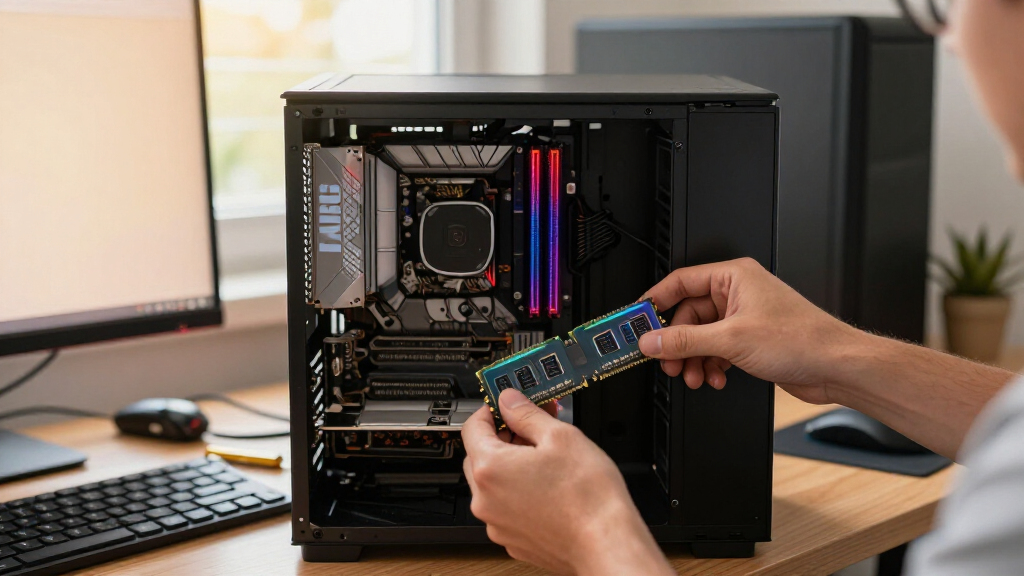

The best DDR4 RAM kits balance the right capacity and speed with compatibility for your specific desktop or laptop. My best overall pick is the Corsair Vengeance LPX 32GB 3200MHz CL16, which pairs a practical capacity with tighter timings than many basic 3200MHz kits. The Crucial Pro 32GB is a straightforward desktop option, while the TEAMGROUP Elite 32GB SODIMM serves laptop upgrades with a different physical format. The main tradeoffs are desktop versus laptop memory, 16GB versus 32GB or more, and faster timings versus broad, uncomplicated compatibility. Read on for the full breakdown and guidance on matching a kit to your system.

Get business pricing on monitors, keyboards and dev gear
- Business-only prices and quantity discounts
- Tax-exempt purchasing
- Multiple users, one account, clear invoices
Key Takeaways
Form factor comes first: The desktop UDIMM picks and laptop SODIMM picks are not interchangeable, so match the module shape to your system before comparing speed or capacity.
32GB is the most flexible desktop tier in this lineup: It appears across several 3200MHz options, including models with tighter CL16 timings and simpler CL22 specifications.
Capacity separates the specialist picks: The Crucial Pro 64GB desktop kit and Crucial 64GB SODIMM kit are aimed at memory-heavy workloads, not buyers who only need a basic upgrade.
Frequency alone does not tell the whole story: The Corsair Vengeance LPX and G.SKILL Ripjaws V pair 3200MT/s with CL16 timings, while several other 3200MHz kits list CL22.
2666MHz kits still have a place: Timetec and A-Tech options may suit compatible systems whose memory support or upgrade needs do not call for 3200MHz, but they are less compelling when a system can use faster memory.



| DDR4 RAM kit | Capacity | Form factor | Voltage | Memory type |
|---|---|---|---|---|
| Crucial Pro 32GB DDR4 RAM Kit | 32GB (2x16GB) | UDIMM | 1.2V | — |
| Timetec 16GB Kit | 16GB (2x8GB) | DIMM | 1.2V | DDR4 |
| PUSKILL DDR4 3200MHz CL16 Desk | 16GB (2x8GB) | DIMM | 1.35V | DDR4 |
| TEAMGROUP Elite DDR4 32GB Kit | 32GB (2x16GB) | SODIMM | 1.2V | DDR4 |
| PNY DDR4 32GB | 32GB (2x16GB) | DIMM | 1.2V | — |
| Crucial Pro 64GB DDR4 RAM Kit | 64GB (2 × 32GB) | 288-pin DIMM | 1.2V | DDR4 |
| Corsair Vengeance LPX DDR4 32G | 32GB (2 × 16GB) | 288-pin DIMM | 1.35V | DDR4 |
| Crucial 64GB DDR4 RAM Kit | 64GB (2 × 32GB) | 260-pin SODIMM | 1.2V | DDR4 |
| G.SKILL Ripjaws V Series DDR4 | 32GB (2 × 16GB) | 288-pin UDIMM | 1.35V | DDR4 |
| A-Tech DDR4 RAM 32GB Kit | 32GB (2 × 16GB) | 260-pin SODIMM | 1.2V | DDR4 |
| TEAMGROUP T-Force Vulcan Z DDR | 16GB (2 x 8GB) | 288-pin DIMM | 1.35V | DDR4 |
| GIGASTONE Game PRO 32GB DDR4 3 | 32GB (2 x 16GB) | 288-pin UDIMM | 1.35V | DDR4 |
| GIGASTONE 32GB | 32GB (2 x 16GB) | 260-pin SODIMM | 1.2V | DDR4 |
| Crucial 32GB DDR4 RAM Kit | 32GB (2 x 16GB) | 288-pin UDIMM | 1.2V | DDR4 |
| Timetec 32GB | 32GB (2 x 16GB) | 288-pin DIMM / UDIMM | 1.2V | DDR4 |
More Details on Our Top Picks
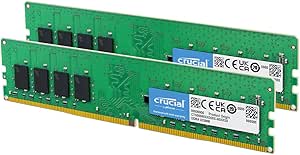
Crucial Pro 32GB DDR4 RAM Kit (2x16GB), 3200MHz Desktop Memory UDIMM 288-Pin, Compatible with Intel and AMD Ryzen
The Crucial Pro 32GB kit is a well-rounded desktop choice: its two 16GB modules provide room for modern games and everyday creative work, while 3200MHz speed suits many DDR4 platforms. Compared with the PNY 32GB kit, it offers similarly straightforward capacity and speed, with compatibility information that specifically names Intel 8th–13th Gen and Ryzen 1000–5000 processors. Its 1.2V operation also avoids the higher voltage used by enthusiast-oriented 3200MHz kits such as the PUSKILL. The tradeoff is CL22 latency, which is looser than the PUSKILL’s CL16, and there are no heatsinks or lighting for buyers who want a more overtly gaming-focused build. I’d pick it for a practical, compatibility-conscious desktop upgrade, not for tuning memory timings.
Pros:- 32GB capacity across two 16GB modules
- 3200MHz speed suits many DDR4 desktop systems
- Lists compatibility with a broad range of Intel and AMD Ryzen processors
- Runs at 1.2V
Cons:- CL22 timing is looser than the PUSKILL kit’s CL16
- No included heatsinks or RGB lighting
- Only suitable for DDR4 systems
Best for: Desktop owners with a supported Intel 8th–13th Gen or Ryzen 1000–5000 system who want 32GB in a simple two-module kit.
Not ideal for: Enthusiast builders focused on tighter timings, RGB, or a heatsinked appearance; the PUSKILL offers CL16 and a heatsink, though at 16GB total.
- Capacity:32GB (2x16GB)
- Memory speed:3200MHz
- Form factor:UDIMM
- Pins:288
- Voltage:1.2V
- Latency:CL22
- ECC:Non-ECC
- Listed compatibility:Intel 8th–13th Gen; AMD Ryzen 1000–5000 Series
Our verdict“Choose this kit for a straightforward 32GB desktop upgrade across supported Intel and Ryzen DDR4 platforms, rather than for low-latency tuning.”
Timetec 16GB Kit (2x8GB) DDR4 2666MHz Desktop RAM – PC4-2666V, 288-Pin, CL19, Non-ECC, Unbuffered
For an older DDR4 desktop that needs a modest memory refresh, this Timetec 16GB kit keeps the specification simple: two 8GB modules, 2666MHz, and plug-and-play installation on a compatible board. It is a more restrained choice than the Crucial Pro 32GB kit, which doubles the capacity and reaches 3200MHz, so I’d favor Timetec when the system or workload does not call for more memory. The lifetime warranty is a useful support feature, but it does not change the kit’s lower capacity or speed. Color and rank may vary between batches, which can matter if you are matching existing memory or want predictable module details. This is a sensible replacement or basic upgrade, not the pick for newer games or heavier multitasking.
Pros:- Two-module 16GB kit for compatible DDR4 desktops
- 2666MHz speed suits systems specified for that memory rate
- Unbuffered, non-ECC desktop memory
- Lifetime warranty is listed
Cons:- 16GB capacity is less suited to demanding modern workloads than the 32GB kits
- 2666MHz is slower than the 3200MHz desktop options in this roundup
- Color and rank may vary between batches
Best for: Owners of DDR4 desktop PCs that support 288-pin UDIMMs and need an uncomplicated 16GB replacement or capacity upgrade.
Not ideal for: Gamers, creators, or heavy multitaskers who would benefit from 32GB and higher speed, such as the Crucial Pro or PNY kits.
- Capacity:16GB (2x8GB)
- Memory type:DDR4
- Speed:2666MHz
- Form factor:DIMM
- Pins:288
- Voltage:1.2V
- CAS latency:CL19
- ECC and buffering:Non-ECC, unbuffered
Our verdict“Choose Timetec for a basic, compatible DDR4 desktop refresh when 16GB and 2666MHz meet your system’s needs.”
PUSKILL DDR4 3200MHz CL16 Desktop RAM Kit Heatsink, 16GB (2x8GB)
The PUSKILL kit targets buyers who value CL16 timing and a heatsink more than a larger capacity. At 3200MHz, its two 8GB modules offer a faster-rated, lower-latency profile than the 2666MHz Timetec kit, making it a better fit for a modest gaming desktop when the motherboard supports the advertised settings. The aluminum heatsink gives it a more finished look than the bare Crucial Pro modules, but it does not add capacity: both the Crucial Pro and PNY kits provide 32GB rather than 16GB. Reaching 3200MHz may require enabling XMP or DOCP in BIOS, so this is not as hands-off as a kit left at default settings. I’d choose it for a budget-conscious 16GB build, not for memory-heavy creative work.
Pros:- 3200MHz rated speed
- CL16 timing is tighter than the CL22 3200MHz kits listed here
- Includes an aluminum heatsink
- Two modules support dual-channel operation on compatible systems
Cons:- 16GB total is less capacity than the Crucial Pro and PNY desktop kits
- Advertised speed may require XMP or DOCP activation in BIOS
- Desktop UDIMM modules are not compatible with laptops
Best for: Desktop builders who want a 16GB dual-channel kit with CL16 timing and a heatsink for gaming or everyday creative tasks.
Not ideal for: Laptop owners or desktop users who need 32GB for large projects, many simultaneous apps, or newer memory-hungry games.
- Capacity:16GB (2x8GB)
- Memory type:DDR4
- Speed:3200MHz
- CAS latency:CL16
- Voltage:1.35V
- Form factor:DIMM
- Pins:288
- Features:XMP 2.0, heatsink
Our verdict“Pick PUSKILL for a 16GB desktop build where CL16 timing and a heatsink matter more than the 32GB capacity of the Crucial Pro or PNY kits.”
TEAMGROUP Elite DDR4 32GB Kit (2 x 16GB) 3200MHz SODIMM Laptop Memory Module
This TEAMGROUP kit is the laptop specialist in this group: its 260-pin SODIMM modules are physically different from desktop UDIMMs, while the 32GB capacity and 3200MHz rating suit compatible laptops that need more room for multitasking or creative applications. That makes it a better fit for a laptop upgrade than the Crucial Pro or PNY kits, both of which use 288-pin desktop memory. Its 1.2V operation and CL22 timing match the practical, standard-speed approach of the Crucial Pro, but the listed laptop compatibility is less specific. Memory speed can depend on the laptop’s supported configurations, so check the exact model before ordering rather than assuming it will run at 3200MHz. I’d choose it for a verified laptop upgrade, not a desktop build.
Pros:- 32GB capacity in a two-module kit
- 3200MHz rated speed for compatible laptops
- 260-pin SODIMM form factor fits supported laptop slots
- 1.2V operation and listed lifetime warranty
Cons:- Not compatible with desktop UDIMM slots
- Actual operating speed depends on laptop support
- CL22 timing is not aimed at low-latency tuning
Best for: Laptop owners whose device supports 32GB of DDR4-3200 memory in two 260-pin SODIMM slots.
Not ideal for: Desktop builders or laptop owners who have not confirmed their system’s memory type, slot count, and supported capacity.
- Capacity:32GB (2x16GB)
- Memory type:DDR4
- Memory speed:3200MHz
- Form factor:SODIMM
- Pins:260
- Voltage:1.2V
- Latency:CL22
- Compatible device type:Laptop
Our verdict“Choose TEAMGROUP for a compatible laptop that needs a 32GB DDR4 SODIMM upgrade, and verify the machine’s supported speed and capacity first.”
PNY DDR4 32GB (2x16GB) 3200MHz CL22 Performance Desktop Memory Kit
PNY’s kit delivers the familiar desktop combination many buyers want: 32GB in two 16GB modules, 3200MHz speed, and standard 1.2V operation. It is close in purpose to the Crucial Pro 32GB kit, with the same listed capacity, speed, voltage, and CL22 timing; the supplied product information gives less detail about specific processor generations, so I’d check motherboard support before choosing it. Against the PUSKILL kit, PNY favors capacity over tighter timing: it doubles the total memory but does not list CL16. That makes it more suitable for multitasking and larger projects than a 16GB kit, while remaining a plain desktop-focused option without stated heatsinks or RGB. Full 3200MHz operation depends on motherboard compatibility, so confirm the board’s memory support.
Pros:- 32GB capacity split across two 16GB modules
- 3200MHz rated speed
- 1.2V operation
- Designed for desktop systems and tested for stability, according to the product description
Cons:- CL22 timing is looser than the PUSKILL kit’s CL16
- Full 3200MHz speed depends on motherboard support
- Not suitable for laptops
Best for: Desktop users who want 32GB for gaming, everyday multitasking, or creative work and have a DDR4 motherboard that supports 3200MHz memory.
Not ideal for: Laptop owners or enthusiasts seeking tighter timings and detailed platform-specific compatibility information.
- Capacity:32GB (2x16GB)
- Memory technology:DDR4
- Memory speed:3200MHz
- Form factor:DIMM
- Pins:288
- Voltage:1.2V
- Timing:CL22
- Compatibility:Desktop
Our verdict“Choose PNY for a no-frills 32GB desktop kit if your DDR4 motherboard supports its 3200MHz rating and you do not need tighter timings.”
Crucial Pro 64GB DDR4 RAM Kit (2x32GB), 3200MHz Desktop Memory, Compatible with Intel and AMD Ryzen
I’d choose this kit when 64GB capacity matters more than low latency or lighting. Its two 32GB DIMMs provide room for large projects, heavy multitasking, and memory-hungry applications, while 3200MHz operation at 1.2V offers a straightforward fit for compatible DDR4 desktops. Compared with the Corsair Vengeance LPX 32GB, this Crucial kit doubles capacity but has looser CL22 timing rather than CL16; that trade suits workloads that need memory headroom more than the tightest response times. It also supports a broad range of listed Intel and Ryzen generations and can downclock to lower speeds. The tradeoff is a plain, non-RGB design and dependence on motherboard support for the intended speed. I’d skip it for a gaming build that needs only 32GB or prioritizes tighter timings.
Pros:- 64GB capacity from two 32GB modules suits memory-intensive workloads.
- 3200MHz speed with downclocking options accommodates supported systems.
- Listed compatibility spans Intel 8th–13th Gen and AMD Ryzen 1000–5000 Series.
- Runs at 1.2V and uses standard 288-pin desktop DIMMs.
Cons:- CL22 timing is looser than the CL16 timing on the Corsair Vengeance LPX and G.SKILL Ripjaws V kits.
- No RGB lighting or distinctive aesthetic features.
- Full-speed operation depends on motherboard and processor support.
Best for: Desktop users running large creative projects, virtual machines, or several demanding applications who need 64GB across two slots.
Not ideal for: Gamers who need only 32GB and prefer tighter CL16 timings or RGB styling.
- Capacity:64GB (2 × 32GB)
- Memory type:DDR4
- Speed:3200MHz; downclock options to 3000MHz or 2666MHz
- Form factor:288-pin DIMM
- Voltage:1.2V
- Latency:CL22
- ECC:Non-ECC
- Compatibility:Intel 8th–13th Gen; AMD Ryzen 1000–5000 Series
Our verdict“Choose this Crucial kit if your desktop workload benefits more from 64GB of capacity than from tighter timings or gaming-focused styling.”
Corsair Vengeance LPX DDR4 32GB (2x16GB) RAM, 3200MHz, CL16-20-20-38, 1.35V, Intel XMP/AMD EXPO, Black
The Vengeance LPX is my pick for a desktop build where low-profile clearance and CL16 timings matter more than extra capacity. Its 32GB split across two modules suits many gaming and general performance systems, and the aluminum heat spreader adds a practical cooling surface without a tall decorative housing. Compared with the Crucial Pro 64GB, this kit offers tighter listed timing but half the capacity, so it makes more sense for a focused gaming PC than for large datasets or virtual machines. XMP support provides a route to the rated speed, though the kit may need BIOS setup and compatible components to reach it. The 1.35V requirement and lack of RGB are tradeoffs; buyers wanting an uncomplicated 1.2V kit or 64GB should look elsewhere.
Pros:- Low-profile modules help with clearance in compact builds.
- CL16 timing is tighter than the CL22 timing on the Crucial Pro 64GB kit.
- Aluminum heat spreader supports heat dissipation.
- XMP 2.0 support provides a convenient route to rated settings on compatible systems.
Cons:- Reaching the rated profile may require BIOS adjustments and compatible hardware.
- 32GB offers less capacity than the Crucial Pro 64GB kit.
- Uses 1.35V and has no RGB lighting.
Best for: PC builders fitting 32GB into a compact desktop with a large CPU cooler or limited memory clearance.
Not ideal for: Users needing 64GB for heavy production workloads, or buyers who want a kit that reaches its rated profile without BIOS configuration.
- Capacity:32GB (2 × 16GB)
- Memory type:DDR4
- Speed:3200MHz
- Latency:CL16-20-20-38
- Voltage:1.35V
- Form factor:288-pin DIMM
- Heat spreader:Aluminum
- Color:Black
Our verdict“Pick the Vengeance LPX for a clearance-conscious gaming desktop where 32GB and tighter timings suit the build better than maximum capacity.”
Crucial 64GB DDR4 RAM Kit (2x32GB), 3200MHz SODIMM Laptop Memory, CL22, Compatible with 13th Gen Intel Core and AMD Ryzen 7000
This Crucial kit brings 64GB to compatible DDR4 laptops, where the smaller SODIMM format is the decisive difference from desktop kits such as the Crucial Pro 64GB. Two 32GB modules can give supported mobile workstations and laptops more room for large files and simultaneous applications, while 3200MHz operation and downclocking to 2933MHz or 2666MHz help accommodate systems with lower memory limits. Its CL22, 1.2V specification favors broad, straightforward compatibility over tighter timing claims. The main risk is fit: this is 260-pin SODIMM memory, not a desktop DIMM kit, and the laptop must support DDR4 and the module capacity. I’d choose it over the 32GB A-Tech kit for capacity-heavy laptop work, but skip it if your machine has soldered memory or a lower upgrade ceiling.
Pros:- 64GB capacity in two laptop-sized modules supports demanding mobile workloads.
- 3200MHz speed can downclock to 2933MHz or 2666MHz.
- Standard 1.2V operation and CL22 timing suit compatible DDR4 laptops.
- 260-pin SODIMM format is designed for laptop memory slots.
Cons:- Restricted to compatible DDR4 laptops and other SODIMM systems.
- CL22 timing is less performance-focused than the CL16 desktop kits in this roundup.
- System capacity limits and accessible slots must be checked before buying.
Best for: Laptop owners with two accessible DDR4 SODIMM slots who run memory-intensive creative, technical, or multitasking workloads.
Not ideal for: Desktop builders, owners of laptops with soldered memory, or anyone whose system cannot support 64GB of DDR4 SODIMM.
- Capacity:64GB (2 × 32GB)
- Memory type:DDR4
- Speed:3200MHz; downclock options to 2933MHz or 2666MHz
- Form factor:260-pin SODIMM
- Latency:CL22
- Voltage:1.2V
- ECC:Non-ECC
- Compatibility:Laptops supporting DDR4 SODIMM
Our verdict“Choose this Crucial kit when a compatible DDR4 laptop needs 64GB, and avoid it for desktops or machines with soldered memory.”
G.SKILL Ripjaws V Series DDR4 RAM 32GB (2x16GB) Up to 3200MT/s CL16-18-18-38 1.35V for Desktop
For a desktop builder seeking 32GB with CL16-18-18-38 timings, Ripjaws V offers a performance-focused alternative to the more capacity-oriented Crucial Pro 64GB. Its 3200MT/s rating and Intel XMP 2.0 support give compatible systems a defined memory profile to enable in BIOS, which is useful for gaming and demanding desktop tasks. Compared with the Corsair Vengeance LPX, the listed timing sequence is slightly tighter after the first number, but the Corsair’s low-profile design is the clearer choice when cooler clearance is a concern. Ripjaws V still requires BIOS setup to reach its rated settings, and 1.35V is higher than the Crucial Pro’s 1.2V. I’d avoid mixing it with unrelated memory kits, since mixed modules can complicate stability and speed settings.
Pros:- 32GB capacity uses a two-module kit for desktop systems.
- 3200MT/s rating and XMP 2.0 support target performance builds.
- CL16-18-18-38 timing is tighter than CL22 kits such as the Crucial Pro 64GB.
- 288-pin UDIMM format is intended for desktop memory slots.
Cons:- BIOS adjustments may be needed to reach rated settings.
- 1.35V is higher than the 1.2V Crucial Pro desktop kit.
- Mixing it with another memory kit can make stability and settings less predictable.
Best for: Desktop builders who want a 32GB matched kit with XMP support and are comfortable enabling the memory profile in BIOS.
Not ideal for: Laptop owners, users who need 64GB, or buyers who want rated speed without checking BIOS and system compatibility.
- Capacity:32GB (2 × 16GB)
- Memory type:DDR4
- Speed:Up to 3200MT/s
- Latency:CL16-18-18-38
- Voltage:1.35V
- Form factor:288-pin UDIMM
- Compatibility:Desktop
- Memory profile:Intel XMP 2.0
Our verdict“Choose Ripjaws V for a desktop performance build if you are willing to enable XMP and do not need more than 32GB.”
A-Tech DDR4 RAM 32GB Kit (2x16GB) 2666MHz PC4-21300 SODIMM Laptop Memory
The A-Tech kit suits a laptop or mini PC that supports 32GB of DDR4 SODIMM at 2666MHz and needs a simple capacity upgrade rather than higher memory speed. Its two 16GB modules and plug-and-play installation make it a practical alternative to the 64GB Crucial laptop kit when the system’s memory ceiling is 32GB or the workload does not need more. At 2666MHz with CL19 timing, it is slower than that Crucial kit’s 3200MHz rating, but may match older systems designed for this speed. The 1.2V, non-ECC specification fits compatible laptop and mini PC slots, and the limited lifetime warranty is listed as a benefit. The tradeoff is strict device compatibility: it cannot replace desktop DIMMs or DDR3/DDR5 memory, and buyers should verify the machine’s supported capacity and module type first.
Pros:- 32GB total capacity is supplied as two 16GB modules.
- 2666MHz speed suits compatible systems built around that memory rate.
- 1.2V non-ECC SODIMMs are designed for laptop and mini PC use.
- Includes a limited lifetime warranty according to the product data.
Cons:- 2666MHz is slower than the 3200MHz Crucial laptop kit.
- Not compatible with desktop DIMM slots or DDR3 and DDR5 systems.
- System support for two modules and 32GB total must be verified.
Best for: Owners of compatible older laptops, notebooks, or mini PCs seeking a 32GB DDR4 SODIMM upgrade at 2666MHz.
Not ideal for: Desktop users, owners of DDR3 or DDR5 systems, or laptop users needing 64GB or 3200MHz memory.
- Capacity:32GB (2 × 16GB)
- Memory type:DDR4
- Speed:2666MHz
- Data transfer rate:PC4-21300
- Form factor:260-pin SODIMM
- Latency:CL19
- Voltage:1.2V
- ECC:Non-ECC
- Warranty:Limited lifetime
Our verdict“Pick A-Tech for a compatible laptop or mini PC capped at 2666MHz when 32GB is enough and you have confirmed the memory requirements.”
TEAMGROUP T-Force Vulcan Z DDR4 16GB Kit (2x8GB) 3200MHz Desktop Memory Module (Gray)
The T-Force Vulcan Z suits a desktop build that needs a familiar two-stick 16GB setup without moving to a larger capacity. Its 3200MHz speed and CL16 latency give it a sharper timing spec than the 32GB Crucial kit’s CL22, though the Crucial offers twice the capacity for heavier multitasking. XMP 2.0 support provides a simple route to the rated speed on a compatible motherboard, while the gray, low-key design avoids the lighting-focused look of some gaming memory. The heat-conductive adhesive is a useful cooling detail, but it does not make this a higher-capacity or faster-than-3200MHz option. I’d check the motherboard’s memory support before buying; this kit is best for a modest upgrade, not a long-term, memory-heavy workstation.
Pros:- 3200MHz speed with CL16 latency
- Two DIMMs support a common dual-channel configuration
- XMP 2.0 support for setting the rated speed on compatible systems
- Lifetime warranty
Cons:- 16GB total capacity is less suitable for heavy multitasking than 32GB kits
- Rated speed depends on motherboard and CPU memory-controller support
- No speed above 3200MHz for buyers seeking a faster-rated kit
Best for: Desktop owners replacing or upgrading to 16GB who want a 3200MHz, CL16 kit and have a compatible DDR4 motherboard.
Not ideal for: Gamers and creators who routinely run memory-heavy apps, since 16GB leaves less headroom than the 32GB desktop kits in this roundup.
- Capacity:16GB (2 x 8GB)
- Memory type:DDR4
- Speed:3200MHz
- Latency:CL16
- Form factor:288-pin DIMM
- Voltage:1.35V
- Memory profile:XMP 2.0
- Warranty:Lifetime
Our verdict“Choose the T-Force Vulcan Z if you want a compact-capacity 16GB desktop upgrade with CL16 timings, but pick a 32GB kit for heavier workloads.”
GIGASTONE Game PRO 32GB DDR4 3200MHz RAM Kit (2x16GB) for Gaming Desktop
The GIGASTONE Game PRO pairs the capacity I’d favor for current gaming and multitasking with a standard 3200MHz desktop specification. Its 2 x 16GB layout offers more room than the 16GB T-Force Vulcan Z, while XMP 2.0 gives compatible systems a way to use the rated speed. The kit is non-ECC, unbuffered UDIMM memory, so it belongs in a supported consumer desktop rather than a laptop or a workstation requiring registered memory. Compared with the Crucial 32GB kit, GIGASTONE explicitly lists XMP 2.0 and 1.35V, while Crucial specifies CL22 and downclocking support. The tradeoff is a narrower fit: check motherboard support, and don’t choose it for laptop upgrades or if you want lighting features.
Pros:- 32GB capacity gives more multitasking headroom than 16GB kits
- Two 16GB modules suit a common dual-channel desktop setup
- 3200MHz speed with Intel XMP 2.0 support
- Non-ECC, unbuffered UDIMM format for compatible desktops
Cons:- Requires a compatible DDR4 desktop motherboard and memory profile support
- No RGB lighting or other listed lighting features
- No latency figure is provided in the supplied specifications
Best for: PC gamers and desktop users who want 32GB in two DIMMs and have a DDR4 UDIMM motherboard that supports the kit’s XMP profile.
Not ideal for: Laptop owners, users of DDR5-only desktops, and buyers who need ECC or registered memory.
- Capacity:32GB (2 x 16GB)
- Memory type:DDR4
- Speed:3200MHz
- Form factor:288-pin UDIMM
- Voltage:1.35V
- ECC:Non-ECC
- Buffering:Unbuffered
- Memory profile:Intel XMP 2.0; AMD Ryzen support listed
Our verdict“Pick this kit for a compatible gaming desktop where 32GB and XMP support matter more than listed latency or lighting.”
GIGASTONE 32GB (2x16GB) DDR4 3200MHz Laptop RAM Kit
This GIGASTONE kit is the laptop-specific pick: its 260-pin SODIMMs fit compatible notebooks, unlike the 288-pin desktop UDIMMs such as the GIGASTONE Game PRO. Two 16GB modules provide 32GB total, making this a more substantial upgrade than the 16GB laptop kit from TEAMGROUP Elite in the wider roundup. The listed 3200MHz speed is a good match for laptops designed for DDR4-3200, but the system must support both the capacity and module speed; memory may run at a lower rate on some machines. Its 1.2V specification is distinct from the 1.35V desktop gaming kit, and there is no listed XMP profile or warranty detail to weigh against alternatives. Confirm your laptop’s service limits and SODIMM requirements before ordering.
Pros:- 32GB total capacity in two 16GB modules
- 3200MHz transfer speed for compatible laptops
- 1.2V SODIMM specification suits the stated laptop memory format
- Non-ECC memory for supported consumer notebooks
Cons:- SODIMM modules do not fit standard desktop UDIMM slots
- Laptop compatibility depends on supported capacity and memory speed
- No warranty or XMP information is listed in the supplied data
Best for: Notebook owners with two accessible DDR4 SODIMM slots who need 32GB for multitasking, study, or creative applications.
Not ideal for: Desktop builders or laptop owners whose systems use soldered memory, fewer compatible slots, or a different supported capacity or speed.
- Capacity:32GB (2 x 16GB)
- Memory type:DDR4
- Speed:3200MHz
- Form factor:260-pin SODIMM
- Voltage:1.2V
- ECC:Non-ECC
- Module configuration:2 x 16GB
Our verdict“Choose this kit for a compatible laptop needing 32GB, and avoid it for any desktop that takes full-size UDIMMs.”
Crucial 32GB DDR4 RAM Kit (2x16GB), 3200MHz, CL22, UDIMM 288-Pin, Downclockable to 2933/2666MHz, Compatible with Intel and AMD Ryzen
Crucial’s 32GB kit makes sense for desktop owners who value a clearly stated compatibility range over tighter timings. It runs at 3200MHz with fallback support for 2933MHz or 2666MHz, which can help when a system cannot use the top listed speed. The CL22 latency is looser than the CL16 T-Force Vulcan Z, but this Crucial kit doubles that model’s capacity and operates at 1.2V rather than 1.35V. It is non-ECC 288-pin UDIMM memory for desktops, not laptops; the GIGASTONE SODIMM kit is the 32GB option for notebooks. I’d favor this kit for everyday multitasking and a range of Intel or Ryzen desktop configurations, while buyers focused on tighter timings should compare CL-rated alternatives and check their board’s supported speeds.
Pros:- 32GB capacity in a two-module kit
- 3200MHz rated speed with listed 2933MHz and 2666MHz fallback speeds
- 1.2V operation
- Listed compatibility with Intel and AMD Ryzen desktops
Cons:- CL22 timings are looser than the CL16 T-Force Vulcan Z
- 288-pin UDIMMs do not fit laptop SODIMM slots
- Fallback speeds depend on system support and configuration
Best for: Desktop users who want 32GB and value listed fallback speeds for a DDR4 system that may not run memory at 3200MHz.
Not ideal for: Laptop owners or desktop buyers prioritizing tighter latency than CL22 for a performance-focused memory build.
- Capacity:32GB (2 x 16GB)
- Memory type:DDR4
- Speed:3200MHz
- Downclock speeds:2933MHz and 2666MHz
- Latency:CL22
- Form factor:288-pin UDIMM
- Voltage:1.2V
- ECC:Non-ECC
Our verdict“Choose this Crucial kit for flexible 32GB desktop memory and fallback speeds, but look elsewhere if tighter timings are your priority.”
Timetec 32GB (2x16GB) DDR4 2666MHz Desktop RAM Kit
The Timetec kit is aimed at a different desktop than the 3200MHz Crucial and GIGASTONE options: its 2666MHz speed and 1.2V operation suit systems built around that memory rate or users who do not need a higher-rated kit. You still get 32GB across two 16GB DIMMs, so capacity matches those faster alternatives, but the lower speed is a clear performance tradeoff for workloads that benefit from memory bandwidth. CL19 is specified, and the lifetime warranty adds a stated support term absent from some kits here. It is non-ECC, unbuffered 288-pin desktop memory, not a laptop upgrade. I’d choose it when the motherboard or processor calls for 2666MHz; for a system that supports 3200MHz, the Crucial kit offers more speed flexibility.
Pros:- 32GB capacity in two 16GB modules
- 1.2V operation
- CL19 latency is specified
- Lifetime warranty
Cons:- 2666MHz rated speed is lower than the 3200MHz kits in this batch
- 288-pin DIMM format is not compatible with laptop SODIMM slots
- Compatibility is limited to systems supporting DDR4 UDIMM memory
Best for: Owners of DDR4 desktop PCs or workstations that support 2666MHz UDIMMs and need a 32GB memory upgrade.
Not ideal for: Laptop users or desktop builders whose systems support 3200MHz and who want to take advantage of the faster-rated Crucial or GIGASTONE kits.
- Capacity:32GB (2 x 16GB)
- Memory type:DDR4
- Speed:2666MHz
- Latency:CL19
- Form factor:288-pin DIMM / UDIMM
- Voltage:1.2V
- ECC:Non-ECC
- Warranty:Lifetime
Our verdict“Pick Timetec when your desktop supports 2666MHz and you want 32GB with a lifetime warranty, not when you need a 3200MHz-rated kit.”
How We Picked
I compared each kit around the decisions that affect a real upgrade: desktop UDIMM or laptop SODIMM fit, total capacity, rated data rate, listed timings, and whether the kit presents a clear route to its advertised settings. I gave more weight to combinations that suit common upgrade needs without pushing buyers into capacity or speed they may not use. The supplied specifications also shaped how confidently each kit could be matched to a system; a precise timing and voltage listing offers more context than a speed figure alone.
The ranking favors well-rounded desktop kits first, then separates value-oriented and specialized picks by their actual use. Kits with 32GB at 3200MHz and CL16 rank ahead of otherwise similar CL22 options for buyers seeking a responsive desktop kit, while 64GB models are highlighted for workloads that can use the extra capacity. Laptop kits are ranked within their own role, not as substitutes for desktop RAM. Compatibility remains system-dependent, so I treat listed speeds as kit specifications rather than a promise that every motherboard or laptop will run them at that rate.
Factors to Consider When Choosing Best DDR4 RAM Kits
Before choosing from these picks, I would work through fit, capacity, and platform support in that order. A kit that looks stronger on paper can be the wrong purchase if its form factor or supported settings do not match the machine.
Match UDIMM or SODIMM Before Comparing Specs
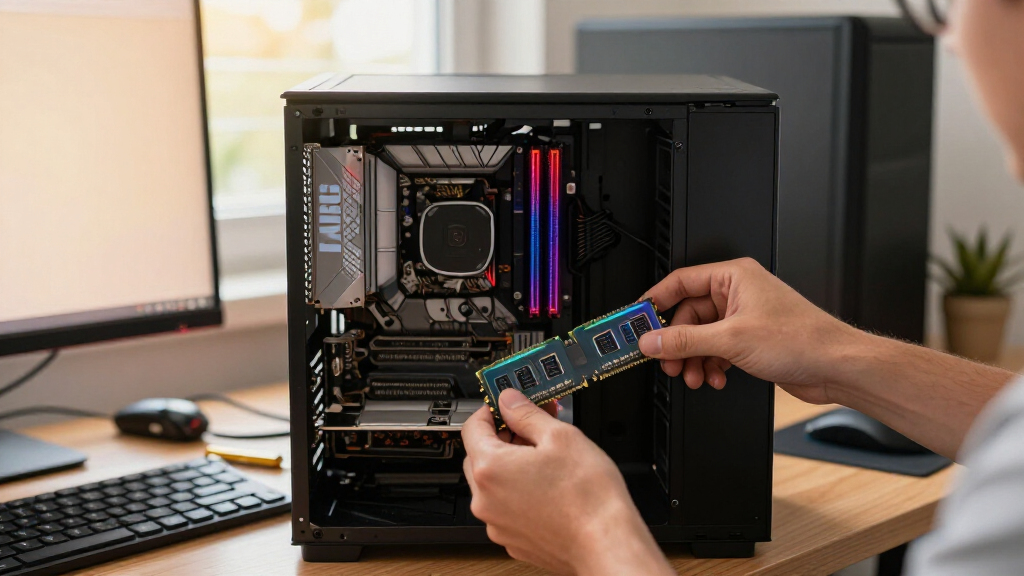
Desktop UDIMMs and laptop SODIMMs have different physical sizes and cannot be swapped between those system types. Check your motherboard or laptop documentation for the required memory type and supported module capacity. Compact desktops and some all-in-one systems can be exceptions, so do not rely on the device being called a computer or laptop alone. Also check how many slots are open and whether existing memory must be removed. Mixing module types is not a workaround for limited slots. This simple check prevents a common mistake: choosing a kit for its capacity or speed before confirming that it can physically fit.
Choose Capacity for Your Workload, Not the Largest Number
Capacity helps when your applications need more memory at once, but extra gigabytes do not automatically make every task faster. A typical everyday desktop upgrade may call for a different capacity than a workstation handling large projects or many demanding applications. The 64GB kits in this roundup make the most sense when your workload can use that headroom and the system supports it. Check the maximum memory capacity in your system documentation, plus the number of available slots. Buying a two-module kit can fill two slots immediately, which may limit later expansion on a board with only two. If you expect to grow capacity, plan around the full slot layout rather than the kit in isolation.
Read Timings Alongside the Speed Rating
A 3200MHz label does not describe every aspect of memory performance; listed timings, such as CL16 or CL22, add useful context. When comparing kits at the same data rate, tighter listed timings can distinguish two otherwise similar choices, as seen with some desktop options here. Still, avoid treating a lower CAS latency as a guarantee of a noticeable improvement in every application. The processor, motherboard, memory controller, and workload all affect the result. Compare full timing specifications when available, but prioritize capacity and compatibility if those are the unresolved parts of your build. A speed figure without the rest of the system’s support limits is not a dependable reason to buy.
Check Whether Your System Can Run the Rated Settings
Memory kits may need a supported profile or manual configuration to operate at their advertised settings. Check your motherboard or laptop specifications and firmware options before assuming a kit will run at its full rated speed. A system may support the modules but set them to a lower speed by default, and some laptops offer little or no memory tuning. That does not always prevent a successful upgrade, but it can change which kit is worthwhile. Review both the kit’s listed specifications and the computer maker’s supported memory details. If you prefer a set-and-forget upgrade, favor a compatible kit whose standard behavior suits your system over one whose appeal depends on settings you cannot enable.
Pay More for Useful Capacity or Better-Specified Performance
Higher capacity and tighter timings are reasons to compare kits, not automatic reasons to stretch your budget. A 64GB kit is easier to justify when large workloads routinely fill less memory; otherwise, a more modest kit may meet your needs. For a desktop that supports 3200MHz, a kit with CL16 timings can be a more targeted performance choice than a basic CL22 kit at a similar rated speed. On an older system limited to 2666MHz, paying extra for a faster rating may bring little benefit if the system cannot use it. Decide which limitation you are trying to solve—capacity, speed, or compatibility—and spend toward that rather than the biggest specification on the box.
Treat Desktop and Laptop Upgrade Planning Differently
Laptop upgrades can be more constrained than desktop builds because slot count, supported capacity, and access to the memory slots vary by model. Some laptops have soldered memory alongside an upgradeable slot, while others may limit supported module configurations. Check the service manual or manufacturer specifications before ordering, particularly for a 64GB kit. Desktop users should also check slot population rules and whether a two-module kit is preferred for the board’s memory-channel layout. Mixing new modules with existing RAM can work, but the system may use settings supported by the full set rather than the fastest kit’s rating. For either system, a matched kit reduces guesswork compared with assembling modules from unrelated specifications.
Frequently Asked Questions
Can I use a laptop SODIMM kit in my desktop?
Usually not: standard desktops take full-size UDIMM memory, while SODIMMs are shorter modules used in laptops and some compact systems. The notch position and module dimensions differ, so they are not direct substitutes. Check the motherboard’s memory type rather than relying on the processor family or the kit’s DDR4 label. A small-form-factor desktop may use SODIMMs, but its documentation should confirm that. If you are upgrading a laptop, likewise verify that it uses removable SODIMMs rather than soldered memory.
Should I choose a 32GB kit or a 64GB kit?
Choose based on the applications and workloads you run together, not on the larger capacity alone. A 32GB kit is a flexible option for many desktop upgrades, while 64GB suits heavier multitasking and memory-intensive work when the system supports it. Before buying 64GB, confirm the computer’s maximum capacity and module support. Also check whether the kit will use all available slots, since that can affect later expansion. If your current system rarely runs short of memory, extra capacity may not improve the tasks you care about.
Will a 3200MHz DDR4 kit run at 3200MHz in my computer?
Not always: the rated speed depends on support from the motherboard or laptop, processor memory controller, and available firmware settings. Some systems may start a kit at a lower default speed unless a supported memory profile is enabled. Many laptops provide fewer tuning controls than desktop motherboards. Check the system’s specifications and setup options before choosing based on speed alone. If the machine has a 2666MHz limit, a faster-rated kit may still operate at a lower supported speed rather than reaching its full rating.
Can I mix a new DDR4 kit with the memory already in my computer?
Mixing can work, but it adds uncertainty. Different capacities, timings, or rated speeds may cause the full set to run at settings the modules can share. The motherboard may also have rules for which slots to populate first. For fewer compatibility surprises, use a matched kit and follow the system manual’s slot layout. If you plan to keep existing modules, compare their specifications and confirm the combined capacity is supported. Avoid assuming that adding more memory automatically preserves the speed printed on a new kit.
Is a 2666MHz kit a sensible upgrade if 3200MHz kits are available?
It can be sensible when the computer supports only 2666MHz or when you need a compatible kit for an older platform. A faster-rated kit cannot make a system exceed its supported memory speed, so the platform limit matters more than the number on the package. If your system supports 3200MHz, a 3200MHz kit gives you a higher rated ceiling, though actual operation still depends on configuration and support. Compare capacity and timings as well as speed. Choose the 2666MHz option because it fits your system or upgrade plan, not simply because DDR4 speeds are interchangeable.
Conclusion
For most desktop buyers, I recommend the Corsair Vengeance LPX 32GB 3200MHz CL16 as the best overall pick, pairing a useful capacity with tighter listed timings than the CL22 alternatives. The Crucial Pro 32GB is my straightforward value-oriented desktop choice when capacity and a simple 3200MHz specification matter more than CL16 timings. For a premium-capacity upgrade, choose the Crucial Pro 64GB desktop kit if your workload benefits from more memory and your system supports it; the Crucial 64GB SODIMM serves the corresponding laptop need. Beginners should start with the Crucial Pro 32GB or the matching Crucial SODIMM option after checking their computer’s memory type and supported capacity. For laptop upgrades, compare the TEAMGROUP Elite 32GB SODIMM, Crucial 64GB SODIMM, and 2666MHz A-Tech kit against your model’s limits; for a basic 16GB desktop build, the TEAMGROUP T-Force Vulcan Z or PUSKILL kit may fit better. The best choice is the one that matches your system first, then meets your capacity and speed needs.
Halloween Picks
halloween
As an affiliate, we earn on qualifying purchases.