For developers who need more room for code, terminals, and documentation away from a desk, I’d choose the Dell Pro 14 Plus P1425 as the best overall portable monitor for its work-focused size and straightforward single-screen setup. The ASUS ZenScreen Duo OLED MQ149CD stands out for developers who want two panels in one travel-ready unit, while the Lenovo ThinkVision M15 offers a practical 15.6-inch workspace without moving to a bulkier large-format screen. The key tradeoff is between portability and usable screen area, with extra panels adding setup and compatibility demands. I compare all 15 options by developer workflow, connectivity, and how much screen space they add to a laptop. Read on for the full breakdown and help matching a monitor to your work style.

Get business pricing on monitors, keyboards and dev gear
- Business-only prices and quantity discounts
- Tax-exempt purchasing
- Multiple users, one account, clear invoices
Key Takeaways
- The Dell Pro 14 Plus P1425 leads as the balanced single-screen pick: its 14-inch format favors a portable coding setup over a larger, heavier workspace.
- The ASUS ZenScreen Duo OLED MQ149CD is the lineup’s standout for multitasking: its dual-panel design adds more simultaneous work area, but it asks more of your setup than a conventional portable display.
- Lenovo ThinkVision M15 appears twice under slightly different listing names: treat these as the same model family and compare the exact listing and configuration rather than assuming the names signal different capabilities.
- Several 15.6-inch FHD models target straightforward second-screen use: KYY, ForHelp, InnoView, MNN, and cocopar differ in listed accessories and connectivity, so the included cover, stand, and ports matter more than the shared screen size.
- Special-purpose screens involve clear tradeoffs: the ARZOPA Z1FC emphasizes a higher refresh rate, the VisionOwl offers an 18.5-inch panel, and the triple-screen extenders add displays at the cost of more setup complexity and bulk.
| Dell Pro 14 Plus P1425 14-Inch Portable Monitor |  | Best for Coding on a Taller Screen | Screen size: 14 inches | Resolution: 1920 × 1200 (WUXGA) | Aspect ratio: 16:10 | VIEW LATEST PRICE | See Our Full Breakdown |
| ASUS ZenScreen Duo OLED MQ149CD 14-Inch Dual Portable Monitor |  | Best for a Portable Multi-Window Workspace | Display: Dual 14-inch OLED panels | Resolution: 1920 × 1200 per panel | Aspect ratio: 16:10 | VIEW LATEST PRICE | See Our Full Breakdown |
| Lenovo ThinkVision M15 15.6-Inch FHD Portable Monitor |  | Best for a Straightforward Coding Side Screen | Screen size: 15.6 inches | Resolution: 1920 × 1080 (FHD) | Display type: IPS LCD | VIEW LATEST PRICE | See Our Full Breakdown |
| Vixtan 14-Inch Triple Laptop Screen Extender, FHD IPS Portable Monitor |  | Best for Extending a Laptop Across Multiple Screens | Screen size: 14 inches | Resolution: 1920 × 1080 (FHD) | Display type: IPS LCD | VIEW LATEST PRICE | See Our Full Breakdown |
| KYY 15.6-Inch 1080p Portable IPS Monitor with USB-C, Mini HDMI, Speakers, and Smart Cover | 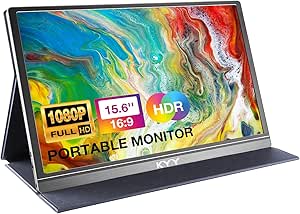 | Best Value for a Lightweight General-Purpose Second Screen | Screen size: 15.6 inches | Resolution: 1920 × 1080 (FHD) | Aspect ratio: 16:9 | VIEW LATEST PRICE | See Our Full Breakdown |
| ForHelp 15.6-Inch 1080p Portable IPS Monitor with USB-C and Mini HDMI |  | Best Lightweight Everyday Pick | Screen: 15.6-inch IPS LCD | Resolution: 1920 × 1080 (FHD) | Brightness: 300 cd/m² | VIEW LATEST PRICE | See Our Full Breakdown |
| InnoView 15.6-Inch FHD Portable Monitor with HDMI, USB-C, and Protective Cover |  | Best for Flexible Device Compatibility | Screen: 15.6-inch IPS LCD | Resolution: 1920 × 1080 (FHD) | Brightness: 250 cd/m² | VIEW LATEST PRICE | See Our Full Breakdown |
| ARZOPA Z1FC 16.1-Inch 144Hz Portable Gaming Monitor |  | Best for Coding and High-Refresh Gaming | Screen: 16.1-inch IPS LCD | Resolution: 1920 × 1080 | Refresh rate: 144 Hz | VIEW LATEST PRICE | See Our Full Breakdown |
| 15.6-Inch FHD Portable Laptop Screen Extender with Dual Monitors |  | Best for Triple-Screen Laptop Work | Displays: Two 15.6-inch IPS panels | Resolution: 1920 × 1080 per display | Refresh rate: 60 Hz | VIEW LATEST PRICE | See Our Full Breakdown |
| VisionOwl 18.5-Inch Portable Monitor, 1080p IPS, 100Hz, USB-C and HDMI |  | Best Large-Screen Portable Monitor | Screen: 18.5-inch IPS LCD | Resolution: 1920 × 1080 (FHD) | Refresh rate: 100 Hz | VIEW LATEST PRICE | See Our Full Breakdown |
| ASUS ZenScreen MB169CK 15.6-Inch 1080p Portable Monitor | 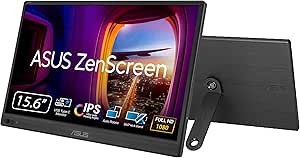 | Best for Flexible Desk and Presentation Setups | Screen: 15.6-inch IPS | Resolution: 1920 × 1080 (FHD) | Refresh rate: 60 Hz | VIEW LATEST PRICE | See Our Full Breakdown |
| Wixzet 15.6-Inch Detachable Laptop Screen Extender |  | Best for Multi-Screen Coding on the Go | Screen size: 15.6 inches | Resolution: 1920 × 1080 (Full HD) | Panel: IPS LCD | VIEW LATEST PRICE | See Our Full Breakdown |
| Lenovo ThinkVision M15 15.6-Inch Full HD Portable Monitor, Raven Black |  | Best for a Simple, Lightweight USB-C Workspace | Screen size: 15.6 inches | Resolution: 1920 × 1080 (Full HD) | Refresh rate: 60 Hz | VIEW LATEST PRICE | See Our Full Breakdown |
| MNN 15.6-Inch FHD Portable IPS Monitor with USB-C and HDMI |  | Best Value for Everyday Coding and Travel | Screen size: 15.6 inches | Resolution: 1920 × 1080 (Full HD) | Panel: LCD IPS | VIEW LATEST PRICE | See Our Full Breakdown |
| cocopar 15.6-Inch Portable Monitor, 1080p FHD, 60Hz, IPS, USB-C and HDMI, with Stand Cover |  | Best for Flexible Mounting on a Compact Desk | Screen size: 15.6 inches | Resolution: 1920 × 1080 (FHD) | Refresh rate: 60 Hz | VIEW LATEST PRICE | See Our Full Breakdown |
| portable monitors for developer | Resolution | Brightness | Weight | Refresh rate |
|---|---|---|---|---|
| Dell Pro 14 Plus P1425 14-Inch | 1920 × 1200 (WUXGA) | 400 cd/m² | 0.65 kg | 60 Hz |
| ASUS ZenScreen Duo OLED MQ149C | 1920 × 1200 per panel | — | 2.4 lbs | — |
| Lenovo ThinkVision M15 15.6-In | 1920 × 1080 (FHD) | 250 cd/m² | — | 60 Hz |
| Vixtan 14-Inch Triple Laptop S | 1920 × 1080 (FHD) | 300 nits | 3 lbs | 60 Hz |
| KYY 15.6-Inch 1080p Portable I | 1920 × 1080 (FHD) | 300 cd/m² | 1.7 lb | 60 Hz |
| ForHelp 15.6-Inch 1080p Portab | 1920 × 1080 (FHD) | 300 cd/m² | 1.52 lb | 60 Hz |
| InnoView 15.6-Inch FHD Portabl | 1920 × 1080 (FHD) | 250 cd/m² | 2.7 lb | 60 Hz |
| ARZOPA Z1FC 16.1-Inch 144Hz Po | 1920 × 1080 | 300 cd/m² | 1.42 kg | 144 Hz |
| 15.6-Inch FHD Portable Laptop | 1920 × 1080 per display | 280 cd/m² | 4 lb (1.8 kg) | 60 Hz |
| VisionOwl 18.5-Inch Portable M | 1920 × 1080 (FHD) | 320 cd/m² | 2.6 lb | 100 Hz |
| ASUS ZenScreen MB169CK 15.6-In | 1920 × 1080 (FHD) | 300 nits | 960 g | 60 Hz |
| Wixzet 15.6-Inch Detachable La | 1920 × 1080 (Full HD) | 300 nits | 5 lb total; each detachable screen is 1.5 lb | 60 Hz |
| Lenovo ThinkVision M15 15.6-In | 1920 × 1080 (Full HD) | 250 cd/m² | 860 g (product description) | 60 Hz |
| MNN 15.6-Inch FHD Portable IPS | 1920 × 1080 (Full HD) | 300 | 1.5 lb | — |
| cocopar 15.6-Inch Portable Mon | 1920 × 1080 (FHD) | 280 cd/m² | 1.5 lb without cover; 2.4 lb with cover | 60 Hz |
More Details on Our Top Picks
Dell Pro 14 Plus P1425 14-Inch Portable Monitor
The Dell Pro 14 Plus P1425 earns this role for developers who want more vertical room without packing a larger panel. Its 1920 × 1200 resolution and 16:10 format show more code lines than a typical 16:9 Full HD screen, including the Lenovo ThinkVision M15. At 0.65 kg, it is also notably light to carry between a home setup and a coworking desk. USB-C and an HDMI port give it more connection flexibility than a USB-C-only setup, while 400 cd/m² brightness can help in brighter workspaces. The tradeoff is its glossy finish, which can reflect windows or overhead lights. Its 60 Hz refresh rate is fine for coding, but this is not the pick for high-refresh gaming.
Pros:- 16:10 WUXGA resolution provides more vertical workspace than a standard 16:9 FHD panel.
- 0.65 kg weight suits frequent travel and mobile work.
- USB-C plus HDMI offers more connection options than USB-C alone.
- 400 cd/m² brightness is a useful advantage in brighter work areas.
Cons:- Glossy screen can reflect ambient light.
- 60 Hz refresh rate is not designed for high-refresh gaming.
Best for: Developers who travel with a laptop and want a lightweight second screen with extra vertical space for code, logs, or documentation.
Not ideal for: People working under bright lights or beside windows who need a matte screen, and developers seeking a high-refresh display.
- Screen size:14 inches
- Resolution:1920 × 1200 (WUXGA)
- Aspect ratio:16:10
- Brightness:400 cd/m²
- Refresh rate:60 Hz
- Connectivity:USB-C and 1 HDMI port
- Weight:0.65 kg
- Screen finish:Glossy
Our verdict“Choose the Dell if a light travel monitor with extra vertical coding space matters more than a matte finish or larger screen.”
ASUS ZenScreen Duo OLED MQ149CD 14-Inch Dual Portable Monitor
For developers who need two separate work areas on the road, the ASUS ZenScreen Duo OLED MQ149CD is the lineup’s most ambitious option: two 14-inch 16:10 panels can keep an editor and reference material visible at once. Its OLED contrast and 100% DCI-P3 coverage also suit code-heavy work that includes visual design or media review. Compared with the single-panel Dell Pro 14 Plus P1425, it offers substantially more total workspace, but asks you to carry a heavier, more involved setup. The 360° hinge, kickstand, and tripod mount give it more positioning choices than the KYY’s cover stand. Each panel is still only 14 inches, and both run at 60 Hz, so the layout favors multitasking over a large continuous canvas or high-refresh gaming.
Pros:- Two 14-inch panels support separate work areas without repeated window switching.
- OLED panels offer a 100000:1 contrast ratio and HDR DisplayHDR 400 True Black.
- 100% DCI-P3 coverage and Delta E < 2 suit color-sensitive design work.
- 360° hinge, kickstand, and tripod mount provide flexible positioning.
Cons:- At 2.4 pounds, it is heavier than the single-screen Dell Pro 14 Plus P1425.
- Each panel’s 14-inch size limits the viewing area for large files or wide timelines.
- 60 Hz refresh rate is less suited to high-refresh gaming.
Best for: Mobile developers who routinely keep code, documentation, terminals, or design references open side by side and can accommodate a 2.4-pound monitor.
Not ideal for: Minimalist travelers who want the lightest possible single-screen setup, or anyone who needs one large uninterrupted display.
- Display:Dual 14-inch OLED panels
- Resolution:1920 × 1200 per panel
- Aspect ratio:16:10
- Color coverage:100% DCI-P3
- Color accuracy:Delta E < 2
- Connectivity:Dual USB-C and Mini HDMI
- Weight:2.4 lbs
- Positioning:360° hinge, fold-out kickstand, and tripod mount
Our verdict“Pick the ASUS if keeping two portable work surfaces open matters more than minimizing carry weight or having one expansive panel.”
Lenovo ThinkVision M15 15.6-Inch FHD Portable Monitor
The Lenovo ThinkVision M15 takes a practical approach: a familiar 15.6-inch FHD IPS panel, USB-C connection, adjustable viewing angle, and ports on both sides. That makes it a sensible side screen for an editor, terminal, or documentation, especially at desks where cable direction and monitor position change. Unlike the ASUS ZenScreen Duo, it keeps the setup simple with one display rather than a hinged dual-panel assembly; unlike the Dell P1425, it gives you a larger diagonal but less vertical resolution. Its 250 cd/m² brightness and 600:1 contrast ratio are modest, so the screen is better suited to controlled indoor lighting than bright shared spaces. The listed weight is inconsistent—860 g in one description and 2000 g in product information—so I would not choose it based on a precise travel-weight expectation.
Pros:- 15.6-inch IPS screen provides a familiar workspace for code and reference windows.
- USB-C connection keeps the setup simple with compatible devices.
- Ports on both sides support different desk and cable arrangements.
- Adjustable viewing angle helps position the display alongside a laptop.
Cons:- Product information gives conflicting weights of 860 g and 2000 g.
- 250 cd/m² brightness and 600:1 contrast are modest for bright environments.
- FHD 16:9 provides less vertical workspace than the Dell P1425’s 16:10 WUXGA panel.
Best for: Developers who want a conventional 15.6-inch second screen for indoor laptop work and value flexible cable placement over extra resolution or premium display features.
Not ideal for: Frequent travelers who need a confirmed low carry weight, or people who work in bright rooms and need stronger brightness.
- Screen size:15.6 inches
- Resolution:1920 × 1080 (FHD)
- Display type:IPS LCD
- Aspect ratio:16:9
- Brightness:250 cd/m²
- Connectivity:USB-C; 2 USB ports
- Listed weight:Conflicting data: 860 g and 2000 g
- Refresh rate:60 Hz
Our verdict“Choose the ThinkVision M15 for a simple, larger-than-14-inch coding companion if its weight uncertainty and modest brightness are acceptable.”
Vixtan 14-Inch Triple Laptop Screen Extender, FHD IPS Portable Monitor
The Vixtan 14-Inch Triple Laptop Screen Extender is aimed at developers who want a multi-screen arrangement attached to a compatible laptop, rather than a standalone portable monitor. Its 180° rotating stand and support for extended, mirrored, and portrait modes give it more layout flexibility than the Lenovo ThinkVision M15’s single-screen setup. FHD resolution, 100% sRGB coverage, and a 178° viewing angle make it a workable companion for code, documentation, and general visual tasks. At 3 pounds, however, it is a larger commitment to carry than the slim KYY monitor. Compatibility needs a check before purchase: MacBook M1, M2, and M3 models support only one additional screen without a DisplayLink adapter. A separate power adapter may also be needed if brightness drops or flickering appears.
Pros:- Supports extended, mirrored, and portrait modes for different coding workflows.
- 180° rotation and adjustable stand allow more positioning options than a fixed cover stand.
- 100% sRGB coverage and 178° viewing angle suit general coding and visual review.
- Includes USB-C and HDMI cables for a range of connections.
Cons:- At 3 pounds, it is heavier than single-screen options such as the KYY.
- MacBook M1, M2, and M3 models need a DisplayLink adapter for a dual-screen setup.
- A separate 5V/3A or higher power adapter may be needed to address flicker or low brightness.
Best for: Laptop developers who need an attached multi-screen workspace, use a compatible 13–17.3-inch laptop, and are comfortable checking OS and connection limits.
Not ideal for: MacBook M1, M2, or M3 users who expect two added displays without a DisplayLink adapter, and travelers prioritizing a light, simple screen.
- Screen size:14 inches
- Resolution:1920 × 1080 (FHD)
- Display type:IPS LCD
- Refresh rate:60 Hz
- Brightness:300 nits
- Connectivity:USB-C and HDMI
- Weight:3 lbs
- Compatibility:Laptops 13–17.3 inches; Windows, macOS, ChromeOS, Android, and Linux
- Mac M-series limitation:M1, M2, and M3 models support one additional screen; DisplayLink adapter required for dual-screen setup
Our verdict“Pick the Vixtan when an attached multi-screen layout is the priority and your laptop supports the required display configuration.”
KYY 15.6-Inch 1080p Portable IPS Monitor with USB-C, Mini HDMI, Speakers, and Smart Cover
The KYY 15.6-inch portable monitor is a straightforward choice for developers who want a larger FHD workspace without the extra complexity of the ASUS dual-panel model or the Vixtan laptop extender. Its 1.7-pound body and cover that doubles as a stand make it easy to add to a work bag, while USB-C and Mini HDMI support a mix of laptops and other devices. The matte IPS screen’s wide viewing angle is useful when the display sits beside a laptop or is shared during a walkthrough. For coding, the 16:9 FHD resolution is practical, though it shows less vertical content than the Dell P1425’s 16:10 panel. The stand cover has only two angle grooves, and USB-C single-cable use depends on a compatible device.
Pros:- 1.7-pound weight and slim profile suit travel and mobile work.
- Matte IPS screen with a 178-degree viewing angle supports comfortable shared viewing.
- USB-C and Mini HDMI allow connection to a range of devices.
- Included cover protects the screen and doubles as a stand.
Cons:- Cover stand provides only two viewing-angle grooves.
- Single-cable USB-C operation requires a compatible device.
- 16:9 FHD gives less vertical workspace than the Dell P1425’s 16:10 WUXGA display.
Best for: Developers seeking a light, general-purpose FHD screen for travel, pair programming, or keeping a terminal or documentation beside a laptop.
Not ideal for: Buyers who need a highly adjustable stand, more vertical coding space, or assured single-cable USB-C operation with every laptop.
- Screen size:15.6 inches
- Resolution:1920 × 1080 (FHD)
- Aspect ratio:16:9
- Screen finish:Matte
- Brightness:300 cd/m²
- Connectivity:2 full-function USB-C ports, Mini HDMI, and 3.5 mm audio
- Weight:1.7 lb
- Stand:PU leather smart cover with two viewing-angle grooves
- Refresh rate:60 Hz
Our verdict“Choose the KYY for a lightweight, flexible FHD second screen if a basic two-position cover stand meets your desk needs.”
ForHelp 15.6-Inch 1080p Portable IPS Monitor with USB-C and Mini HDMI
The ForHelp 15.6-inch is a straightforward second-screen choice for developers who want a familiar Full HD workspace without carrying a bulky setup. At 1.52 pounds, it is lighter than the InnoView, and its matte IPS panel can make editor panes and terminal text easier to view from different seating positions. USB-C and Mini HDMI provide a useful fallback when a laptop cannot send video over USB-C. The aluminum body adds a sturdier feel than a basic plastic shell, while the cover protects the display and works as a stand.
The tradeoff is a 60Hz, 300 cd/m² screen without extensive stand adjustment: the cover has only two angle grooves. Developers should also check USB-C DisplayPort Alt Mode support before expecting a one-cable setup. Compared with the larger VisionOwl, this is easier to pack but offers less screen area.
Pros:- Light 1.52-pound build is easier to carry than the InnoView.
- Matte Full HD IPS panel has 178-degree viewing angles.
- USB-C and Mini HDMI allow more than one connection route.
- Protective cover doubles as a stand.
Cons:- Cover stand offers only two viewing-angle positions.
- USB-C video depends on DisplayPort Alt Mode support.
- 60Hz refresh rate is less suited to smoother motion than the ARZOPA Z1FC.
Best for: Developers who travel with a laptop and want a light, conventional 15.6-inch second display for code, documentation, or chat.
Not ideal for: Developers who need a wide range of stand angles, a brighter screen for sunlit workspaces, or a USB-C connection on a device without DisplayPort Alt Mode.
- Screen:15.6-inch IPS LCD
- Resolution:1920 × 1080 (FHD)
- Brightness:300 cd/m²
- Refresh rate:60 Hz
- Connectivity:2 full-featured USB-C ports; 1 Mini HDMI port
- Weight:1.52 lb
- Thickness:0.3 inches
- Audio:Two built-in speakers
Our verdict“Choose the ForHelp if low carry weight and a simple Full HD coding screen matter more than adjustable stand angles or a higher refresh rate.”
InnoView 15.6-Inch FHD Portable Monitor with HDMI, USB-C, and Protective Cover
The InnoView 15.6-inch suits developers who move between laptops, tablets, and other HDMI-capable devices. Its USB-C and HDMI inputs give it a practical connection fallback, and the matte IPS display keeps the workspace usable from varied viewing angles. Portrait orientation can help with long code files or logs, while landscape remains a natural fit for a side-by-side editor and browser. Its 18-month warranty is also a useful point of distinction against the ForHelp, whose listed product data does not specify a warranty.
There are compromises for desk mobility: at 2.7 pounds, it is notably heavier than the ForHelp, and its 250 cd/m² brightness is lower. HDMI use may require a separate power cable, while USB-C single-cable operation depends on compatible video output and adequate power. Compared with the VisionOwl, it is smaller but lacks the larger work area and 100Hz refresh rate.
Pros:- USB-C and HDMI support a broad range of compatible devices.
- Portrait and landscape orientations suit different coding layouts.
- Matte 15.6-inch IPS display has 178-degree viewing angles.
- 18-month warranty is specified.
Cons:- At 2.7 pounds, it weighs substantially more than the ForHelp.
- HDMI connection may need a separate power cable that is not included.
- Screen can flicker or restart if the device supplies insufficient power.
Best for: Developers who want one portable screen for several compatible devices and value portrait orientation and a stated warranty.
Not ideal for: Frequent travelers prioritizing a light bag, or developers who need a brighter display and a more self-contained HDMI setup.
- Screen:15.6-inch IPS LCD
- Resolution:1920 × 1080 (FHD)
- Brightness:250 cd/m²
- Contrast ratio:1200:1
- Refresh rate:60 Hz
- Ports:2 full-function USB-C ports; 1 HDMI port
- Weight:2.7 lb
- Warranty:18 months
Our verdict“Pick the InnoView if you need a versatile screen for multiple compatible devices and can accept extra weight and power planning.”
ARZOPA Z1FC 16.1-Inch 144Hz Portable Gaming Monitor
The ARZOPA Z1FC is the pick for developers who want a portable work screen that can also handle high-refresh gaming. Its 144Hz refresh rate makes scrolling and fast motion appear smoother than on the 60Hz ForHelp or InnoView, while the 16.1-inch IPS panel gives a little more room for editor panes. The listed 106% sRGB gamut and 178-degree viewing angle add appeal for people who also review visual work. A built-in kickstand is quicker to position than the cover-based stands on the ForHelp and InnoView, and it supports portrait orientation for code or logs.
For programming alone, the refresh-rate advantage may not justify its gaming-focused tradeoffs. It does not support adaptive sync, and console setup may require following specific instructions. At 1.42 kg, it is also heavier than the ForHelp. This makes most sense as a dual-purpose display, not the lightest coding companion.
Pros:- 144Hz refresh rate supports smoother motion than the 60Hz ForHelp and InnoView.
- 16.1-inch IPS display offers more workspace than a 15.6-inch panel.
- Built-in adjustable kickstand supports horizontal and vertical use.
- 106% sRGB gamut and 178-degree viewing angles.
Cons:- No adaptive sync or FreeSync support.
- At 1.42 kg, it is heavier than the ForHelp.
- Console connection may require extra setup steps.
Best for: Developers who also game on a laptop or console and want a higher-refresh portable screen with a built-in adjustable stand.
Not ideal for: Developers focused on the lightest travel kit, or those who need adaptive sync for gaming or color-critical work.
- Screen:16.1-inch IPS LCD
- Resolution:1920 × 1080
- Refresh rate:144 Hz
- Color gamut:106% sRGB
- Brightness:300 cd/m²
- Ports:2 USB-C ports; 1 Mini HDMI port
- Stand:Built-in adjustable kickstand
- Weight:1.42 kg
Our verdict“Choose the ARZOPA if gaming is part of the job-travel kit and you value 144Hz more than low weight or adaptive sync.”
15.6-Inch FHD Portable Laptop Screen Extender with Dual Monitors
This dual-screen extender takes a different approach from the single-panel ForHelp and VisionOwl: it adds two 15.6-inch displays around a compatible laptop, creating a mobile workspace for code, documentation, terminals, and communication tools. That layout can reduce window switching for developers who routinely work across several applications. The matte Full HD IPS panels offer 100% color gamut and support extend, mirror, and portrait modes. An aluminum shell, cables, power adapter, and carrying bag are listed, giving buyers a fuller setup kit than the standalone monitors in this group.
The extra workspace comes with real setup and carrying costs. At 4 pounds, it is much heavier than the ForHelp, and compatibility is more involved: some MacBook models and laptops without full-featured USB-C may need an optional H5-T cable, external power, and driver installation. This is a workstation expansion tool, not a quick plug-in screen for every laptop.
Pros:- Two 15.6-inch FHD displays create a triple-screen laptop workspace.
- Extend, mirror, and portrait modes support different coding layouts.
- Matte IPS panels list a 100% color gamut and 178-degree viewing angles.
- Includes cables, power adapter, and carrying bag.
Cons:- The 4-pound assembly is heavier than any single monitor listed here.
- Some laptops require an optional H5-T cable, external power, or driver installation.
- Compatibility and setup are more involved than with a standalone USB-C or HDMI monitor.
Best for: Developers with a compatible 13–17.3-inch laptop who regularly need separate screens for an editor, terminal, and reference material.
Not ideal for: Light-travel commuters, or MacBook and USB-C users unwilling to check compatibility or handle extra cables, power, and driver setup.
- Displays:Two 15.6-inch IPS panels
- Resolution:1920 × 1080 per display
- Refresh rate:60 Hz
- Brightness:280 cd/m²
- Color gamut:100%
- Connectivity:USB-C; HDMI and USB-A setup supported with optional H5-T cable
- Weight:4 lb (1.8 kg)
- Laptop fit:13–17.3 inches
Our verdict“Choose this extender if multiple simultaneous coding windows matter more than low weight and simple setup.”
VisionOwl 18.5-Inch Portable Monitor, 1080p IPS, 100Hz, USB-C and HDMI
The VisionOwl 18.5-inch gives developers more physical room for code and a reference window than the 15.6-inch ForHelp or InnoView. Its Full HD resolution across a larger panel means it is less compact, but can make split-screen layouts feel more spacious. The 100Hz refresh rate also sits between the standard 60Hz monitors and the gaming-oriented ARZOPA Z1FC, while the listed 320 cd/m² brightness is the highest among these five. An integrated stand and 75 × 75 mm VESA mounting holes offer more placement choices than a cover stand alone.
That extra room changes the portability equation: at 2.6 pounds and 16.6 inches wide, it takes more bag space than the ForHelp. USB-C video still requires a compatible full-featured port, and its larger size may be awkward on small café tables or cramped desks. It is a strong choice for developers who want one broad portable screen, not the smallest travel setup.
Pros:- 18.5-inch Full HD panel offers more physical workspace than the 15.6-inch options.
- 100Hz refresh rate is higher than the ForHelp and InnoView’s 60Hz.
- Integrated stand and 75 × 75 mm VESA mounting holes allow flexible placement.
- 320 cd/m² brightness and 125% sRGB gamut are listed.
Cons:- Larger body takes more room in a bag and on a small desk than the ForHelp.
- Single-cable USB-C video requires a compatible full-featured USB-C or Thunderbolt port.
- Full HD resolution is spread across a larger screen than the 15.6-inch alternatives.
Best for: Developers who split their work between code and reference material and want a larger portable display with flexible mounting.
Not ideal for: Developers with tight desk space or small bags, or anyone who prefers a compact 15.6-inch screen for frequent travel.
- Screen:18.5-inch IPS LCD
- Resolution:1920 × 1080 (FHD)
- Refresh rate:100 Hz
- Brightness:320 cd/m²
- Color gamut:125% sRGB (88% NTSC)
- Ports:2 USB-C ports; 1 HDMI port
- Mounting:Integrated stand; 75 × 75 mm VESA mount
- Weight:2.6 lb
Our verdict“Pick the VisionOwl if a spacious coding canvas and flexible mounting matter more than compact size.”
ASUS ZenScreen MB169CK 15.6-Inch 1080p Portable Monitor
The ASUS ZenScreen MB169CK is a good fit for developers who want a standard second screen that can also be positioned for walkthroughs or shared viewing. Its matte 15.6-inch Full HD IPS panel helps limit reflections during laptop work, while the 360-degree kickstand and tripod socket offer more placement options than the cover-based stands on the MNN and cocopar. USB-C can carry video and power over one cable, but only when the connected device supports DP Alt Mode; mini-HDMI gives you another route when it does not. At 960 g, it is heavier than the Lenovo ThinkVision M15’s listed 860 g, so I would choose the Lenovo for a lighter carry. The ASUS makes more sense when stand flexibility and a matte screen matter more than minimizing bag weight.
Pros:- Matte Full HD IPS screen helps reduce distracting reflections.
- 360-degree kickstand and tripod socket provide flexible placement.
- USB-C and mini-HDMI support different connection setups.
- Flicker-free and low blue light features are included.
Cons:- At 960 g, it is heavier than the listed Lenovo ThinkVision M15.
- USB-C video requires DP Alt Mode support from the connected device.
- The 60 Hz refresh rate is aimed at office work, not high-refresh gaming.
Best for: Developers who move between laptop-based coding and small team demos, and want a matte screen with adaptable positioning.
Not ideal for: Frequent commuters who prioritize the lightest possible 15.6-inch screen, or users whose USB-C device lacks DP Alt Mode and who do not want to connect over mini-HDMI.
- Screen:15.6-inch IPS
- Resolution:1920 × 1080 (FHD)
- Refresh rate:60 Hz
- Brightness:300 nits
- Connectivity:Dual USB-C, mini-HDMI
- Stand:360-degree kickstand; tripod socket
- Weight:960 g
- Eye-care features:Flicker-free; low blue light
Our verdict“Choose the ZenScreen MB169CK if adaptable placement and a matte display matter more to your mobile coding setup than the lowest carry weight.”
Wixzet 15.6-Inch Detachable Laptop Screen Extender
The Wixzet is the most specialized option here: its detachable screens let a developer build a laptop-centered dual- or triple-display setup, rather than simply adding one portable panel. That can help keep a code editor, terminal, and documentation visible at once, and the screens can also work in standalone configurations. The 15.6-inch Full HD IPS panels list 120% sRGB coverage and 300-nit brightness, while folding and rotation allow several arrangements. This flexibility comes with a substantial carry burden: the stated total is 5 lb, far above the single-screen MNN and cocopar at 1.5 lb each without their covers. Connection planning matters too: HDMI needs extra USB-A-to-USB-C power, and a two-USB-C setup calls for two full-featured video-and-power ports. I would pick this for screen area, not a light travel kit.
Pros:- Detachable screens support dual-screen, triple-screen, and standalone arrangements.
- Full HD IPS display lists 120% sRGB gamut and HDR support.
- Folding and rotation provide multiple laptop-work configurations.
- Broad operating-system compatibility is listed, with plug-and-play setup.
Cons:- The stated 5 lb total weight is much higher than single-screen portable monitors in this group.
- HDMI requires an additional USB-A-to-USB-C cable for power.
- Using two USB-C connections depends on having two suitable video-and-power ports.
Best for: Developers who regularly work from temporary desks and need separate displays for code, terminals, and reference material.
Not ideal for: Developers who commute with a minimal bag, use a laptop with limited video-capable ports, or only need one extra screen.
- Screen size:15.6 inches
- Resolution:1920 × 1080 (Full HD)
- Panel:IPS LCD
- Refresh rate:60 Hz
- Brightness:300 nits
- Color gamut:120% sRGB
- Connectivity:HDMI, USB-A, USB-C, Thunderbolt
- Laptop compatibility:13 to 17.3 inches
- Weight:5 lb total; each detachable screen is 1.5 lb
Our verdict“Choose the Wixzet if extra laptop-attached screens are worth a heavier and more demanding setup than a single monitor such as the MNN.”
Lenovo ThinkVision M15 15.6-Inch Full HD Portable Monitor, Raven Black
The ThinkVision M15 favors a straightforward laptop extension over extra connection types or stand features. Its 15.6-inch Full HD screen adds room for a terminal or documentation pane, while two USB-C ports with power pass-through can simplify a compatible laptop setup. At a listed 860 g, it is lighter than the ASUS ZenScreen MB169CK, making it the stronger pick for developers who carry a monitor regularly. It also supports VESA mounting, which is useful when a mobile workspace becomes a fixed desk. The tradeoff is a glossy finish that may reflect windows or overhead lights; the ASUS’s matte panel is a better bet in bright spaces. Lenovo lists 250 cd/m² brightness and a 45 color-gamut figure, so this is more about extra coding space than vivid visuals.
Pros:- Listed 860 g weight is lower than the ASUS ZenScreen MB169CK.
- Two USB-C ports provide power pass-through.
- VESA compatibility allows mounting beyond a laptop-side setup.
- Full HD resolution suits code, terminals, and documentation.
Cons:- Glossy screen can reflect ambient light.
- Connectivity is listed as USB Type-C, with no HDMI option.
- The listed 45 color-gamut figure is limited for color-focused work.
Best for: Developers who want a relatively light, VESA-compatible second screen for a USB-C laptop and routine coding tasks.
Not ideal for: People who often work near bright windows, need HDMI connectivity, or prioritize color-rich media work.
- Screen size:15.6 inches
- Resolution:1920 × 1080 (Full HD)
- Refresh rate:60 Hz
- Brightness:250 cd/m²
- Connectivity:Two USB Type-C ports
- Power consumption:9.5 W
- Weight:860 g (product description)
- Mounting:VESA-compatible
- Warranty:1 year
Our verdict“Choose the ThinkVision M15 for a lighter USB-C coding companion, but favor the matte ASUS ZenScreen if reflections are a concern.”
MNN 15.6-Inch FHD Portable IPS Monitor with USB-C and HDMI
The MNN covers the core needs of a mobile developer without the laptop-mounted complexity of the Wixzet: a 15.6-inch Full HD IPS screen, USB-C, HDMI, and a protective cover that doubles as a stand. Its listed 1.5 lb weight suits travel, and the choice of HDMI or USB-C offers more flexibility than the USB-C-only Lenovo ThinkVision M15. A compatible laptop can send video and power over one USB-C cable, but the device must support Thunderbolt 3.0 or USB 3.1 Type-C DP Alt Mode; HDMI remains an alternative connection. The 300-nit brightness and matte finish suit ordinary desk work, while HDR support is listed. The product data gives unusually large item dimensions, so I would verify the packed size before buying. Its conventional single-screen design is less flexible than the ASUS’s tripod-ready stand.
Pros:- Full HD IPS panel with a matte finish and 178-degree viewing angle.
- USB-C and HDMI provide more connection options than the Lenovo ThinkVision M15.
- Smart cover protects the panel and doubles as a stand.
- Listed weight is 1.5 lb.
Cons:- Single-cable USB-C video requires DP Alt Mode or compatible Thunderbolt support.
- Listed item dimensions appear unusually large for a 15.6-inch monitor.
- The cover stand offers less placement flexibility than the ASUS ZenScreen’s kickstand and tripod socket.
Best for: Developers who want one lightweight extra screen for coding on the move, with both HDMI and USB-C connection options.
Not ideal for: Buyers who need a verified compact packed footprint, a built-in adjustable kickstand, or multiple screens attached to a laptop.
- Screen size:15.6 inches
- Resolution:1920 × 1080 (Full HD)
- Panel:LCD IPS
- Brightness:300
- Connectivity:Two full-feature USB-C ports; one HDMI port
- Weight:1.5 lb
- Display modes:Copy, extended, second screen, portrait
- Included accessories:Smart cover, Mini HDMI cable, full-function Type-C cable
Our verdict“Choose the MNN for a lightweight, conventional coding screen with USB-C and HDMI, after checking that its listed dimensions suit your bag.”
cocopar 15.6-Inch Portable Monitor, 1080p FHD, 60Hz, IPS, USB-C and HDMI, with Stand Cover
The cocopar is a practical single-screen choice for developers who want the option to move between a laptop setup and a mounted display. Its two USB-C ports and HDMI cover common connection needs, while two VESA holes let it sit on a compatible arm or mount rather than relying only on its cover. That makes it more adaptable to a fixed desk than the cover-stand-only MNN, though the MNN lists higher brightness at 300 versus cocopar’s 280 cd/m². The 15.6-inch Full HD IPS screen, 60 Hz refresh rate, and 85% color gamut suit coding and general productivity rather than color-critical work. USB-C video still depends on DP Alt Mode or compatible Thunderbolt support. The monitor itself is listed at 1.5 lb, but the cover brings the combined weight to 2.4 lb.
Pros:- Two USB-C ports and HDMI support several connection setups.
- Two VESA holes allow mounting in addition to using the stand case.
- IPS panel has a 178-degree viewing angle.
- HDR, FreeSync, and low blue light features are listed.
Cons:- USB-C video requires Thunderbolt 3/4 or USB 3.1 Type-C DP Alt Mode.
- The 85% color gamut is less suited to color-critical work.
- The stand case raises listed weight from 1.5 lb to 2.4 lb.
Best for: Developers who want a portable Full HD coding screen that can also attach to a VESA mount at a home or shared desk.
Not ideal for: Color-critical professionals, or travelers who want the lightest possible setup and plan to carry the included cover.
- Screen size:15.6 inches
- Resolution:1920 × 1080 (FHD)
- Refresh rate:60 Hz
- Brightness:280 cd/m²
- Color gamut:85%
- Connectivity:Two USB-C ports, HDMI, 3.5 mm audio
- Mounting:Two VESA holes
- Weight:1.5 lb without cover; 2.4 lb with cover
- Power consumption:6 W
Our verdict“Choose cocopar if VESA mounting and flexible placement matter more than the MNN’s higher listed brightness or a lighter covered carry.”
How We Picked
I ranked these monitors for the work developers actually do on the move: keeping code, a terminal, documentation, or a remote session visible without turning every location into a desk-sized setup. The main criteria were usable workspace, portability, connection options, setup demands, and practical support such as a cover or stand. I gave more weight to a dependable, manageable second screen than to gaming-focused specifications that may matter less for coding.
The order reflects the balance between those factors, not a claim that one screen fits every laptop or workflow. The Dell takes the overall lead as a work-oriented single-screen choice; the ASUS Duo earns a distinct place for users who value two panels more than minimal setup. The ThinkVision M15 and standard 15.6-inch models suit familiar external-display needs, while larger, faster, and multi-screen designs rank lower for general developer use because their extra size or complexity serves narrower preferences. Where two listings appear to describe the same Lenovo model, I treat them as a duplicate model family rather than separate evidence of different performance.
Factors to Consider When Choosing Portable Monitors For Developers
Choosing a portable monitor for development is less about chasing the most impressive spec and more about removing friction from your specific work setup. Before picking a screen, I’d check what your laptop can drive, how much space you need at once, and whether you’ll carry the monitor every day or use it mainly at a temporary workstation.
Match Screen Size to Your Actual Work Pattern
A larger display gives code and reference material more room, but the gain only helps if you can carry and position it comfortably. A 14-inch screen can suit frequent travel or a compact laptop setup, while a 15.6-inch panel gives more room for side-by-side windows without reaching the size of the 18.5-inch VisionOwl. Think about what you keep open together: one editor and a terminal need less space than an editor, browser documentation, logs, and chat. Scaling also changes the usable workspace, so a high-resolution label alone does not tell you how much readable content you will see. A common mistake is buying the largest panel that fits a bag without checking whether it fits the table or stand arrangement you use most.
Check Laptop Ports, Video Output, and Power
USB-C is convenient only when the laptop’s port supports video output; a charging or data-only port may not send a display signal. Check the laptop maker’s port documentation and confirm how the monitor is powered, since some setups may need a second cable or an adapter. HDMI can provide another connection route, but it may add cable clutter and still leave power to solve separately. Dual-screen and extender designs deserve extra scrutiny because they can depend on more connections, operating-system support, or a particular laptop layout. If you move between work and personal machines, prioritize a connection plan both computers can support rather than assuming one USB-C cable will work everywhere.
Decide Whether One Extra Screen Is Enough
Many developers benefit most from a single secondary display for documentation, a terminal, or a preview window. Dual-panel monitors and laptop screen extenders can keep several work areas visible, but they also add setup steps, more components, and a wider footprint. Their value depends on having tasks that genuinely benefit from separate screens rather than simply spreading the same windows farther apart. Check whether the screens can be positioned independently and whether your laptop can support the number of external displays you want. If you work mostly in one editor, a conventional single monitor may be simpler and easier to carry.
Think About Stand, Cover, and Viewing Position
A monitor’s support setup affects everyday usability as much as its panel size. A folio cover may protect the screen and prop it up, but the angle or height it offers may not suit a long coding session. A low panel can encourage a hunched posture when placed beside a laptop, so consider how both screens will line up on the desks you use. Extender models attach around the laptop and can save separate stand space, yet they may be less flexible when you want to share the screen or use a different seating arrangement. Avoid treating an included cover as a substitute for checking stability, adjustment, and comfortable positioning.
Choose Features Around the Work, Not the Spec Sheet
Refresh rate and other display features should match your tasks rather than drive the decision by themselves. The ARZOPA Z1FC’s 144Hz listing may appeal if your development work also includes gaming or fast-moving visuals, but it is not automatically a better coding display than a simpler FHD panel. For text-heavy work, a readable image, comfortable scaling, and a stable connection are more relevant priorities. OLED and multi-screen designs can be attractive for particular workflows, but their premium features only pay off when you will use them regularly. Compare each feature with a real task you perform; otherwise, it may add cost or complexity without improving your workday.
Plan for the Whole Mobile Setup
The monitor is only one part of a portable workstation: cables, adapters, a laptop stand, and a power source can make a light display feel cumbersome. Check the packed dimensions and weight of the full setup, not just the screen, especially if you commute with it daily. A large monitor may be a better choice for hotel or shared-office work than for moving between meetings. For frequent travel, a modestly smaller display can be a better fit if it connects quickly and packs neatly. Before buying, sketch out your typical workstation and confirm the screen, laptop, and cables can all fit and stay powered.
Frequently Asked Questions
Will a USB-C portable monitor work with any laptop that has USB-C?
No. A USB-C connector does not guarantee that the laptop can send video through that port; the port needs display-output support, and the monitor may also need separate power. Check the laptop’s technical documentation for USB-C video or DisplayPort support before choosing a cable-only setup. If the laptop lacks video over USB-C, an HDMI connection may be an option when both devices support it, though power and adapters still need planning. This check matters even more for dual-screen extenders, which may have additional connection or system requirements.
Is a dual-screen portable monitor worth it for coding?
It can be worthwhile if you regularly keep several distinct work areas visible, such as an editor, terminal, and documentation. A dual-screen design like the ASUS ZenScreen Duo offers more simultaneous workspace than a single panel, but it can take more room and may require a more involved connection setup. If you mainly switch between a couple of windows, a standard portable monitor may be easier to position and pack. Check laptop display support and desk width before choosing a multi-panel unit, since the extra screens only help when you can use them comfortably.
Should I choose a 14-inch monitor or a 15.6-inch model for travel?
Choose based on how often you carry the monitor and how much content you want visible at once. A 14-inch option such as the Dell P1425 is a more compact match for a travel-focused workstation, while a 15.6-inch model can give code and reference material more room. The difference also affects how the display fits beside your laptop and whether it works on small tables. Check packed dimensions, not just diagonal size, and factor in the cover and cables. If you travel daily, the smaller screen may be a more comfortable compromise; for longer work sessions at one temporary desk, the larger panel may pay off.
Do developers need a 144Hz portable monitor?
Most coding workflows do not require a high refresh rate, so I would not make it the deciding feature unless you also use the monitor for gaming or motion-heavy work. The ARZOPA Z1FC is the lineup’s 144Hz-focused option, giving it a more specific appeal than the standard FHD work screens. For everyday programming, connection reliability, readable text, screen size, and comfortable positioning are usually more relevant. A faster refresh rate cannot compensate for a laptop that cannot drive the display as expected. Match the feature to a regular task rather than buying it for the number alone.
How can I tell whether a laptop screen extender will fit my setup?
Check the extender’s supported laptop size, mounting method, connection requirements, and the space needed when its panels are open. A detachable or multi-screen extender may be less universal than a freestanding monitor because the laptop’s shape, ports, and available display output all affect fit. Confirm compatibility with your operating system and the number of external displays your computer can run. Also consider whether you need to use the screens on a narrow desk or reposition them away from the laptop. If you switch computers often, a conventional portable monitor with standard video connections may be easier to reuse.
Conclusion
For most developers who want one dependable extra screen without committing to a wide multi-panel setup, I’d start with the Dell Pro 14 Plus P1425 as the best overall. If screen area per dollar is your priority, compare the standard 15.6-inch FHD options such as the ForHelp, MNN, KYY, and cocopar, checking the exact listing, connections, and included stand or cover before choosing; these make the strongest value shortlist in this lineup. The ASUS ZenScreen Duo OLED MQ149CD is my premium pick for developers who will use two panels often and are comfortable with a more involved setup. For beginners who want a familiar, straightforward second-screen format, the Lenovo ThinkVision M15 is a sensible starting point, while buyers who want a larger display can look at the VisionOwl 18.5-inch. Choose the ARZOPA Z1FC for a gaming-friendly high-refresh-rate mix, or a laptop screen extender when keeping multiple panels attached to the computer matters more than compactness. Match the connection and physical setup to your laptop before settling on any model.