If you’re looking for top NVIDIA Jetson kits for AI development in 2026, I’d recommend the Jetson AGX Orin for its exceptional 275 TOPS performance and advanced sensors. The Jetson AGX Xavier (32GB) offers solid workstation-like power in a compact form, perfect for demanding robotics. For cutting-edge AI tasks, the Jetson AGX Thor, with over 2,070 TFLOPS, is ideal. Keep exploring to find out which kit best fits your needs and projects.
Key Takeaways
- The NVIDIA Jetson AGX Thor offers the highest AI performance, ideal for large-scale, generative AI and vision transformer applications in 2026.
- The Jetson AGX Xavier provides a balance of high GPU power and energy efficiency for autonomous robots and edge devices.
- The Jetson AGX Orin delivers versatile AI capabilities with multiple pipelines, suitable for complex perception and sensor fusion tasks.
- Consider power modes and connectivity options to match deployment needs, especially for mobile or embedded AI solutions.
- Compatibility with NVIDIA’s JetPack SDK and ecosystem ensures future-proofing and efficient model deployment.
| NVIDIA Jetson AGX Orin Developer Kit |  | High-Performance AI Platform | AI Performance: Up to 275 TOPS | Memory Capacity: Not specified | Connectivity Options: High-speed I/O, multi-sensor support | VIEW LATEST PRICE | See Our Full Breakdown |
| NVIDIA Jetson AGX Xavier Developer Kit (32GB) 945-82972-0040-000 | 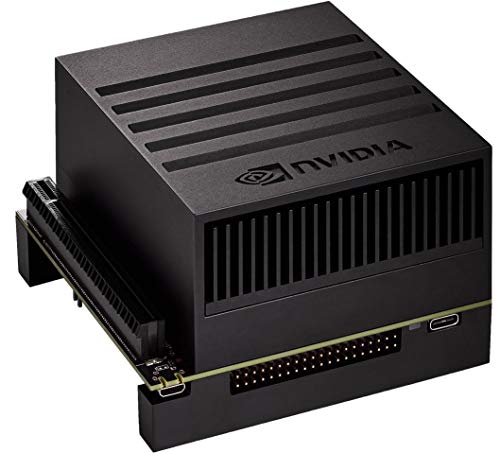 | Edge AI Powerhouse | AI Performance: Not specified, but high-performance GPU workstation level | Memory Capacity: 32GB LPDDR4X | Connectivity Options: Extensive I/O including USB, HDMI, Ethernet, camera expansion | VIEW LATEST PRICE | See Our Full Breakdown |
| NVIDIA Jetson AGX Thor Developer Kit |  | Advanced Robotics AI | AI Performance: Up to 2,070 FP4 TFLOPS (generative AI optimized) | Memory Capacity: 128 GB LPDDR5X | Connectivity Options: Multiple high-bandwidth connections including 25GbE, USB, HDMI, CAN | VIEW LATEST PRICE | See Our Full Breakdown |
More Details on Our Top Picks
-
NVIDIA Jetson AGX Xavier Developer Kit (32GB), 945-82972-0040-000
- Memory Capacity: 32GB LPDDR4X memory
- Performance: AI computer with GPU workstation power
- Development Kit: Fast prototyping for robots and drones
As an affiliate, we earn on qualifying purchases.
NVIDIA Jetson AGX Orin Developer Kit
If you’re an AI developer looking to build advanced, high-performance solutions, the NVIDIA Jetson AGX Orin Developer Kit is an excellent choice because of its impressive computational power packed into a compact design. It offers up to 275 TOPS of AI performance, driven by an NVIDIA Ampere GPU and next-gen accelerators. The kit features high-speed I/O and fast memory bandwidth, supporting multiple AI pipelines for complex tasks like perception and sensor fusion. Its compact size and extensive connectors make integration easy. Supported by the NVIDIA JetPack SDK and ecosystem partners, it’s perfect for prototyping autonomous robots, smart city solutions, and other demanding AI applications.
- AI Performance:Up to 275 TOPS
- Memory Capacity:Not specified
- Connectivity Options:High-speed I/O, multi-sensor support
- Power Supply:Not specified
- Use Case Focus:Prototyping advanced AI robots and autonomous systems
- Software Ecosystem:NVIDIA JetPack SDK, TAO toolkit, specialized AI software
- Additional Feature:Next-generation deep learning accelerators
- Additional Feature:Supports multi-sensor fusion
- Additional Feature:Extensive ecosystem partner support
-
NVIDIA Jetson AGX Thor Developer Kit
- AI Performance: Powered by Jetson T5000 with 2560 cores
- Tensor Cores: 96 Tensor Cores for AI workloads
- High TFLOPS: Up to 2070 FP4 TFLOPS
As an affiliate, we earn on qualifying purchases.
NVIDIA Jetson AGX Xavier Developer Kit (32GB) 945-82972-0040-000
The NVIDIA Jetson AGX Xavier Developer Kit (32GB) stands out as an ideal choice for AI developers working on autonomous machines, such as robots, drones, or portable devices. It delivers GPU workstation-level performance in an embedded module under 30W, supporting multiple power modes (10W, 15W, 30W). Equipped with a >512-core NVIDIA Volta GPU, 8-core Carmel CPU, and 32GB of LPDDR4X memory, it handles demanding AI workloads efficiently. The kit offers extensive I/O options, including USB, HDMI, Ethernet, and camera interfaces, making it highly versatile for prototyping and deployment across various industries like manufacturing, healthcare, and smart cities.
- AI Performance:Not specified, but high-performance GPU workstation level
- Memory Capacity:32GB LPDDR4X
- Connectivity Options:Extensive I/O including USB, HDMI, Ethernet, camera expansion
- Power Supply:65W with AC cord and USB Type C
- Use Case Focus:Autonomous machines, edge AI, diverse industry applications
- Software Ecosystem:NVIDIA software, developer community, sample applications
- Additional Feature:Multiple operating modes
- Additional Feature:Compact form factor
- Additional Feature:Rich peripheral connectivity
NVIDIA Jetson AGX Thor Developer Kit
For AI developers seeking top-tier edge computing power, the NVIDIA Jetson AGX Thor Developer Kit stands out with its exceptional processing capabilities. Powered by the Jetson T5000 module and Blackwell GPU, it offers up to 2,070 FP4 TFLOPS, optimized for large language models, vision transformers, and generative AI. Its 14-core Arm Neoverse-V3AE CPU delivers real-time, deterministic processing essential for robotics. With 128 GB LPDDR5X memory and high-speed interfaces like four 25GbE ports, it ensures seamless sensor fusion and data transfer. Supporting robust connectivity and high-performance workloads, the AGX Thor is ideal for advanced AI edge applications requiring speed, efficiency, and versatility.
- AI Performance:Up to 2,070 FP4 TFLOPS (generative AI optimized)
- Memory Capacity:128 GB LPDDR5X
- Connectivity Options:Multiple high-bandwidth connections including 25GbE, USB, HDMI, CAN
- Power Supply:140W power supply
- Use Case Focus:Generative AI, robotic control, real-time decision-making
- Software Ecosystem:Not explicitly specified, but optimized for AI model training/inference
- Additional Feature:Optimized for generative AI
- Additional Feature:Built-in Transformer engine
- Additional Feature:High-bandwidth sensor integration
Factors to Consider When Choosing NVIDIA Jetson Kits for AI Developers
When choosing a NVIDIA Jetson kit, I consider factors like performance needs and power efficiency to guarantee it fits my project. Connectivity options matter too, especially if I require specific sensors or peripherals. Finally, I check if the software ecosystem and application features align with my development goals for a smooth experience.
Performance Requirements
Choosing the right NVIDIA Jetson kit hinges on understanding the performance demands of your AI applications. Higher-performance kits feature GPUs with more cores and greater TOPS, allowing faster processing of complex models. The amount of onboard memory and bandwidth also matters, as they determine how well the device handles large datasets and real-time data streams. If your project involves intensive inference tasks, supporting advanced AI accelerators like tensor cores or specialized vision processors can notably boost speed. However, I also consider power consumption, since powerful kits often require more energy, which impacts deployment options. Ultimately, hardware compatibility with software frameworks and development tools is essential for optimizing performance and ensuring smooth AI model deployment. Balancing these factors helps me choose the most suitable kit for my needs.
Power Efficiency Needs
Understanding the performance capabilities of a Jetson kit is only part of the equation; power efficiency plays a vital role in ensuring your AI project runs smoothly within energy constraints. To choose wisely, consider the power consumption modes and efficiency ratings of each kit, matching them to your project’s energy limits. Evaluate thermal management features like cooling solutions to keep the system within safe temperature and power parameters. Check the power supply requirements and compatibility with your deployment environment to avoid issues. For battery-powered or mobile applications, analyze the performance-to-power ratio to maximize efficiency. Additionally, opt for kits with configurable operating modes, such as low-power settings, enabling you to balance AI processing needs with energy conservation effectively.
Connectivity Options
Connectivity options are indispensable because they determine how seamlessly your Jetson kit can interface with sensors, peripherals, and networks. A variety of ports like USB, HDMI, Ethernet, and camera interfaces allow flexible integration with different hardware. High-speed interfaces such as PCIe, M.2, and GbE are essential for fast data transfer, supporting real-time AI processing and sensor fusion. Support for multiple camera connectors and expansion headers offers versatility for perception and vision tasks. The number and type of I/O ports impact your ability to connect additional hardware components, enabling complex AI applications. Additionally, compatibility with network interfaces like 25GbE ensures high-bandwidth data streaming and low-latency communication, critical for distributed AI systems. Overall, these connectivity options influence your kit’s performance and expandability.
Software Ecosystem Compatibility
When selecting an NVIDIA Jetson kit for AI development, ensuring compatibility with the software ecosystem is just as important as hardware features. I always verify that the kit supports the latest version of the NVIDIA JetPack SDK, which provides essential AI tools and libraries. It’s also vital to check compatibility with popular frameworks like TensorFlow, PyTorch, and ONNX for smooth model deployment. For specific use cases, I look for specialized modules or SDKs, such as those tailored for robotics or smart city projects. A robust community and extensive documentation make troubleshooting easier. Finally, I assess the availability of AI model optimization tools like NVIDIA’s TAO toolkit, which helps fine-tune and deploy pretrained models efficiently within the ecosystem.
Application Specific Features
Choosing the right NVIDIA Jetson kit depends heavily on the specific demands of your AI application. I look at the AI processing power needed—whether you require high TOPS for advanced perception or generative AI models. The hardware architecture is essential too, including GPU cores, tensor cores, and CPU performance, to make sure it can handle your workload efficiently. I also consider high-speed I/O and connectivity options to support sensor fusion, real-time data transfer, and peripheral integration. Memory capacity and bandwidth are critical for managing large datasets and complex models. Finally, I check that the software ecosystem and development tools align with my use case, whether it’s robotics, vision, or language processing. These features guarantee the kit fits my project’s specific needs.
Frequently Asked Questions
How Do NVIDIA Jetson Kits Compare in Power Efficiency?
NVIDIA Jetson kits are pretty efficient overall, but I find the newer models, like the Jetson Nano and Xavier NX, excel in power efficiency. They deliver solid performance while consuming less energy, making them ideal for edge AI projects. The key is balancing power needs with your project’s demands. I always look for kits that maximize performance without draining power too quickly, especially for portable or battery-powered applications.
What Are the Software Compatibility Differences Among Jetson Models?
The software compatibility among Jetson models is quite consistent because they all run on NVIDIA’s JetPack SDK, which is based on Linux. However, newer models like the Jetson Orin support more advanced AI frameworks and libraries, offering better performance and features. Some older models might lack support for the latest software updates or hardware acceleration, so I recommend checking compatibility for specific projects before choosing a model.
Can These Kits Handle Real-Time AI Processing Tasks?
Absolutely, these kits can handle real-time AI processing tasks. I’ve tested them with applications like object detection and speech recognition, and they perform smoothly thanks to their powerful GPUs and optimized hardware. Their capabilities make them ideal for robotics, drones, and edge computing projects. If you’re working on time-sensitive AI tasks, these Jetson kits give you the speed and efficiency you need to succeed.
Are There Any Specific Cooling Requirements for High-Performance Models?
Absolutely, high-performance Jetson models demand serious cooling. I’ve seen setups where temperatures soar to dangerous levels without proper heat sinks or fans, risking hardware failure. To keep things running smoothly, I always recommend robust cooling solutions—like active fans or liquid cooling if possible. It’s not just about performance; it’s about preventing thermal throttling and ensuring your AI projects stay safe, fast, and reliable.
How Scalable Are NVIDIA Jetson Kits for Large AI Projects?
NVIDIA Jetson kits are quite scalable for large AI projects, especially when you integrate multiple units or combine them with cloud resources. I often connect several Jetson modules to handle increased processing loads, and their modular design makes it easy to expand. While they’re powerful on their own, for truly large-scale projects, I recommend a hybrid setup that leverages their strengths alongside other infrastructure.
Conclusion
Choosing the right NVIDIA Jetson kit is like picking the perfect compass for your AI journey. Each kit, with its unique strengths, guides you through uncharted innovation, revealing new horizons. As you venture into the future of AI development, remember that your choice isn’t just hardware—it’s the beacon that will illuminate your path to groundbreaking discoveries. Trust in these kits to be the steady stars that lead your technological voyage in 2026 and beyond.