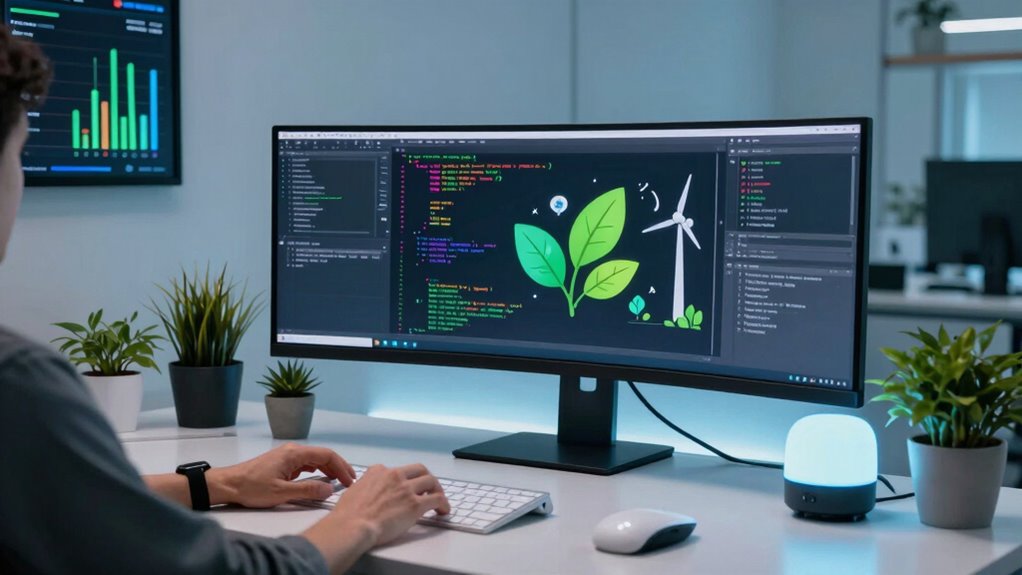

The new push for energy-efficient software development encourages you to create code that uses fewer resources, reducing energy consumption and operational costs. You’re guided to use optimized algorithms, minimize unnecessary processes, and consider the entire software lifecycle. By adopting energy-aware tools and designing for low-power devices, you help promote a more sustainable digital environment. Keep exploring how these practices can make your projects more efficient and environmentally friendly in the future.

Get business pricing on monitors, keyboards and dev gear
- Business-only prices and quantity discounts
- Tax-exempt purchasing
- Multiple users, one account, clear invoices
Key Takeaways
- Increasing awareness of environmental impact drives the adoption of energy-efficient coding practices across the industry.
- Developers now utilize tools to profile and optimize software for lower power consumption.
- Cloud providers promote sustainable infrastructure, encouraging developers to design resource-efficient applications.
- Emphasis shifts from performance speed to sustainability and resource conservation in software development.
- Educational initiatives and standards are emerging to embed green coding principles into daily programming practices.
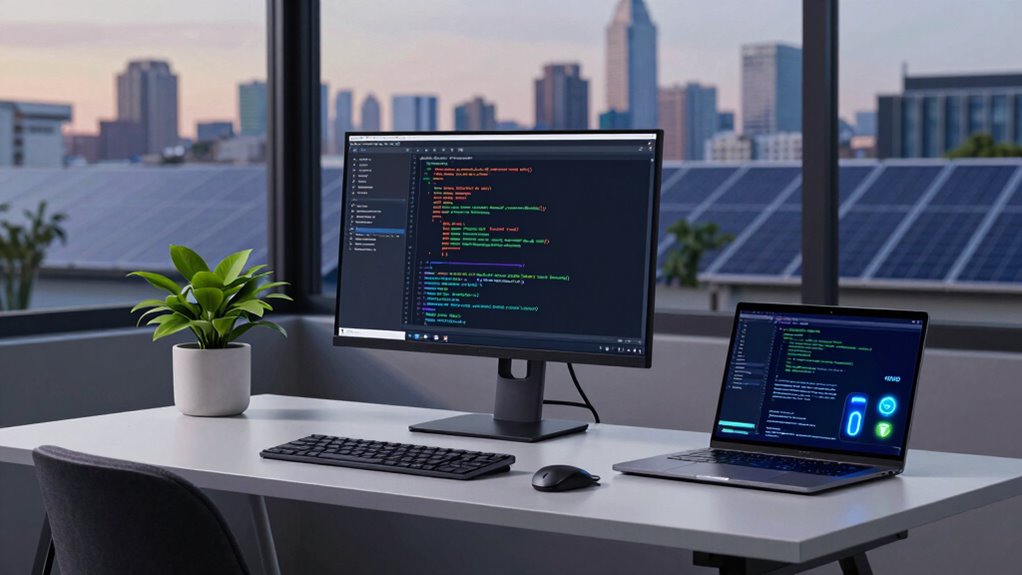
Have you ever considered how much energy your software consumes? In today’s digital world, the impact of software on energy use is more crucial than you might realize. As developers, you hold the power to reduce this footprint through green coding and sustainable programming practices. These approaches focus on creating efficient code that minimizes resource consumption, leading to less energy demand from data centers and devices. By adopting green coding principles, you can design software that accomplishes tasks with fewer instructions, optimized algorithms, and smarter data handling. This not only helps in reducing operational costs but also contributes to a healthier environment.
Efficient coding reduces energy use, cuts costs, and supports a healthier environment—every line of code counts toward sustainability.
Sustainable programming emphasizes writing code with the future in mind. It involves considering the entire lifecycle of your software, from development to deployment and maintenance. You can start by choosing energy-efficient algorithms that perform the same tasks with less computational effort. For example, replacing a resource-heavy sorting algorithm with a more efficient one can substantially cut energy consumption. Additionally, minimizing unnecessary processes and reducing the frequency of background tasks can lighten the load on servers and devices, further conserving energy. Incorporating natural pools and landscaping ideas can also inspire ways to design eco-friendly digital environments that align with sustainable principles. Recognizing the importance of resource efficiency in software development can guide your decisions toward more environmentally conscious practices.
Implementing these practices requires a mindset shift. Instead of prioritizing speed or feature richness alone, you focus on creating lean, optimized code. This often means profiling your applications to identify bottlenecks and refactoring inefficient parts. Using energy-aware programming tools and metrics can help you measure how much power your code consumes, guiding you toward more sustainable choices. For instance, some development environments now provide insights into the energy impact of specific functions, enabling you to make smarter decisions during the coding process.
Moreover, sustainable programming encourages developers to think about the hardware their software runs on. Writing software that is compatible with low-power devices or that can scale down resource use during periods of low demand can further reduce overall energy use. Cloud providers are increasingly offering greener infrastructure options, so choosing energy-efficient hosting can complement your coding efforts. These combined practices make your software not just functional but also environmentally responsible.
Ultimately, embracing green coding and sustainable programming isn’t just about compliance or corporate responsibility; it’s a practical approach to creating software that’s efficient and future-proof. As a developer, your choices can lead to substantial energy savings and lessen the strain on the planet’s resources. The push toward energy-efficient software development is gaining momentum, and your role in this movement is essential. By integrating these principles into your daily work, you help shape a more sustainable digital future—one line of code at a time. Exploring digital concepts and adopting sustainable practices are key to this transformation.
energy-efficient programming tools
As an affiliate, we earn on qualifying purchases.
As an affiliate, we earn on qualifying purchases.
Frequently Asked Questions
How Does Energy-Efficient Software Impact Overall System Performance?
Energy-efficient software can improve your overall system performance by optimizing hardware use and reducing resource waste. When you focus on hardware optimization, your system runs smoother, with less strain on components. This leads to faster response times and a better user experience. Although it might seem counterintuitive, efficient software can boost performance while saving energy, ensuring your system remains responsive and reliable without sacrificing speed or functionality.
Are There Specific Programming Languages Better for Energy Efficiency?
You’re on the right track, as some programming languages are inherently more energy-efficient. For example, languages like C and Rust typically have lower power consumption due to their closer hardware interactions and efficient coding optimization. On the other hand, higher-level languages like Python may consume more power. So, choosing the right language can considerably impact your system’s energy footprint, especially when you focus on optimizing your code for efficiency.
What Tools Can Developers Use to Measure Software Energy Consumption?
You can use tools like PowerTOP, Intel’s Power Gadget, or perf to measure your software’s energy consumption. These tools perform power profiling, giving you detailed energy metrics that reveal how your code impacts battery life and power use. By analyzing these metrics, you can optimize your code for better energy efficiency, making your software more sustainable and eco-friendly. Regularly measuring energy metrics helps you identify and fix energy-draining parts of your application.
How Does Energy-Efficient Coding Affect Software Security?
Energy-efficient coding can enhance security by encouraging cleaner, more optimized code, reducing vulnerabilities. When you focus on code optimization, you eliminate unnecessary processes that could be exploited, making your software less prone to security vulnerabilities. However, rushing for efficiency might sometimes cause you to overlook security best practices, so striking a balance is essential. Overall, mindful energy-efficient coding supports a more secure, resilient software environment.
What Are the Cost Implications of Adopting Energy-Efficient Development Practices?
Adopting energy-efficient development practices can initially increase costs due to training and new tools, but a thorough cost benefit analysis often reveals long-term savings. You’ll reduce energy consumption, lowering operational expenses and aligning with sustainability metrics. These practices can also enhance your company’s reputation, attract eco-conscious clients, and future-proof your software, ultimately making the investment worthwhile. Over time, the benefits outweigh the upfront costs, promoting both profitability and environmental responsibility.
software profiling for energy consumption
As an affiliate, we earn on qualifying purchases.
As an affiliate, we earn on qualifying purchases.
Conclusion
By embracing energy-efficient software development, you’re planting seeds for a greener future. Think of your code as a well-tuned engine, humming smoothly without wasting fuel. Every small optimization is like adding a drop of fuel-saving magic, helping the planet breathe easier. So, step up and be a catalyst for change—your innovative efforts can turn the digital landscape into a lush, sustainable garden where technology and nature thrive hand in hand.
low-power device development kits
As an affiliate, we earn on qualifying purchases.
As an affiliate, we earn on qualifying purchases.
green coding software development
As an affiliate, we earn on qualifying purchases.
As an affiliate, we earn on qualifying purchases.
Fall Picks
fall essentials
As an affiliate, we earn on qualifying purchases.