TL;DR
External SSDs for PS5 help expand storage and speed up load times, especially for PS4 games. They can’t run PS5 games directly but are essential for managing space. Knowing speed, capacity, and compatibility is crucial for the best experience.
If you’re tired of deleting games just to make room for new ones, or if load times are killing your vibe, external SSDs are your new best friend. They’re fast, portable, and can dramatically boost your storage capacity without opening up your PS5. But not all SSDs are created equal, and choosing the right one can seem overwhelming. This guide cuts through the noise, showing you what really matters — speed, capacity, and compatibility — so you can pick the perfect drive for your gaming setup.
Whether you’re a casual gamer or a pro, understanding how external SSDs fit into your PS5 experience can save you time, money, and frustration. Ready to upgrade? Let’s break down everything you need to know — with real-world examples, practical tips, and the latest tech insights.
External SSDs can significantly increase your PS5 storage and speed up game transfers.
Speed matters — look for drives with at least 550MB/s transfer rate to support PS5 storage needs.
External SSDs are great for PS4 games and backups, but PS5 games still require internal NVMe or supported external drives to run.
Modern drives like the Samsung T7 Shield and WD_BLACK P50 offer high speeds and capacities, making them top choices.
Proper setup — including formatting — is essential to ensure compatibility and performance.
Why External SSDs Are a Game-Changer for PS5 Storage
External SSDs are like a breath of fresh air for your PS5. They let you store dozens of PS4 games, backups, and even some PS5 titles, freeing up your internal drive. But beyond just expanding space, they significantly impact your gaming experience. Faster load times mean less waiting and more immersion, especially with titles that have large open worlds or frequent cutscenes. For example, transferring a game from your PC or another drive to an external SSD can be completed in minutes, not hours, thanks to high transfer speeds. This efficiency allows you to keep your library flexible and organized, without sacrificing performance or convenience.
However, it’s important to understand that these drives act as extensions of your storage, not as a replacement for the internal NVMe SSD. They do not support running PS5 games directly, which means you’ll need to transfer games back to the internal storage to play. This creates a tradeoff: external SSDs provide rapid access and transfer but don’t eliminate the internal drive’s role in high-speed gaming. Understanding this distinction helps set realistic expectations and ensures you choose a drive that aligns with your gaming habits and needs.

Seagate 2TB Game Drive for PlayStation | USB 3.0 (STLV2000101)
- Officially Licensed: Compatible with PS5 and PS4
- PS5 Ready: Store and transfer PS5 games
- PS4 Compatible: Play PS4 games directly
As an affiliate, we earn on qualifying purchases.
As an affiliate, we earn on qualifying purchases.
Key Features to Look for When Picking Your PS5 External SSD
Speed is crucial, but why? Drives with at least 550MB/s are recommended because anything slower can bottleneck your data transfer, leading to longer load times and frustrating delays when moving large game files. Choosing a faster drive means quicker game transfers, reduced waiting, and more time for gaming instead of waiting for data to load. For instance, a drive like the Samsung T7 Shield offers speeds up to 1050MB/s, which can cut transfer times in half compared to slower options, ensuring you spend less time waiting and more time playing.
The interface also matters. USB 3.2 Gen 2 and Thunderbolt 3/4 are not just about speed; they determine how efficiently data moves between your console and the drive. A high-quality interface reduces latency and prevents data bottlenecks, which is especially important when dealing with large files or multiple games. For example, the WD_BLACK P50 supports Thunderbolt 4, offering a significant bandwidth advantage that benefits demanding users who juggle large libraries or stream gameplay.
Capacity is more than just storage—it’s about your gaming habits. A 1TB drive might suffice for casual players, but if you prefer to keep dozens of games installed or frequently swap titles, a 2TB or larger drive becomes more practical. This reduces the need to constantly delete games and allows for a more seamless gaming experience. Remember, higher capacity drives tend to be more expensive, but they offer better long-term flexibility, especially as your game library grows.
Size and durability are also key. A portable, rugged drive like the Crucial X8 can withstand transport and rough handling, making it ideal for gamers on the go. This ensures your investment lasts longer and stays protected, even if you’re traveling or commuting frequently. Balancing speed, capacity, and portability allows you to select a drive that fits both your gaming needs and lifestyle, ensuring consistent performance wherever you play.
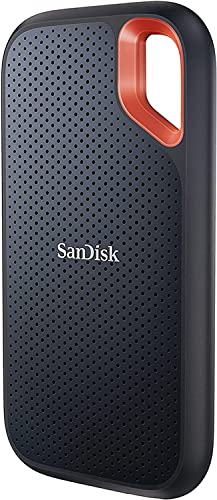
SANDISK 2TB Extreme Portable SSD (Old Model) – Up to 1050MB/s, USB-C, USB 3.2 Gen 2, IP65 Water and Dust Resistance, Updated Firmware – External Solid State Drive – SDSSDE61-2T00-G25
- High-Speed NVMe Performance: Up to 1050MB/s read, 1000MB/s write
- Durable and Water-Resistant: IP65 rated, 3-meter drop protection
- Portable and Secure: Includes carabiner loop for easy attachment
As an affiliate, we earn on qualifying purchases.
As an affiliate, we earn on qualifying purchases.
Understanding Compatibility and Future-Proofing
Compatibility isn’t just about plugging in a drive; it’s about ensuring the drive meets the specific requirements of your PS5 and future updates. Sony’s specifications emphasize a minimum transfer speed of 550MB/s, but as games and updates become more demanding, having a drive that exceeds this minimum provides a buffer for future titles. Additionally, the physical connection type—USB-C versus USB-A—affects data transfer efficiency and convenience, especially with newer consoles supporting faster USB-C ports.
Beyond the technical specs, consider the drive’s firmware and software support. Some drives receive regular firmware updates that improve compatibility, speed, and reliability. Also, check if the drive’s manufacturer offers tools for easy formatting and diagnostics, which can save you time and prevent issues down the line.
Tradeoffs exist between speed, capacity, and cost. High-capacity drives with blazing speeds tend to be more expensive, so balance your needs based on your gaming habits. For example, if you primarily play PS4 titles, a less expensive drive with slightly lower speeds might suffice. But if you plan to store and transfer large PS5 games frequently, investing in a faster, higher-capacity drive is wise. Future-proofing your setup means investing in drives that can handle upcoming game sizes and software updates without needing an upgrade soon.
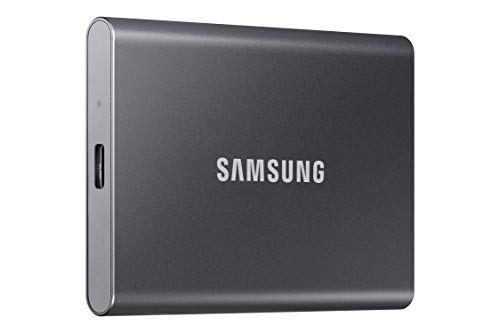
Samsung T7 Portable SSD 2TB Titan Gray, USB 3.2 Gen 2, Up to 1,050MB/s
- Designed for Creators: Fast speeds and durable for all tasks
- Rapid Data Transfer: Up to 1,050MB/s read/write speeds
- High Capacity Storage: Up to 4TB for large files and games
As an affiliate, we earn on qualifying purchases.
As an affiliate, we earn on qualifying purchases.
Frequently Asked Questions
Can I play PS5 games directly from an external SSD?
No. PS5 games need to be stored on the internal NVMe SSD or an officially supported internal drive to run. External SSDs are mainly for PS4 games and backups. You can transfer PS5 games back to internal storage for play.
What’s the fastest external SSD I can get for PS5?
Currently, drives like the Samsung T7 Shield and Crucial X8 reach speeds up to 1050MB/s, which meet or exceed Sony’s recommended minimum. Check the latest models for updates, but these are among the top options in 2024.
Will using an external SSD improve load times for PS5 games?
No, PS5 games require the internal NVMe SSD for the best load times. External SSDs mainly help with storage capacity and transferring files faster, not with game performance.
How do I format my external SSD for PS5?
Connect the drive to your PS5, go to Settings > Storage > External Storage, and select Format as Extended Storage. Be aware this erases existing data, so back up beforehand.
Are all external SSDs compatible with PS5?
No, only drives with at least 550MB/s transfer speed and proper formatting are compatible. Always check Sony’s compatibility list for supported models before purchasing.
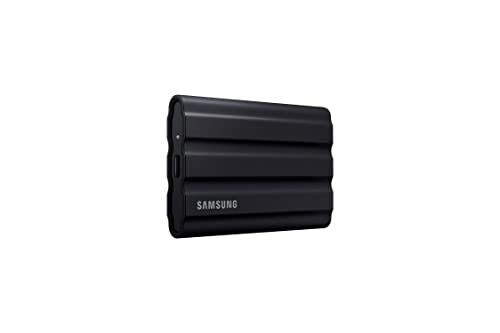
Samsung T7 Shield Portable SSD 2TB, USB 3.2 Gen 2, Up to 1,050 MB/s
- Durable Design: Water, dust, and drop resistant
- High-Speed Transfer: Up to 1,050 MB/s read speed
- Universal Compatibility: Works with PC, Mac, Android, consoles
As an affiliate, we earn on qualifying purchases.
As an affiliate, we earn on qualifying purchases.
Conclusion
Adding an external SSD transforms your PS5 experience — more space, faster transfers, less frustration. Just remember, it’s a storage extension, not a replacement for the internal NVMe for PS5 games.
Pick the right drive, set it up properly, and enjoy your expanded gaming universe. Your console’s new best friend is just a USB port away — ready to keep your games flowing.