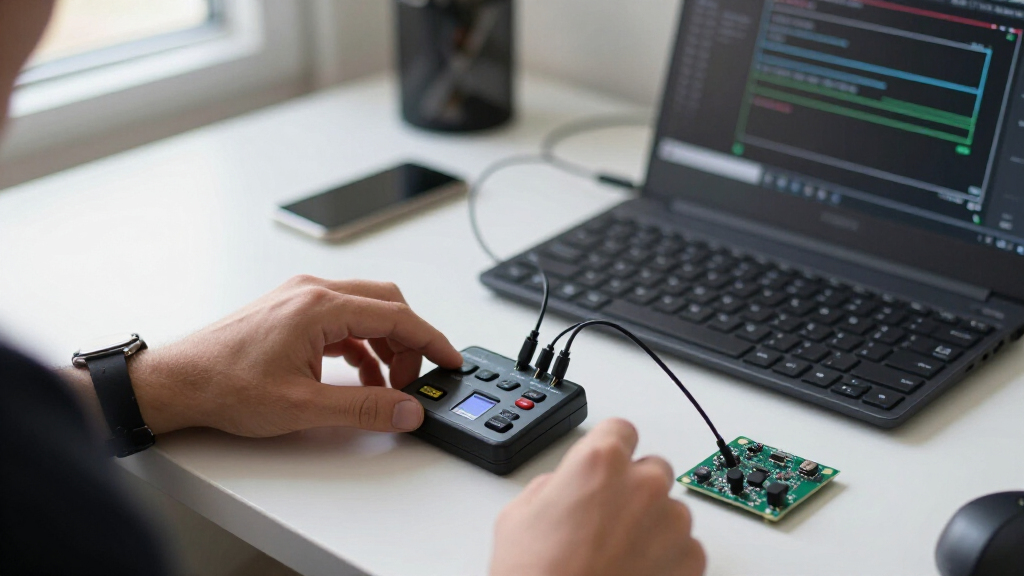
USB logic analyzers are essential tools for debugging digital signals and communication protocols. The best options balance high sample rates, multiple channels, and user-friendly interfaces. The Saleae Logic Pro stands out as the overall top pick thanks to its reliability and software ecosystem, while the innomaker LA1010 offers impressive performance for a lower price. Other standout choices include models with higher channel counts and faster sampling, but these often come with increased complexity or cost. Continue reading for a detailed breakdown to find the right fit for your needs.

Get business pricing on monitors, keyboards and dev gear
- Business-only prices and quantity discounts
- Tax-exempt purchasing
- Multiple users, one account, clear invoices
Key Takeaways
- Higher channel counts and faster sampling rates generally lead to better performance but increase complexity and cost.
- User interface and software support are critical for efficient debugging, especially for beginners.
- Budget options can be suitable for simple tasks but may lack the robustness needed for professional work.
- More advanced models with higher speeds are better suited for high-speed protocol analysis like USB 3.0 or PCIe.
- Tradeoffs often involve balancing versatility, ease of use, and price—understanding your specific needs is key.
| HiLetgo 8-Channel USB Logic Analyzer, 24 MHz |  | Best for Basic Bus Debugging | Channels: 8 | Maximum sampling rate: 24 MHz | Supported protocols: UART, I²C, SPI | VIEW LATEST PRICE | See Our Full Breakdown |
| DreamSourceLab DSLogic U3Pro16 16-Channel USB Logic Analyzer |  | Best for High-Speed Capture | Channels: 16 digital channels | Maximum sampling rate: Up to 1 GHz | Onboard memory: 2 Gbits DDR3 | VIEW LATEST PRICE | See Our Full Breakdown |
| DSLogic Plus 16-Channel USB Logic Analyzer |  | Best Balance of Capture Modes and Portability | Channels: 16 | Sampling rate, buffer mode: Up to 400 MHz | Sampling rate, stream mode: Up to 100 MHz | VIEW LATEST PRICE | See Our Full Breakdown |
| innomaker LA1010 16-Channel USB Logic Analyzer, 100 MHz |  | Best for Straightforward 16-Channel Protocol Work | Input channels: 16 | Sampling rate: 100 MHz per channel | Supported protocols: More than 30, including I²C, SPI, UART, and CAN | VIEW LATEST PRICE | See Our Full Breakdown |
| KeeYees 24 MHz 8-Channel USB Logic Analyzer with Test Clips |  | Best Accessory Kit for Budget Bus Debugging | Channels: 8 | Frequency: 24 MHz | Connector: USB Type-A | VIEW LATEST PRICE | See Our Full Breakdown |
| Saleae Logic Pro 8-Channel Logic Analyzer, Black |  | Best Overall Multi-purpose USB Logic Analyzer | Channels: 8 digital/analog inputs | Digital sample rate: Up to 500 MS/s | Analog sample rate: Up to 50 MS/s | VIEW LATEST PRICE | See Our Full Breakdown |
| DreamSourceLab DSLogic U3Pro32 32-Channel USB Logic Analyzer | 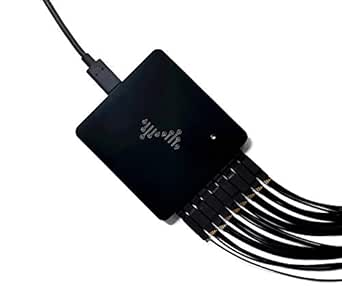 | Best for High-Channel Count and Deep Protocol Support | Channels: 32 | Maximum sampling rate: 1 GHz | Onboard memory: 2 Gbits DDR3 | VIEW LATEST PRICE | See Our Full Breakdown |
| Comidox USB Logic Analyzer, 24 MHz, 8-Channel |  | Best Budget-Friendly Entry-Level Analyzer | Channels: 8 | Maximum sampling rate: 24 MHz | Input voltage compatibility: 5 V, 3.3 V, 2.5 V, 2.0 V | VIEW LATEST PRICE | See Our Full Breakdown |
| InnoMaker LA5032 32-Channel USB Logic Analyzer |  | Best for High-Channel, Multi-Protocol Analysis with Deep Memory | Channels: 32 | Maximum sampling rate: 500 MHz | Glitch detection: 6.25 ns | VIEW LATEST PRICE | See Our Full Breakdown |
| DSLogic Plus 16-Channel USB Logic Analyzer |  | Best for Balanced Performance and Portability | Channels: 16 | Maximum sampling rate: 400 MHz | Onboard memory: 256 Mbits | VIEW LATEST PRICE | See Our Full Breakdown |
| ALIENTEK DL16 Plus USB Logic Analyzer, 16 Channels, 500 MHz Sample Rate |  | Best Overall for Protocol Support and Platform Compatibility | Maximum sample rate: 500 MHz | Channels: 16 | Memory: 3.5 Gbits (claimed), conflicting info about 1G hardware depth | VIEW LATEST PRICE | See Our Full Breakdown |
| BINGOX 16-Channel USB Logic Analyzer, 400 MHz |  | Best for Versatile Digital Signal Capture and Protocol Analysis | Channels: 16 | Maximum sampling rate: 400 MHz at 4 channels | Hardware memory: 256 Mbits | VIEW LATEST PRICE | See Our Full Breakdown |
| LONELY BINARY 8-Channel 24 MHz USB Logic Analyzer Kit |  | Best for Basic Protocol Debugging and Educational Use | Channels: 8 | Maximum sampling rate: 24 MHz | Included accessories: Breakout board, breadboard adapter, test clips, alligator clips | VIEW LATEST PRICE | See Our Full Breakdown |
| Innomaker LA2016 16-Channel USB Logic Analyzer, 200 MHz |  | Best for Protocol Diversity and Portable Debugging | Channels: 16 | Maximum sampling rate: 200 MHz | Memory: 1 Gbit | VIEW LATEST PRICE | See Our Full Breakdown |
| USB logic analyzer | Channels | Maximum sampling rate |
|---|---|---|
| HiLetgo 8-Channel USB Logic An | 8 | 24 MHz |
| DreamSourceLab DSLogic U3Pro16 | 16 digital channels | Up to 1 GHz |
| DSLogic Plus 16-Channel USB Lo | 16 | — |
| innomaker LA1010 16-Channel US | — | — |
| KeeYees 24 MHz 8-Channel USB L | 8 | — |
| Saleae Logic Pro 8-Channel Log | 8 digital/analog inputs | — |
| DreamSourceLab DSLogic U3Pro32 | 32 | 1 GHz |
| Comidox USB Logic Analyzer | 8 | 24 MHz |
| InnoMaker LA5032 32-Channel US | 32 | 500 MHz |
| DSLogic Plus 16-Channel USB Lo | 16 | 400 MHz |
| ALIENTEK DL16 Plus USB Logic A | 16 | — |
| BINGOX 16-Channel USB Logic An | 16 | 400 MHz at 4 channels |
| LONELY BINARY 8-Channel 24 MHz | 8 | 24 MHz |
| Innomaker LA2016 16-Channel US | 16 | 200 MHz |
More Details on Our Top Picks
HiLetgo 8-Channel USB Logic Analyzer, 24 MHz
The HiLetgo suits embedded projects where eight channels and familiar serial buses matter more than high-speed capture. Its 24 MHz ceiling is enough for many UART, I²C, and SPI checks, while support for common 2.0 V to 5 V logic levels makes it a straightforward fit for many microcontroller boards. Compared with the KeeYees 24 MHz 8-Channel, it has more clearly specified input thresholds and impedance; KeeYees instead lists a wider set of protocols and includes multiple test hooks. The main tradeoff is limited headroom: neither this unit’s sampling rate nor its channel count approaches the DSLogic Plus. Also, 1.8 V systems are not recommended, and the supplied data does not identify software or operating-system compatibility, so buyers should confirm their workflow before choosing it.
Pros:- Eight channels can capture several related digital signals at once.
- Supports sampling up to 24 MHz for routine bus debugging.
- Input levels cover common 2.0 V to 5 V systems.
- USB and Dupont cables are included.
Cons:- 1.8 V logic compatibility is not recommended.
- Software and operating-system compatibility are not specified.
- The 24 MHz ceiling is modest beside the DSLogic Plus and higher-speed options.
Best for: Hobbyists debugging UART, I²C, or SPI on 2.0 V to 5 V boards who want a basic eight-channel USB capture tool.
Not ideal for: Engineers working with 1.8 V logic, fast buses, or software workflows that require confirmed operating-system support.
- Channels:8
- Maximum sampling rate:24 MHz
- Supported protocols:UART, I²C, SPI
- Input voltage range:-0.5 V to 5.25 V
- Input impedance:1 MΩ || 10 pF (typical)
- Connectivity:USB Type-A
- Included accessories:USB cable, Dupont cable
Our verdict“Choose the HiLetgo for basic eight-channel debugging on common logic levels, but look to a faster analyzer for demanding timing work.”
DreamSourceLab DSLogic U3Pro16 16-Channel USB Logic Analyzer
The DSLogic U3Pro16 is the speed-focused choice here: it pairs 16 digital channels with sampling up to 1 GHz, plus stream and buffer modes for different capture jobs. That flexibility matters when a short, fast event needs buffer capture or a longer session calls for streaming; the stream mode can reach up to 16G samples, with its maximum rate falling as more channels are active. Compared with the DSLogic Plus, this model offers substantially higher peak sampling rates and more onboard memory, while the Plus is a lighter, lower-bandwidth option with USB 2.0. The tradeoff is that the headline rate is conditional: 1 GHz stream capture uses three channels, and 1 GHz buffer capture uses eight. Buyers should also account for the listed one-pound weight and choose settings around their channel needs.
Pros:- Sampling rates reach up to 1 GHz in supported configurations.
- Stream and buffer modes serve long captures and high-speed events.
- Onboard 2 Gbits of DDR3 memory.
- DSView software supports Windows, macOS, and Linux and includes protocol decoders.
Cons:- Maximum sampling rate drops as more channels are used.
- 1 GHz buffer capture is limited to eight channels.
- At one pound, it is heavier than the DSLogic Plus.
Best for: Hardware developers diagnosing fast digital interfaces who need high sample rates, long streaming captures, and Windows, macOS, or Linux support.
Not ideal for: Beginners who need an uncomplicated low-speed tool, or users who expect 1 GHz sampling across all 16 channels.
- Channels:16 digital channels
- Maximum sampling rate:Up to 1 GHz
- Onboard memory:2 Gbits DDR3
- Interface:USB 3.0 Type-C
- Stream mode sample depth:Up to 16G samples
- Stream mode rates:1 GHz at 3 channels; 500 MHz at 6; 250 MHz at 12; 125 MHz at 16
- Buffer mode rates:1 GHz at 8 channels; 500 MHz at 16
- Software compatibility:Windows, macOS, Linux
Our verdict“Pick the U3Pro16 when high-speed capture and flexible acquisition modes matter more than maintaining peak rates on every channel.”
DSLogic Plus 16-Channel USB Logic Analyzer
The DSLogic Plus hits a useful middle ground for buyers who want 16 channels and two capture modes without stepping up to the U3Pro16’s demanding high-speed profile. Buffer mode reaches 400 MHz, while stream mode supports rates up to 100 MHz and depths up to 16G, so it can handle both quick timing checks and longer recordings. Its Windows, macOS, and Linux support and nearly 100 protocol decoders add practical value for mixed development setups. Compared with the innomaker LA1010, it offers faster buffered sampling and a much deeper stated stream capture; the LA1010 instead specifies 100 MHz per channel and more than 30 protocols. The tradeoff is that the Plus’s 400 MHz peak is a buffer-mode figure, not its streaming rate, and the maximum rate varies with active channel count.
Pros:- Offers buffer and real-time streaming modes.
- Buffer sampling reaches up to 400 MHz.
- Stream depth reaches up to 16G samples.
- Cross-platform software and nearly 100 protocol decoders support varied debugging tasks.
Cons:- The 16G depth applies to stream mode, not buffer mode.
- Maximum sampling rate varies with the number of active channels.
- USB 2.0 interface and 256 Mbits of onboard SDRAM distinguish it from the faster U3Pro16.
Best for: Embedded developers who want 16-channel coverage, cross-platform software, and both deep streaming and faster buffered captures.
Not ideal for: Users who need the U3Pro16’s higher peak rates, or who expect 400 MHz sampling during long stream captures.
- Channels:16
- Sampling rate, buffer mode:Up to 400 MHz
- Sampling rate, stream mode:Up to 100 MHz
- Sampling depth, stream mode:Up to 16G samples
- Sampling depth, buffer mode:Up to 256M samples
- Onboard memory:256 Mbits SDRAM
- Interface:USB 2.0 Type-C
- Operating systems:Windows, macOS, Linux
Our verdict“Choose the DSLogic Plus for versatile 16-channel work when deep streaming and moderate high-speed buffer capture matter more than the U3Pro16’s peak performance.”
innomaker LA1010 16-Channel USB Logic Analyzer, 100 MHz
The LA1010 prioritizes a clear, practical specification: 16 channels at 100 MHz per channel, with KingstVIS software for waveform viewing and decoding more than 30 protocols. That makes it easier to match against routine multi-signal debugging than products whose advertised peak rates change substantially with the active channel count. Compared with the DSLogic Plus, the LA1010 has a lower stated sampling rate and fewer protocol decoders, but its per-channel rate is explicitly stated and may be simpler to plan around. It also works with Windows, macOS, and Linux and uses just 0.5 watts. The tradeoff is that the analyzer depends on a computer and software for display and analysis; it is not a standalone instrument. Buyers seeking deep streaming captures or higher buffer rates should favor the DSLogic Plus instead.
Pros:- Captures 16 digital input channels simultaneously.
- Specifies 100 MHz per channel.
- Decodes more than 30 protocols, including I²C, SPI, UART, and CAN.
- Supports Windows, macOS, and Linux with 0.5-watt power consumption.
Cons:- Requires a computer and software to display and analyze waveforms.
- Its 100 MHz rate is lower than the DSLogic Plus buffer-mode maximum.
- The supplied specifications do not state capture depth.
Best for: Embedded developers who need to monitor 16 digital signals at a stated 100 MHz per channel and decode common protocols across major desktop operating systems.
Not ideal for: Engineers who need high-speed buffer capture, deep streaming, or an analyzer that operates without a computer.
- Input channels:16
- Sampling rate:100 MHz per channel
- Supported protocols:More than 30, including I²C, SPI, UART, and CAN
- Computer interface:USB 2.0
- Compatible operating systems:Windows, macOS, Linux
- Power consumption:0.5 watts
- Weight:0.28 kg
Our verdict“The LA1010 fits buyers who value a stated per-channel rate and broad protocol decoding over the higher peak speeds and capture options of the DSLogic Plus.”
KeeYees 24 MHz 8-Channel USB Logic Analyzer with Test Clips
The KeeYees makes its case through a practical bundle: eight channels at 24 MHz, support for common serial protocols, and 12 test hook clips in six colors. Those clips can help keep channel connections organized while probing a small board, and stated compatibility with open-source software such as sigrok gives software-focused hobbyists a possible route to protocol analysis. Compared with the HiLetgo 8-Channel, KeeYees lists more protocols—including RS232 and 1-Wire—and supplies multiple hooks; HiLetgo provides more detailed electrical input specifications. Both are entry-level 24 MHz options, so neither suits demanding high-speed capture or projects needing more than eight channels. KeeYees also requires compatible software for analysis, and its stated 5 V maximum calls for care when connecting to higher-voltage signals.
Pros:- Includes 12 test hook clips in six colors.
- Supports UART, IIC, SPI, RS232, and 1-Wire debugging.
- Compatible with open-source software such as sigrok.
- Eight channels and 24 MHz sampling suit basic serial-bus work.
Cons:- Limited to eight channels and 24 MHz.
- Requires compatible software for protocol analysis.
- Maximum voltage is specified as 5 V, limiting use with higher-voltage signals.
Best for: Hobbyists debugging UART, IIC, SPI, RS232, or 1-Wire who want a bundle of color-coded test hooks and are comfortable setting up compatible software.
Not ideal for: Developers needing more than eight channels, higher sampling rates, or clearly specified electrical thresholds for a particular target system.
- Channels:8
- Frequency:24 MHz
- Connector:USB Type-A
- Maximum voltage:5 V
- Supported protocols:UART, IIC, SPI, RS232, 1-Wire
- Included test hooks:12 clips in six colors
- Included cable:USB cable
Our verdict“Choose the KeeYees for an entry-level eight-channel kit with useful test clips and broad listed protocol support, provided its software and voltage limits fit your setup.”
Saleae Logic Pro 8-Channel Logic Analyzer, Black
The Saleae Logic Pro stands out for its versatile support of eight digital and analog inputs, making it suitable for a wide range of debugging tasks. Its high digital sampling rate of up to 500 MS/s and 50 MS/s for analog signals allow for precise analysis, comparable to more specialized options like the InnoMaker LA5032. The software compatibility across Windows, Mac, and Linux enhances its appeal, though its sample capacity depends heavily on the connected PC’s memory, which can limit long captures. This tradeoff favors users who prioritize usability and protocol decoding over raw onboard memory. Compared with the DSLogic U3Pro32, it offers easier setup but less onboard storage. It makes the most sense for professionals needing quick, reliable protocol decoding with cross-platform support.
Pros:- Supports eight digital and analog inputs for versatile testing
- Decodes over 23 protocols including SPI and I2C
- High digital sample rate of up to 500 MS/s
Cons:- Sample capacity depends on PC memory, limiting long captures
- Lacks onboard storage for standalone operation
Best for: Electronics engineers and developers requiring a versatile, high-speed analyzer with broad protocol support and cross-platform compatibility.
Not ideal for: Hobbyists or students who need a budget-friendly, simple device with onboard storage for long-term data collection.
- Channels:8 digital/analog inputs
- Digital sample rate:Up to 500 MS/s
- Analog sample rate:Up to 50 MS/s
- Protocol analyzers:SPI, I2C, and 23+ more
- Compatible devices:Windows, Mac, Linux
- Connection:USB 3.0
Our verdict“This analyzer is best suited for professionals who need a flexible, high-speed protocol decoder compatible with multiple operating systems.”
DreamSourceLab DSLogic U3Pro32 32-Channel USB Logic Analyzer
The DSLogic U3Pro32 offers a substantial upgrade in channel count with 32 digital inputs, making it ideal for complex systems that demand simultaneous monitoring. Its maximum sampling rate of 1 GHz, supported by onboard DDR3 memory, surpasses most other analyzers like the Saleae Logic Pro, especially when capturing many channels. The device supports both stream and buffer modes, providing flexibility for different debugging scenarios. However, the maximum sampling rate varies with the number of active channels, a tradeoff that can affect performance during multi-channel captures. Its software, DSView, runs seamlessly across Windows, macOS, and Linux, similar to the Logic Pro, but the reliance on real-time data transfer may introduce latency in some cases. This makes it well-suited for high-speed, multi-channel analysis where onboard storage is less critical.
Pros:- Supports up to 1 GHz sampling for high-speed analysis
- Offers both stream and buffer capture modes with flexible sampling
- Includes nearly 100 protocol decoders for comprehensive analysis
Cons:- Maximum sampling rate depends on the number of active channels
- Stream mode transfers data to PC memory in real time, which may introduce latency
Best for: Advanced developers and engineers working on multi-channel digital systems requiring high-speed, multi-protocol analysis with large onboard memory.
Not ideal for: Casual hobbyists who need a simple, low-cost solution with fewer channels or lower sampling speeds.
- Channels:32
- Maximum sampling rate:1 GHz
- Onboard memory:2 Gbits DDR3
- Maximum stream sample depth:16 G samples
- Software:DSView
- Compatibility:Windows, macOS, Linux
Our verdict“Ideal for high-end applications where multi-channel, high-speed data capture and extensive protocol decoding are priorities.”
Comidox USB Logic Analyzer, 24 MHz, 8-Channel
The Comidox USB Logic Analyzer provides a straightforward solution for basic digital analysis, supporting up to eight channels at 24 MHz. Its compatibility with Saleae Logic and PulseView software makes it accessible for beginners and hobbyists. While its lower sampling rate limits detailed analysis of high-speed signals, it covers common protocols like UART, SPI, and I2C effectively. The device supports input voltages up to 5 V, making it suitable for typical electronics projects, but its performance may struggle with lower-voltage or faster signals. Its simplicity and low cost are attractive, though users need to have a good understanding of electronics to interpret the data correctly without onboard decoding or advanced features. It’s best for entry-level debugging rather than professional-grade analysis.
Pros:- Supports up to 8 channels at 24 MHz sampling
- Compatible with Saleae Logic and PulseView software
- Includes test clips and multiple wires for immediate setup
Cons:- Limited to 24 MHz sampling speed, unsuitable for high-speed signals
- Not recommended for low-voltage or fast digital signals
Best for: Electronics hobbyists and students starting to learn digital protocol analysis with a limited budget.
Not ideal for: Professionals or advanced developers needing higher sampling speeds and more channels for complex debugging.
- Channels:8
- Maximum sampling rate:24 MHz
- Input voltage compatibility:5 V, 3.3 V, 2.5 V, 2.0 V
- Supported protocols:UART, SPI, I2C
- Software compatibility:Saleae Logic, PulseView
- Included items:Analyzer, USB cable, Dupont wires
Our verdict“A practical choice for beginners needing a low-cost, easy-to-use analyzer for basic digital protocols.”
InnoMaker LA5032 32-Channel USB Logic Analyzer
The InnoMaker LA5032 excels in handling extensive digital systems with 32 synchronous channels, supporting signals up to 500 MHz. Its deep memory with 10 billion samples per channel allows for long-duration captures, surpassing many competitors like the DSLogic U3Pro32. Its protocol decoding suite includes over 20 standards, such as MIPI DSI LP, I2C, SPI, UART, CAN, and JTAG, making it suitable for complex embedded projects. The integrated PWM generator adds further versatility. The device’s wired setup and the need for external probes might be less convenient than portable, standalone options, but it compensates with high throughput and protocol support. The somewhat unclear hardware memory specifications could be clearer, but overall, this device is designed for intensive debugging tasks where channel count and protocol support matter most.
Pros:- Handles 32 channels simultaneously at up to 500 MHz
- Decodes over 20 protocols including MIPI DSI LP and CAN
- Includes a PWM generator and comprehensive connection accessories
Cons:- Requires wired connection, reducing portability
- Some specifications like sample depth and memory could be more transparent
Best for: Embedded system developers and hardware engineers working on high-channel-count, multi-protocol projects requiring deep memory and advanced features.
Not ideal for: Hobbyists or students seeking a portable, plug-and-play device with no need for extensive protocol decoding or high-speed performance.
- Channels:32
- Maximum sampling rate:500 MHz
- Glitch detection:6.25 ns
- Sample depth:10G samples per channel
- Hardware memory:5 Gbit
- Protocol decoding:20+ protocols
Our verdict“Best suited for complex, high-speed debugging of multi-channel digital systems with demanding protocol analysis needs.”
DSLogic Plus 16-Channel USB Logic Analyzer
The DSLogic Plus offers a solid middle ground with 16 channels and a maximum sampling rate of 400 MHz, making it suitable for a wide range of debugging tasks. Its support for both stream and buffer modes provides flexibility, similar to the Saleae Logic Pro, though its 256 Mbits onboard memory is more limited than high-end models like the InnoMaker LA5032. Its included shielded fly wires and aluminum case add durability and ease of use, especially in portable setups. The software, DSView, ensures broad compatibility, but the varying maximum sampling rate depending on the number of channels may require some planning. This device strikes a balance between performance and portability, ideal for developers who need reliable, versatile analysis without the complexity of ultra-high-speed or multi-protocol systems.
Pros:- Supports up to 400 MHz sampling for effective analysis
- Offers both stream and buffer modes for flexibility
- Includes durable shielded fly wires and an aluminum case
Cons:- Maximum sampling rate decreases with more channels active
- Requires DSView software, which may add setup time
Best for: Developers and engineers needing a portable, reliable, multi-channel analyzer with decent speed for general debugging.
Not ideal for: High-speed, multi-protocol applications or systems requiring more than 16 channels simultaneously.
- Channels:16
- Maximum sampling rate:400 MHz
- Onboard memory:256 Mbits
- Stream mode sample depth:Up to 16 G samples
- Compatibility:Windows, macOS, Linux
- Software:DSView
Our verdict“A well-rounded choice for portable, mid-range digital debugging with balanced speed and channel count.”
ALIENTEK DL16 Plus USB Logic Analyzer, 16 Channels, 500 MHz Sample Rate
The ALIENTEK DL16 Plus stands out for its extensive protocol decoding—supporting over 120 protocols—making it ideal for complex digital analysis tasks. Its all-metal CNC enclosure adds durability, and the inclusion of both large and small test hooks enhances versatility. Compared to the Innomaker LA2016, which emphasizes protocol diversity but has a lower sample rate, the DL16 Plus offers a higher sampling speed and broader software compatibility across Windows, Mac, and Ubuntu. However, the conflicting memory specifications—3.5 Gbits versus a 1G hardware depth—raise questions about actual storage capabilities. This model is best suited for professionals needing comprehensive protocol decoding and robust hardware, but the ambiguous memory specs might be a concern for long, high-speed captures.
Pros:- Supports over 120 protocol decoders, enabling wide-ranging analysis
- Compatible with Windows, Ubuntu, and Mac for flexible use
- Multiple trigger and acquisition modes for complex testing
- All-metal CNC enclosure enhances durability
Cons:- Conflicting memory specifications create uncertainty about actual storage capacity
- Relatively large size may be less portable
Best for: Embedded developers and digital circuit testers who need broad protocol support and cross-platform flexibility.
Not ideal for: Hobbyists with limited budgets or those primarily analyzing simple signals, as the device may be more feature-rich than necessary.
- Maximum sample rate:500 MHz
- Channels:16
- Memory:3.5 Gbits (claimed), conflicting info about 1G hardware depth
- Interface:USB 2.0
- Protocol support:Over 120 protocols
- Supported platforms:Windows, Ubuntu, Mac
Our verdict“This analyzer suits professional users requiring extensive protocol decoding and cross-platform support, despite some ambiguity in memory specs.”
BINGOX 16-Channel USB Logic Analyzer, 400 MHz
The BINGOX 16-Channel USB Logic Analyzer offers a flexible approach with variable sampling rates—up to 400 MHz in buffer mode and 100 MHz in stream mode—making it suitable for detailed embedded debugging. Its support for multiple digital protocols and compatibility with Windows, macOS, and Linux make it a versatile choice. Compared to the ALIENTEK DL16 Plus, which boasts higher protocol support and a more durable enclosure, the BINGOX emphasizes speed flexibility and broad OS compatibility. Its maximum sampling rate is dependent on channel count and mode, which could limit performance in some scenarios. This device makes the most sense for users who need adaptable sampling and protocol support across different operating systems, though the varied dimensions listed can cause some confusion about its exact size.
Pros:- Supports multiple sampling rates tailored to channel count and mode
- Compatible with Windows, macOS, and Linux for cross-platform use
- Includes shielded wires, test hooks, and USB-C connectivity for convenience
Cons:- Sampling rate varies with channel count and mode, potentially limiting speed in some setups
- Dimensions listed differ between product descriptions, which might cause sizing uncertainties
Best for: Embedded engineers and troubleshooting specialists seeking flexible sampling and multi-OS compatibility for digital signals.
Not ideal for: Users who need maximum protocol decoding capacity or a rugged enclosure—those might prefer the DL16 Plus instead.
- Channels:16
- Maximum sampling rate:400 MHz at 4 channels
- Hardware memory:256 Mbits
- Maximum sampling depth:16G in stream mode
- Input voltage:-30 V to +30 V
- Supported OS:Windows, macOS, Linux
Our verdict“This analyzer provides adaptable sampling options and cross-platform support, making it suitable for versatile debugging tasks.”
LONELY BINARY 8-Channel 24 MHz USB Logic Analyzer Kit
The LONELY BINARY 8-Channel 24 MHz USB Logic Analyzer is a straightforward kit ideal for beginners or educational purposes, focusing on I2C, SPI, and UART signals. Its inclusion of multiple adapters, clips, and a storage case supports flexible circuit connections. Compared with higher-speed analyzers like the LA2016, which offers 200 MHz, this model’s 24 MHz limit suffices for simple serial debugging but falls short for high-speed applications. Its low sampling rate makes it less suitable for capturing fast digital signals or complex protocol analysis. This pick is best for learners or hobbyists working on basic I2C or UART projects, but advanced users requiring high-speed or wide protocol coverage should look elsewhere.
Pros:- Supports multiple common protocols including I2C, SPI, UART
- Includes extensive accessories for flexible circuit testing
- Works across Windows, macOS, and Linux for broad compatibility
Cons:- Limited to 24 MHz sampling rate, unsuitable for high-speed signals
- Lack of detailed software features or protocol decoding capabilities
Best for: Electronics students and hobbyists learning digital communication protocols on breadboards or small projects.
Not ideal for: Professional developers needing high-speed, multi-protocol analysis or embedded debugging at higher frequencies.
- Channels:8
- Maximum sampling rate:24 MHz
- Included accessories:Breakout board, breadboard adapter, test clips, alligator clips
- Supported protocols:I2C, SPI, UART
- Connectivity:USB-A and USB-C
- Supported OS:Windows, macOS, Linux
Our verdict“This kit offers basic digital signal analysis and educational value, best suited for beginners or simple serial debugging tasks.”
Innomaker LA2016 16-Channel USB Logic Analyzer, 200 MHz
The Innomaker LA2016 offers a balanced approach with 16 channels and a solid 200 MHz sampling rate, supporting over 20 protocols including I2C, SPI, UART, and CAN. Its portability—USB-powered with included probes and clips—makes it a practical choice for field diagnostics or on-the-go debugging. When compared with the BINGOX analyzer, which provides variable sampling rates and more OS options, the LA2016 emphasizes protocol coverage and ease of use. Its memory of 1 Gbit supports extensive captures, but compatibility is limited to Windows versions up to Windows 10, which could restrict some users. This device is well-suited for engineers needing portable, multi-protocol decoding without complex setup, but users on newer Windows versions or seeking higher speeds may prefer alternative options.
Pros:- Captures 16 signals simultaneously with a 200 MHz sample rate
- Decodes over 20 protocols automatically for broad analysis
- Portable design with USB bus power and included accessories
Cons:- Windows support limited to Windows 10 and earlier versions
- Requires a computer to operate, not standalone
Best for: Field technicians and embedded developers who need a portable, multi-protocol analyzer compatible with common OS environments.
Not ideal for: High-speed signal analysis or users requiring the latest Windows compatibility, as the device’s software support ends at Windows 10.
- Channels:16
- Maximum sampling rate:200 MHz
- Memory:1 Gbit
- Supported protocols:Over 20 including I2C, SPI, UART, CAN
- Compatible OS:Windows (up to 10), macOS, Linux
- Power:USB bus-powered
Our verdict“This analyzer balances protocol diversity and portability, ideal for on-site debugging and multi-protocol analysis on most Windows systems.”
How We Picked
Our evaluation focused on performance, usability, build quality, and value. We prioritized devices with reliable sampling rates, sufficient channel counts, and sturdy construction. Ease of setup and software support were also critical, especially for users new to logic analysis. We compared these factors across a broad range of products, considering both budget-friendly options and high-end models. The ranking reflects a balance between these criteria, ensuring each pick serves a distinct user profile—from beginners to advanced professionals.Factors to Consider When Choosing USB Logic Analyzers
Choosing the right USB logic analyzer depends on your specific needs and budget. Key factors include sampling rate, channel count, user interface, and software support. Understanding these elements helps prevent common pitfalls like overspending on features you won’t use or choosing models that lack compatibility with your system. Consider how much complexity you’re comfortable with, whether you need high-speed analysis, and if portability is important. A well-informed choice ensures your investment improves your debugging workflow effectively.Sampling Rate and Speed
The sampling rate determines how accurately the analyzer captures fast digital signals. For most low- to mid-speed protocols, a rate of 100-200 MHz suffices, but high-speed protocols like USB 3.0 or PCIe require rates of 400 MHz or higher. Opting for a higher rate provides more detailed captures but can increase cost and complexity. Matching the sampling rate to your application helps avoid missing critical signal details or overspending on unnecessary speed.
Channel Count
The number of channels impacts how many signals you can monitor simultaneously. Basic debugging might only need 8 channels, but complex systems often require 16 or more. Higher channel counts enable more comprehensive analysis without needing multiple devices. However, more channels typically mean a larger, more expensive device, so consider your current and future needs carefully to avoid overpaying or under-equipping.
Software Compatibility and Ease of Use
An intuitive, reliable software interface saves time and reduces frustration. Some analyzers come with proprietary software, while others support popular platforms like Windows, macOS, or Linux. Look for features like waveform decoding, protocol analysis, and export options. Budget models may have less polished interfaces, so if you’re a beginner, prioritizing software support can make a significant difference in your debugging efficiency.
Build Quality and Portability
The physical robustness of a USB logic analyzer affects its longevity, especially if you work in field conditions. Compact, lightweight models are easier to carry but might compromise on cooling or durability. Larger, sturdier devices may offer better heat dissipation and stability but can be less portable. Consider your typical workspace environment and whether mobility or durability is more important for your workflow.
Price and Future-proofing
Budget constraints influence many buying decisions, but investing in a slightly more capable device can pay off in the long run. Consider future projects that may require higher speeds or more channels. A device with upgrade options or modular components can extend its usefulness. Balance your current needs with potential growth to avoid frequent replacements or upgrades.
Frequently Asked Questions
What sampling rate do I need for high-speed USB protocol analysis?
For analyzing high-speed USB protocols like USB 3.0, a sampling rate of at least 400 MHz is recommended. This ensures capturing the signal details accurately, reducing the risk of missed or misinterpreted data. Faster sampling rates also improve the ability to analyze complex or high-frequency signals, which are common in modern communication standards. Choosing a device with a higher rate provides more headroom for future projects or troubleshooting high-speed interfaces.
Can I use a USB logic analyzer with my Linux system?
Many USB logic analyzers support Linux through dedicated or third-party software, but compatibility varies. Devices like Saleae often provide official Linux support, making them easier to integrate into diverse environments. When choosing a model, check the manufacturer’s documentation for Linux compatibility and available drivers. Ensuring software support across your operating systems can save considerable setup time and frustration.
Is a higher channel count always better for my projects?
While more channels allow for more comprehensive signal monitoring, they also increase the device’s cost and complexity. For simple or single-signal troubleshooting, 8 channels might suffice. High-channel devices are invaluable for complex systems with multiple signals, but if your work is focused on a few lines, a lower-channel model can be more cost-effective and easier to manage. Matching the channel count to your specific project scope prevents overspending and simplifies analysis.
What features should I prioritize if I am a beginner?
Beginners should look for a USB logic analyzer with an intuitive interface, solid software support, and sufficient channels for basic debugging. Devices with pre-configured protocols and waveform decoding simplify the learning curve. Portability and clear documentation also help new users get started quickly. Investing in a device that balances ease of use with reliable performance can accelerate your understanding and productivity in digital troubleshooting.
How important is software support and updates?
Software support is vital for a smooth debugging experience, especially when decoding complex protocols or exporting data. Regular updates from the manufacturer improve stability, add features, and fix bugs, extending the device’s lifespan. Compatibility with your operating system also matters; robust, actively maintained software reduces frustration and enhances capabilities. A device backed by good software support ultimately offers better value and longer-term reliability.
Conclusion
For those seeking the best overall performance, the Saleae Logic Pro remains the top choice thanks to its reliable software ecosystem and solid build. Budget-conscious users or hobbyists will find the HiLetgo 8-Channel USB Logic Analyzer or BINGOX 16-Channel USB Logic Analyzer suitable for basic tasks. Professionals or advanced users needing high-speed analysis and multiple channels should consider models like the ALIENTEK DL16 Plus or innomaker LA1010. Beginners benefit from easier-to-use options with strong software support, while those with complex projects should prioritize higher sampling rates and more channels. Matching your specific needs with these recommendations ensures a more productive and satisfying debugging experience.
Halloween Picks
halloween
As an affiliate, we earn on qualifying purchases.