
📊 Full opportunity report: When One Agent Isn’t Enough: Claude Now Builds Its Own Team Of Agents On The Fly on ThorstenMeyerAI.com — validation score, market gap, and execution plan.

Get business pricing on monitors, keyboards and dev gear
- Business-only prices and quantity discounts
- Tax-exempt purchasing
- Multiple users, one account, clear invoices
TL;DR
Claude has introduced a new feature called dynamic workflows, enabling it to automatically assemble and manage teams of specialized agents during a task. This development addresses limitations of single-agent approaches in complex projects, marking a significant step in AI orchestration. The feature is currently available for high-value, complex tasks, with broader applications still under development.
Anthropic’s Claude has introduced a new capability that allows it to assemble its own team of agents on the fly, marking a significant evolution in AI orchestration. This feature, called dynamic workflows, enables Claude to create tailored agent teams for complex, high-value tasks, rather than relying on a single agent. The development aims to address the limitations of traditional one-agent approaches in handling extensive or intricate projects, making AI more adaptable and effective in professional settings.
The dynamic workflows feature is a core advancement from Anthropic’s Claude team, completing a trilogy of skills that enable AI to better organize and delegate tasks. Unlike static multi-agent setups, Claude writes and executes small JavaScript programs that orchestrate subagents, each with specialized roles and isolated workspaces. This allows for parallel processing, independent verification, and more reliable task completion.
According to Anthropic, this approach is particularly useful for complex, high-value tasks such as code rewrites, research routines, or large-scale fact-checking, where single-agent methods often underperform. The system can decide which model to deploy for each subtask, and whether to run agents in parallel or sequentially. It also supports resuming interrupted workflows, enhancing robustness.
While the technology is powerful, Anthropic emphasizes that it is resource-intensive, using more tokens and computational power. It is not intended for simple tasks like fixing typos but for projects requiring detailed orchestration and multiple review layers. The feature is accessible via commands like “ultracode,” allowing users to trigger custom workflows tailored to their specific needs.
When one agent isn’t enough: Claude now builds its own team on the fly
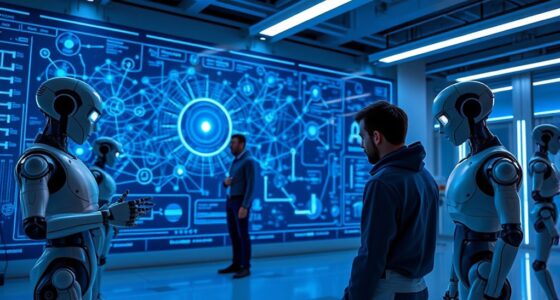
Skills package what you know; loops decide how far you delegate over time. Dynamic workflows are the third axis — within a single task, Claude writes its own harness and assembles a temporary team of subagents. Think of it as Claude drawing an org chart for one job.
The shift is from prompting a worker to commissioning a team — more output, more cost, and a manager’s judgment required. Reach for a workflow when a task is big, parallel, adversarial, or judgment-heavy — and when you can feel a single agent getting lazy, grading its own homework, or losing the plot. Bound it (token budgets, pilot first) — workflows can spawn hundreds of agents and burn far more tokens. For everything else, don’t hire five people to change a lightbulb.
Implications for AI Workflow Management
This development signifies a major step toward more autonomous and adaptable AI systems capable of managing complex projects without constant human oversight. By enabling Claude to dynamically assemble specialized agent teams, organizations can leverage AI for tasks that traditionally required human project managers or multiple specialists. This could lead to increased efficiency, better accuracy, and more scalable AI applications in fields like software development, research, and quality assurance.
Furthermore, this approach addresses common failure modes in single-agent systems—such as partial work, bias, and goal drift—by dividing tasks into focused, independent subcomponents. As a result, AI can produce more reliable and comprehensive outcomes, reducing the need for extensive human intervention in high-stakes projects.
As an affiliate, we earn on qualifying purchases.
Evolution of Multi-Agent AI Systems
Anthropic’s work on multi-agent AI systems has been progressing over the past year, with earlier efforts focusing on static workflows and SDK-based orchestrations. The introduction of dynamic workflows marks a significant leap, allowing Claude to generate and execute customized orchestration scripts during a task. This builds on prior research demonstrating the limitations of single-agent models in handling complex, multi-step processes.
Previous developments included the ability to run multiple Claude instances in parallel, but these setups required manual configuration and lacked flexibility. The new approach automates this process, enabling the AI to reason about when and how to assemble its own team, similar to human project management practices. This aligns with broader trends toward autonomous AI systems capable of self-organization and adaptive execution.
“Claude’s new dynamic workflows allow it to craft tailored agent teams on the fly, significantly enhancing its capacity for complex, high-value tasks.”
— Thorsten Meyer, AI researcher
AI orchestration tools for complex projects
As an affiliate, we earn on qualifying purchases.
As an affiliate, we earn on qualifying purchases.
Limitations and Areas Still Under Development
While the technology shows promise, it remains unclear how broadly it will be adopted outside specialized use cases. The approach is resource-intensive, and its effectiveness for routine or lower-stakes tasks has not yet been demonstrated. Additionally, it is not yet confirmed how well the system performs in real-world, unpredictable environments, or how it handles failures within its self-managed workflows.
Further testing is needed to determine how reliably Claude can manage complex workflows over extended periods and whether it can adapt to unexpected changes in task scope or requirements.
As an affiliate, we earn on qualifying purchases.
Upcoming Deployments and Broader Integration Plans
Anthropic plans to expand access to the dynamic workflows feature for select enterprise clients, focusing on high-value, complex projects. Additional testing will evaluate its performance in real-world scenarios, with potential integration into larger AI management platforms. The company is also exploring ways to optimize resource consumption and improve user controls for workflow customization.
In the near term, expect more case studies demonstrating how organizations are deploying Claude’s new capabilities for research, development, and quality assurance tasks. Broader availability and refinement of the feature may follow based on initial feedback and performance metrics.
AI research and code rewriting tools
As an affiliate, we earn on qualifying purchases.
As an affiliate, we earn on qualifying purchases.
Key Questions
How does Claude build its own team of agents?
Claude writes and executes small JavaScript programs that spawn and coordinate specialized subagents, each with a focused brief, enabling dynamic team assembly tailored to the task.
What types of tasks are best suited for this new feature?
Complex, high-value tasks such as large-scale research, code rewriting, fact-checking, and multi-step project management are ideal candidates for dynamic workflows.
Is this feature available to all users now?
Currently, it is available for select enterprise applications focused on demanding, complex projects, with broader rollout planned after further testing.
Does this increase resource use significantly?
Yes, the feature uses more tokens and computational resources, making it suitable mainly for high-stakes, complex tasks rather than simple fixes.
What are the main limitations of this technology?
Its effectiveness in unpredictable environments, handling failures within workflows, and resource efficiency are still under evaluation.
Source: ThorstenMeyerAI.com
Halloween Picks
halloween
As an affiliate, we earn on qualifying purchases.