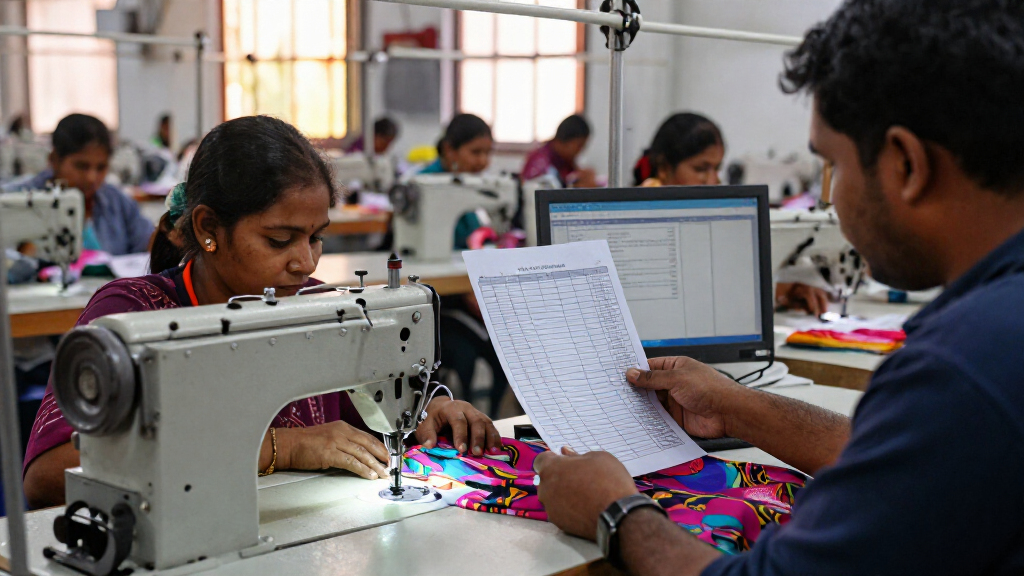

🔍 Read the full analysis: What Prompted Bangladesh To Form A Garment Wage Board? on ThorstenMeyerAI.com

Get business pricing on monitors, keyboards and dev gear
- Business-only prices and quantity discounts
- Tax-exempt purchasing
- Multiple users, one account, clear invoices
TL;DR
Bangladesh appointed a six-member garment wage board on Nov. 1, 2026, while workers were protesting for a higher minimum wage. The current monthly minimum is 12,500 taka; workers are seeking 30,000 taka. The board has no announced first-meeting date or deadline for setting a new wage.
Bangladesh appointed a six-member garment wage board on Nov. 1, 2026, as protests over pay disrupted hundreds of factories and workers demanded a monthly minimum of 30,000 taka. The board is tasked with working out a new wage structure for an industry employing millions of people and central to the country’s export economy; the existing minimum is 12,500 taka, in force since December 2023.
The Ministry of Labour and Employment issued two notifications establishing the board under the Bangladesh Labour Act, as amended in 2026. The announcement came during a day of road blockades and clashes in garment-producing areas around Dhaka. Reuters reported that police used tear gas and water cannon after bricks were thrown at officers; a police vehicle and police box were set alight, and Border Guard Bangladesh personnel were deployed.
The Bangladesh Garment Manufacturers and Exporters Association (BGMEA) reported disruptions at 529 of 2,134 factories covered across five industrial regions on Nov. 1, with 987,190 workers leaving their workplaces. The Daily Star reported the figures from the association’s situation report. The count refers to factories where operations were disrupted as workers walked out, not factories confirmed to have been closed by their owners. Reuters reported that factories had reopened by Monday, Nov. 2, although owners remained concerned about further unrest.
The board is chaired by Sheikh Ashfaqur Rahman, with an independent member, two employer representatives and two worker representatives. The Daily Star named University of Dhaka professor Mosleh Uddin Ahmed as the independent member; employers’ representatives Asif Ayub and ABM Shamsuddin; and worker representatives Anwar Hossain and Babul Akhter. The chair is to work with the other members to determine a minimum wage.
Pay Dispute Puts Export Supply at Risk
The wage dispute affects workers’ ability to meet basic expenses and raises the risk of further interruptions in a major export industry. Labour Minister Ariful Haque Choudhury urged workers to return to their jobs and warned, according to Reuters and Al Jazeera, that prolonged disruption could delay export shipments and payments from foreign buyers. Factories reopened, but that did not resolve the disagreement over pay.
Workers say the current minimum does not cover household needs. Reuters quoted garment worker Mahin Hossain saying, “After paying rent, there is very little left for food, our children’s education and other essential expenses.” Employers, meanwhile, have rejected the size of the demand. The dispute also puts international clothing buyers in focus: Reuters quoted an economist and both sides pointing to buyer pricing as part of the pressure on wages and production costs.
The outcome matters beyond Bangladesh because disruptions could affect suppliers, retailers and export schedules. It also tests how the industry handles rising wage expectations while facing cost pressures and the prospect of greater automation. The board’s decision will set a new benchmark for garment workers, but its timing and the final wage level remain unknown.
Products Worth Considering

Samsung Galaxy Tab S10 Lite – 6 GB RAM, 128 GB storage, up to 2 TB microSD, 10.9‑inch LCD, Gray

Apple MacBook Air 15-inch with M5 chip, 16GB Memory, 512GB SSD, and Liquid Retina Display

LG UltraGear 27GX704A-B 27-inch QHD OLED Gaming Monitor
As an affiliate, we earn on qualifying purchases.
A Scheduled Review Meets Rising Protests
Pressure had been building for weeks. The Daily Star reported on Oct. 21 that workers had been blocking roads since mid-October. Protester Sharifa Begum told the newspaper, “Our only demand is either to lower the prices of essential commodities or raise our wages.” Reuters and Al Jazeera reported renewed escalation on Saturday, Oct. 31, when about 30 factories near Ashulia declared holidays, according to local industrial police superintendent Mohammad Mominul Islam Bhuiyan. Police said clashes there injured several people, including officers.
On Nov. 1, protests spread across Dhaka and Gazipur. BGMEA’s report, as carried by The Daily Star, attributed the largest number of departures to Gazipur and Mymensingh: 645,360 workers at 276 affected factories. In Savar, Ashulia and Jirani, it counted 290,205 workers leaving 185 factories. It reported disruption at 68 factories in the Dhaka Metropolitan Police area, all in Mirpur, and none in the areas it covered in Narayanganj or Chattogram.
The current minimum wage has applied since December 2023. The Daily Star reported that a 2026 amendment to the Labour Act shortened the interval between minimum-wage reviews from five years to three, so a review was due. The protests have made that scheduled process immediate and contentious. Workers’ demand of 30,000 taka is more than twice the current floor; Reuters put the demand at about $243 to $245 a month.
“After paying rent, there is very little left for food, our children’s education and other essential expenses.”
— Garment worker Mahin Hossain, quoted by Reuters
Board Schedule and Wage Figure Unknown
The notifications do not state when the board will first meet or when a revised wage structure will be announced, and no public deadline has been reported. The final minimum wage is also unsettled: workers are demanding 30,000 taka, while the owners’ association has rejected that amount. The sources provided do not establish what figure the board members will recommend or whether they will reach agreement.
Factories reopened on Nov. 2, according to Reuters, but it remains unclear whether the return to work will hold or whether protests will resume. The BGMEA figures describe reported disruptions and workers leaving their workplaces on Nov. 1; they do not establish the full duration of lost production or the total effect on shipments. The precise role of buyers in determining prices and how any new wage would be reflected in purchasing agreements also remain unresolved.
Wage Board Must Set Its Timetable
The board is expected to consult its worker, employer and independent members and work out a minimum wage, but the government has not announced a meeting date or decision timetable. Its first public steps, including whether it schedules consultations and publishes a proposed wage, will clarify how quickly the review proceeds.
In the meantime, factory operations and worker response will be watched for signs of renewed disruption. Labour Minister Ariful Haque Choudhury has called for workers to return, while factory owners have said they remain concerned about further unrest. Until the board announces a process and a wage figure, the central dispute over whether the current minimum can cover living costs remains open.
Key Questions
Why did Bangladesh form a garment wage board?
The government appointed the board during protests over wages. Workers say the current minimum does not cover basic household expenses and are demanding an increase; a three-year review interval introduced by a 2026 Labour Act amendment also meant a wage review was due.
How much are garment workers demanding?
Workers are seeking a minimum monthly wage of 30,000 taka. Reuters reported the demand as about $243 to $245 a month.
What is the current garment minimum wage?
The current monthly minimum is 12,500 taka. It has applied since December 2023.
How many factories were affected by the Nov. 1 protests?
BGMEA reported disruptions at 529 factories and 987,190 workers leaving work on Nov. 1, out of 2,134 factories covered across five industrial regions. The report describes disrupted operations and walkouts, not confirmed owner-ordered closures.
When will the board decide on a new wage?
No first meeting date or public deadline for a new wage announcement has been reported. The board’s timetable and the final wage figure remain unknown.
Source: ThorstenMeyerAI.com