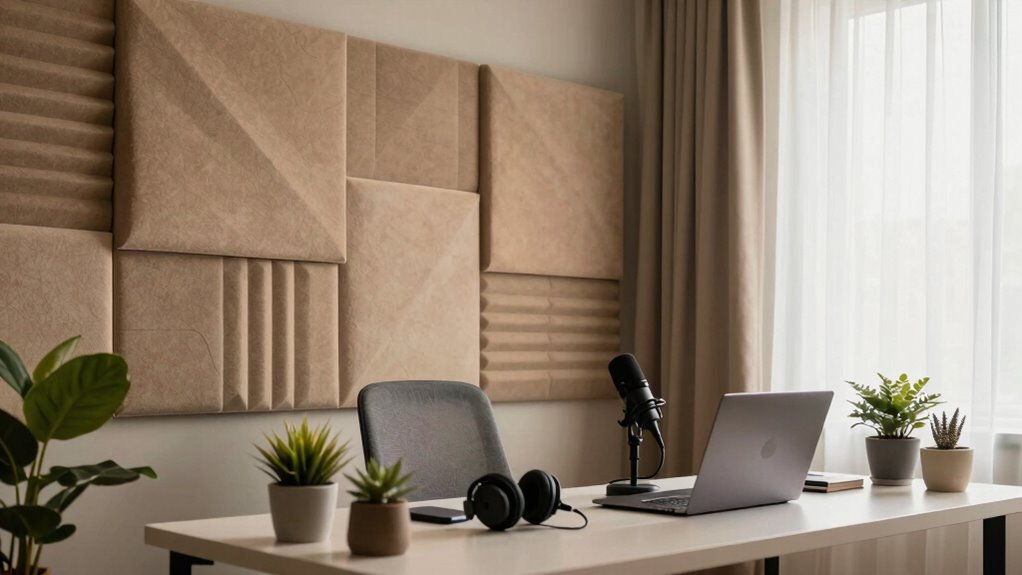

To reduce echo and background noise in your home office, start by adding soft furnishings like rugs, curtains, and upholstered furniture, which absorb sound. Position your desk away from reflective surfaces and seal gaps around windows and doors to block outside noise. Using acoustic panels or foam can also help dampen sound reflections. Investing in noise-canceling headphones or updating your setup with soundproofing tips can make a big difference. Keep exploring for more tips to create an ideal sound environment.

Get business pricing on monitors, keyboards and dev gear
- Business-only prices and quantity discounts
- Tax-exempt purchasing
- Multiple users, one account, clear invoices
Key Takeaways
- Incorporate soft furnishings like rugs, curtains, and upholstered furniture to absorb sound reflections and reduce echo.
- Seal gaps around windows and doors with weatherstripping or caulk to block external noise infiltration.
- Position your desk near a wall and arrange furniture to minimize sound reflections and improve acoustics.
- Install acoustic panels or foam at reflection points to dampen sound and enhance audio clarity.
- Use noise-canceling headphones and wireless microphones to block background noise and improve voice quality during calls.
As an affiliate, we earn on qualifying purchases.
How Does Echo and Background Noise Impact Your Home Office Calls?
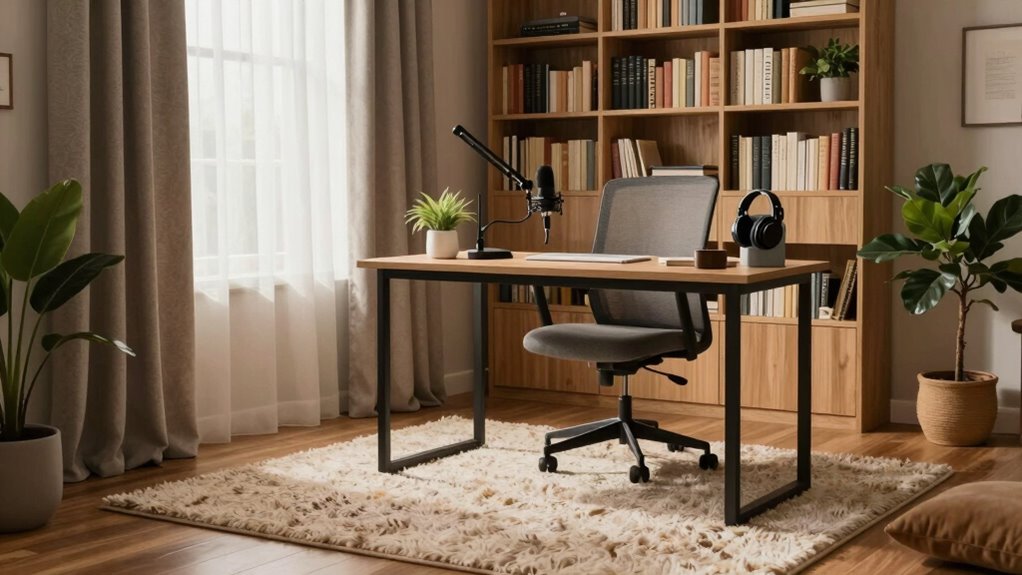
Have you ever experienced a call where your voice echoes or background noise makes it hard to hear? These issues can seriously disrupt your communication, making you seem unprofessional or inattentive. Background music, especially if loud or inconsistent, distracts both you and your listeners, reducing focus and clarity. Proper microphone placement matters too—placing your mic too close or too far can cause echo or muffled sound. When your microphone isn’t positioned correctly, it picks up unwanted sounds or creates feedback that worsens the echo effect. This combination of background music and poor microphone placement hampers your ability to deliver clear, confident messages. Understanding how these factors impact your calls helps you take steps to improve your audio quality immediately. Additionally, incorporating soundproofing solutions can significantly reduce echo and background noise, creating a more professional and distraction-free environment. Being aware of home design details, such as room layout and materials, can also help optimize your space for better sound control, especially by utilizing features like acoustic panels or sound-absorbing furniture. In some cases, adding soundproofing materials to walls and ceilings can make a noticeable difference in minimizing echoes.
noise-canceling headphones for work
As an affiliate, we earn on qualifying purchases.
As an affiliate, we earn on qualifying purchases.
What Are the Common Sources of Echo and Noise at Home?
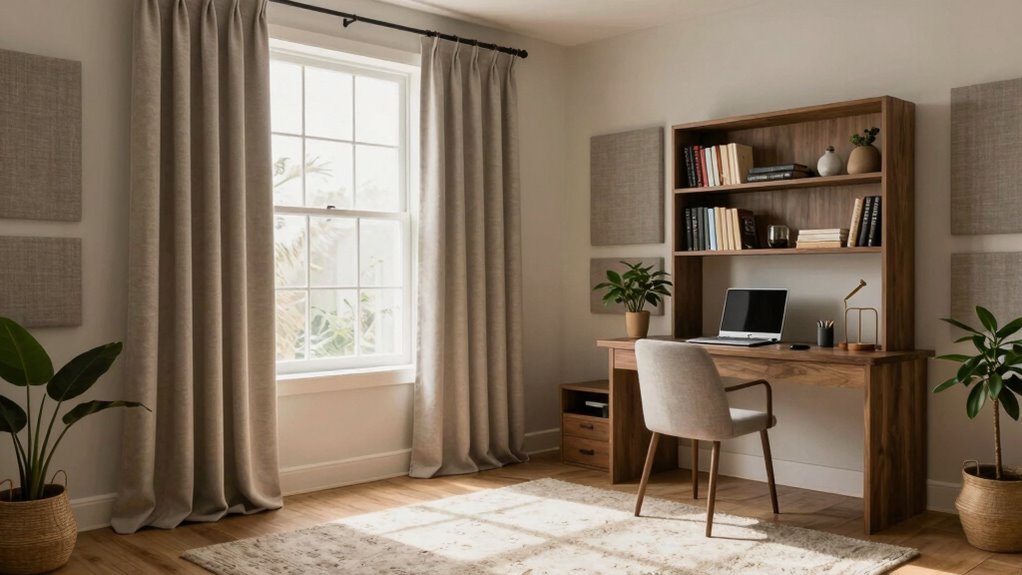
You’ll notice that your room’s size and shape can amplify echo, especially in long or narrow spaces. Hard surfaces like glass, wood, or tile reflect sound waves, making noise more prominent. External noises, such as traffic or neighbors, also seep in and increase overall background noise. Incorporating soundproofing techniques can help reduce these issues and create a more controlled acoustic environment. Additionally, understanding the presence of microplastics in dust can be important, as these particles may contribute to indoor air quality concerns that subtly impact your comfort and health. Recognizing how Hard surfaces reflect sound can guide you in choosing appropriate furnishings to absorb noise and improve sound quality indoors. Using soft furnishings, like rugs and curtains, can further mitigate sound reflection, creating a quieter and more comfortable home office space.
Room Size and Shape
The size and shape of your home office play a essential role in how sound behaves within the space. Smaller rooms or those with irregular shapes tend to trap sound, creating echoes that can be distracting. To reduce this, consider your furniture arrangement; placing soft furnishings like desks and bookshelves strategically can help absorb sound. Window treatments such as thick curtains or blinds also play a critical role by blocking reflective surfaces and minimizing noise from outside. Avoid placing furniture directly against walls or in a way that creates large open areas, as these can amplify echoes. By carefully considering the room’s dimensions and shape, along with thoughtful furniture placement and window coverings, you can considerably improve sound quality and create a more comfortable working environment.
Hard Surface Materials
Hard surface materials are often the main culprits behind echo and background noise in a home office. When furniture is arranged against bare walls or on hard floors, sound waves bounce freely, creating reverberation. To minimize this, consider rearranging your furniture to break up reflective surfaces and absorb sound. Wall coverings also play a vital role; bare walls reflect more sound than those with curtains, tapestries, or acoustic panels. Adding soft furnishings like rugs, upholstered chairs, and fabric-covered bulletin boards can greatly reduce echo. By strategically adjusting your furniture arrangement and incorporating wall coverings, you create a more acoustically friendly environment, making your home office quieter and more comfortable for focused work. Understanding how drone bees contribute to hive stability can also inspire effective soundproofing strategies by mimicking natural sound absorption methods.
Ambient External Noise
External noises often seep into your home office from various sources outside your walls, disrupting concentration and increasing overall noise levels. Common culprits include outdoor traffic, which creates constant background hum, and neighbor disturbances like lawnmowers or parties that cause sudden loud noises. These sounds can make it difficult to focus during calls or work sessions. To better understand, see the table below:
| Source | Effect |
|---|---|
| Outdoor traffic | Persistent hum, distraction |
| Neighbor disturbances | Sudden loud noises |
| Street activities | Intermittent sounds |
Reducing these external noises involves sealing gaps, using soundproofing measures, or adding dense curtains to limit sound infiltration, helping create a quieter, more focused workspace. Additionally, adding soundproofing materials can significantly dampen external noise entering your home office. Incorporating natural elements like landscaping can also serve as a buffer against noise pollution, creating a more serene environment. Implementing sound masking techniques can further help mask residual outside sounds, improving concentration and reducing noise pollution.
As an affiliate, we earn on qualifying purchases.
Simple Acoustic Treatments to Cut Down Echo Effectively
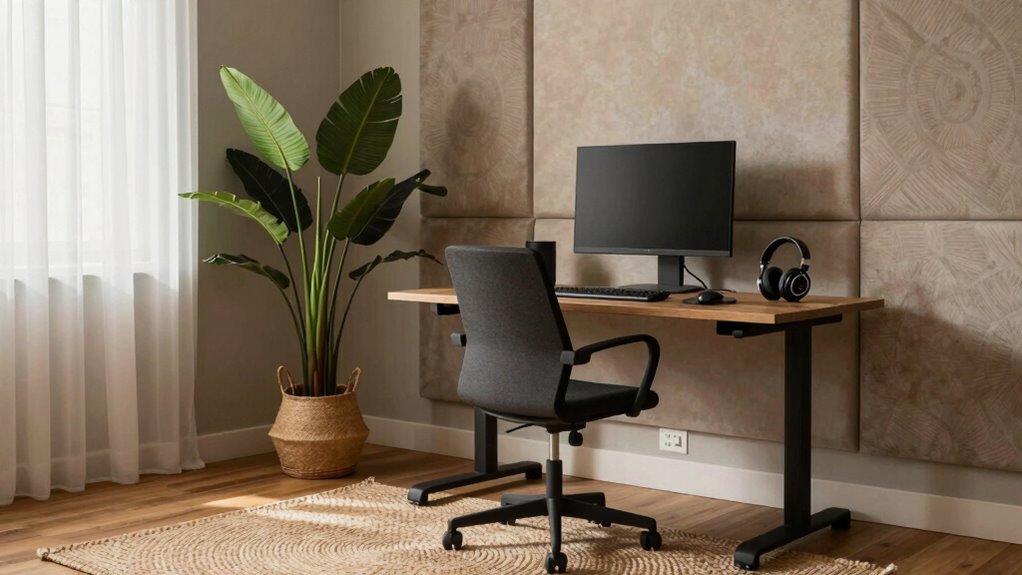
To effectively reduce echo in your home office, incorporating simple acoustic treatments can make a noticeable difference. Focus on echo control by adding soft materials that absorb sound waves. Using rugs, carpets, or fabric-covered furniture helps dampen sound reflections. Wall hangings, like acoustic panels or thick curtains, prevent sound from bouncing around the room. Placing bookshelves filled with books or decorative items also aids in dispersing sound energy. Additionally, sound absorption techniques can be tailored to your space to optimize acoustics. Incorporating soundproofing materials can further enhance the effectiveness of these treatments and block external noise. Avoid hard, reflective surfaces where possible. These acoustic treatments are affordable and easy to implement, making your space more comfortable and reducing echo effectively. Remember, the goal is to minimize sound reflections, creating a clearer and more professional environment for work. Using room acoustics principles can help you achieve better sound quality and comfort. Properly managing sound reflections is essential for a productive and distraction-free workspace.
weatherstripping for windows and doors
As an affiliate, we earn on qualifying purchases.
As an affiliate, we earn on qualifying purchases.
DIY Soundproofing Tips for Reducing Background Noise

To reduce background noise, start by sealing gaps and cracks around doors and windows to block sound leaks. Then, add soft acoustic panels to absorb noise and prevent echoes from bouncing around your space. These simple DIY steps can make a noticeable difference in creating a quieter home office. Understanding sound wave behavior can help you better position your soundproofing materials for maximum effectiveness, and incorporating sound vibrations can further enhance the overall sound absorption in your environment. Considering car protection accessories such as specialized soundproofing options can also provide additional noise reduction benefits. Exploring easy homemade flautas techniques can inspire creative ways to improve your space’s acoustics through soft, food-related elements that help absorb sound.
Seal Gaps and Cracks
Sealing gaps and cracks around your home office is one of the simplest yet most effective ways to cut down on unwanted noise. Start by inspecting windows, doors, and outlets for leaks. Use weatherstripping or caulk to seal small gaps, preventing sound from escaping or entering. Installing soundproof curtains can also block noise coming through windows, especially if you choose thick, dense fabrics. Additionally, consider adding acoustic foam around door frames or along walls to further dampen sound reflections. These measures create a barrier that minimizes sound leakage and echoes. Incorporating soundproofing techniques into your setup can significantly enhance noise reduction. Taking these steps not only reduces background noise but also improves overall sound quality, making your home office a quieter, more focused space. Properly sealing these gaps can also help improve the overall sound insulation of your workspace.
Add Soft Acoustic Panels
Adding soft acoustic panels is an effective way to absorb sound and reduce background noise in your home office. They improve acoustics by dampening echoes and creating a quieter environment. To maximize their impact, choose panels with appealing acoustic panel aesthetics that complement your decor. When installing, DIY installation techniques make the process straightforward, saving you money and effort. Here are some tips:
- Select panels with attractive designs to enhance your space’s look.
- Mount panels at reflection points, such as opposite screens or speakers, for better sound absorption.
- Use mounting hardware that’s easy to install and remove, allowing flexibility in arrangement.
What Tech Tools Can Improve Your Audio Quality?
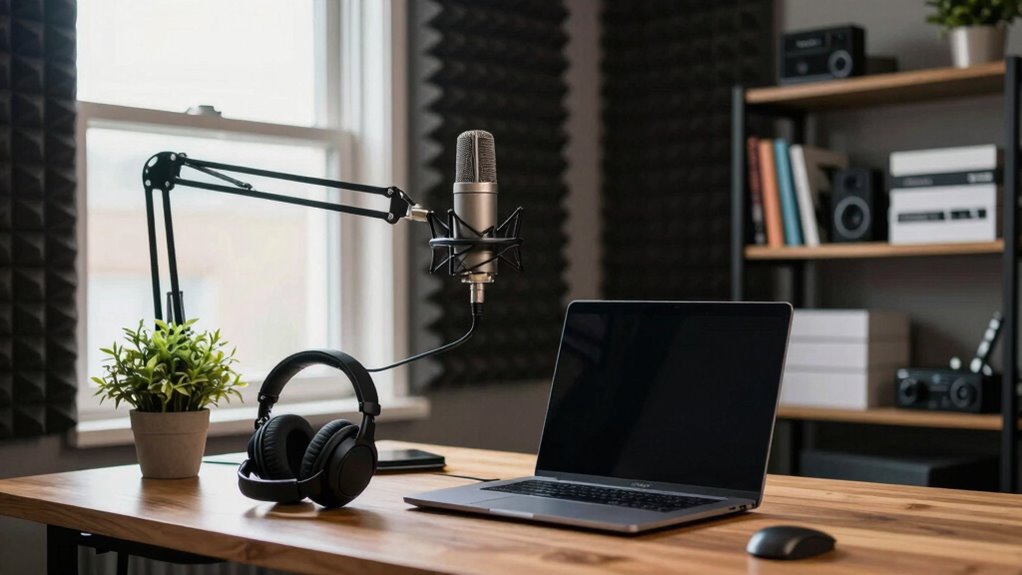
What tech tools can truly enhance your audio quality? Wireless microphones are a game-changer, allowing you to move freely without sacrificing sound clarity. They deliver crisp, clear audio and reduce background noise, making your voice stand out during calls or recordings. Noise-canceling headphones are another essential tool; they block out distracting sounds and help you focus on your conversation or content. By wearing these headphones, you minimize ambient noise that can bleed into your microphone or disrupt your concentration. Together, wireless microphones and noise-canceling headphones create a professional audio environment, even in a noisy home setting. Investing in these tools guarantees your voice comes through clearly and reduces the need for extensive post-editing or frustration during calls.
Best Practices for Setting Up a Quiet and Focused Home Office
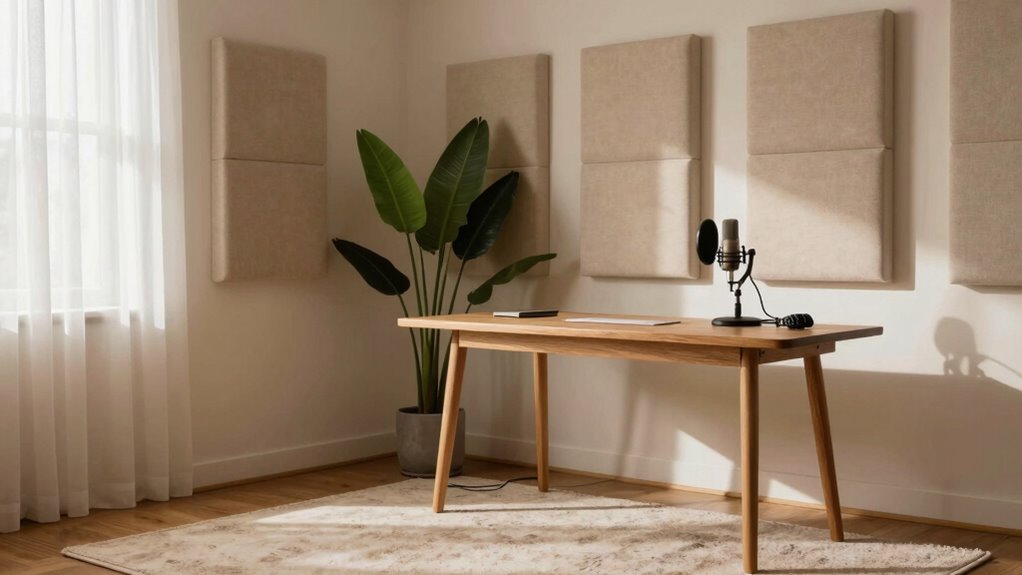
Creating a quiet and focused home office starts with thoughtful placement and organization. To minimize noise and distractions, consider these best practices:
- Arrange your desk near a wall to reduce sound reflections and improve acoustics.
- Invest in ergonomic furniture to maintain comfort, which helps you stay focused longer.
- Optimize lighting by using natural light or soft, adjustable lamps to prevent eye strain and create a calming environment.
Proper placement and ergonomic setup help you stay comfortable and alert. Use lighting optimization to eliminate harsh shadows and reduce visual distractions, supporting concentration. Keep noise sources away from your workspace whenever possible, and add soft furnishings like rugs or curtains to absorb sound. These simple steps create an environment conducive to productivity and quiet.
Troubleshooting Persistent Noise Issues and When to Seek Help

Persistent noise problems can be frustrating, especially when simple adjustments don’t seem to help. If you’ve tried soundproof curtains and noise cancellation devices without success, it might be time to seek professional advice. Persistent issues could stem from structural gaps or external sources that need targeted solutions. When noise continues to disrupt your work, consider consulting an acoustic expert to identify the root cause and recommend effective treatments. They might suggest additional soundproofing measures or specialized equipment. Remember, some noise issues require more than DIY fixes. If your efforts don’t improve your environment, seeking help guarantees you find lasting solutions that create a truly quiet home office. Don’t hesitate to invest in expert assistance for a peaceful, productive workspace.
Frequently Asked Questions
How Do I Choose the Best Microphone for Noisy Environments?
To choose the best microphone for noisy environments, look for one with noise-canceling features that actively reduce background sounds. Consider microphones that respond well to proper placement—position it close to your mouth and away from noise sources. Directional or cardioid microphones are ideal, as they focus on your voice and minimize ambient noise. Combining good microphone placement with noise-canceling tech guarantees clearer audio during calls or recordings.
Can Background Music Help Reduce Perceived Echo During Calls?
They say music soothes the savage beast, and it can also help reduce perceived echo during calls. Background music acts like sound masking, making echoes less noticeable. Music therapy combined with acoustic panels can improve your home office environment by absorbing unwanted sounds and creating a more controlled acoustic space. Play soft, instrumental tunes to help your voice stand out and make calls clearer and more comfortable.
What Are Budget-Friendly Solutions for Soundproofing a Home Office?
You can save money by using DIY materials like thick curtains, rugs, or foam panels to absorb sound. Rearranging your furniture placement, such as placing bookshelves against walls or positioning desks away from noise sources, also helps reduce echo. These budget-friendly solutions are easy to implement, improve acoustics, and create a quieter home office environment without needing professional soundproofing.
How Often Should I Update My Home Office Soundproofing Measures?
You should update your home office soundproofing measures whenever you notice increased noise or echo, or after significant decorating acoustics changes. Regularly reassess your furniture placement, as rearranging can improve sound absorption. Keep an eye on how well your current solutions work, and don’t hesitate to add or modify soundproofing elements as your space evolves. Updating guarantees your workspace remains quiet and conducive to productivity.
Are There Specific Apps to Cancel Background Noise During Calls?
Sure, there are apps that promise to cancel background noise during calls, but honestly, noise canceling headphones and acoustic panels do the real magic. Apps like Krisp or RTX Voice can help, but nothing beats blocking noise at the source. So, invest in good noise-canceling headphones, and strategically place acoustic panels for peace. After all, relying solely on apps is like putting a band-aid on a leaky faucet.
Conclusion
Reducing echo and background noise can markedly enhance your home office calls, making communication clearer and more professional. Did you know that poor acoustics can drop your call quality by up to 50%? By implementing simple acoustic treatments, DIY soundproofing, and smart tech tools, you’ll create a more focused workspace. Keep experimenting with setups and troubleshooting to find what works best for you—your clearer, distraction-free calls are worth the effort.
Fall Picks
fall essentials
As an affiliate, we earn on qualifying purchases.