

For most buyers, I’d start with the Intel Core i7-14700KF: its high core count makes it a strong all-round choice for gaming and demanding work, provided you have a graphics card and capable cooling. The Core i5-14400F is a more straightforward fit for budget-conscious builds, while the Core Ultra 7 265K suits buyers who want a newer platform and integrated graphics. The main tradeoffs are performance versus power and cooling demands, processor cost versus the total platform cost, and whether you need built-in graphics. Read on for how all 11 picks differ and which one fits your build.

Get business pricing on monitors, keyboards and dev gear
- Business-only prices and quantity discounts
- Tax-exempt purchasing
- Multiple users, one account, clear invoices
Key Takeaways
- The Core i7-14700KF is the strongest all-round fit in this lineup for buyers pairing a discrete graphics card with a demanding mix of games and productivity work.
- The Core i5-14400F offers a simpler route to a capable desktop, but its F suffix means you need a separate graphics card and cannot rely on processor graphics for troubleshooting.
- The Core Ultra 7 265K and Ultra 9 285K bring newer platform options, but their appeal depends on the motherboard and memory costs as well as processor performance.
- The i7-12700K and i7-12700KF are close relatives; the K version includes integrated graphics, while the KF version requires a discrete graphics card.
- High-end unlocked chips such as the i9-14900K and i9-12900K call for a stronger cooling plan and power-aware motherboard choices, not just a larger performance budget.
| Intel Core i7-12700KF 12-Core Desktop Processor, up to 5.0 GHz, Unlocked |  | Best Value for a Discrete-GPU Build | Cores and threads: 12 cores (8 Performance-cores + 4 Efficient-cores), 20 threads | Maximum speed: Up to 5.0 GHz | Socket: LGA 1700 | VIEW LATEST PRICE | See Our Full Breakdown |
| Intel Core i7-12700K Desktop Processor | 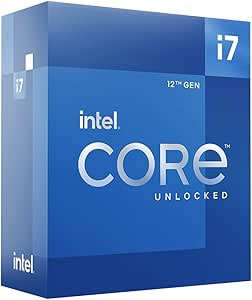 | Best for Builders Who Want Integrated Graphics | Cores and threads: 12 cores (8 Performance-cores + 4 Efficient-cores), 20 threads | Base clock: 3.6 GHz | Maximum turbo frequency: 5.0 GHz | VIEW LATEST PRICE | See Our Full Breakdown |
| Intel Core Ultra 7 265K Desktop Processor, 20 Cores, Up to 5.5 GHz |  | Best for a New DDR5 Platform | Cores and threads: 20 cores (8 Performance-cores + 12 Efficient-cores), 20 threads | Maximum speed: Up to 5.5 GHz | Socket: LGA 1851 | VIEW LATEST PRICE | See Our Full Breakdown |
| Intel Core i7-14700KF Desktop Processor |  | Best for Heavy Multitasking on LGA 1700 | Cores and threads: 20 cores (8 Performance-cores + 12 Efficient-cores), 28 threads | Maximum turbo frequency: 5.6 GHz | Socket: LGA 1700 | VIEW LATEST PRICE | See Our Full Breakdown |
| Intel Core i9-12900K Desktop Processor |  | Best Premium Pick with Integrated Graphics | Cores and threads: 16 cores (8 Performance-cores + 8 Efficient-cores), 24 threads | Base clock: 3.2 GHz | Boost clock: Up to 5.2 GHz | VIEW LATEST PRICE | See Our Full Breakdown |
| Intel Core i5-14400F 14th Gen Desktop Processor | 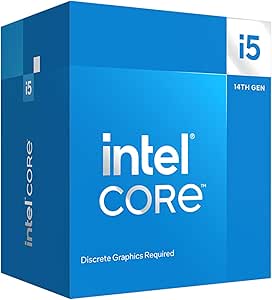 | Best Value for a Discrete-GPU Build | Generation: 14th Gen | Cores / threads: 10 (6 P-cores + 4 E-cores) / 16 | Maximum speed: Up to 4.7 GHz | VIEW LATEST PRICE | See Our Full Breakdown |
| Intel Core i5-14600K Desktop Processor |  | Best Midrange Overclocking Pick | Cores / threads: 14 (6 P-cores + 8 E-cores) / 20 | Maximum turbo frequency: Up to 5.3 GHz | Cache: 24 MB Intel Smart Cache | VIEW LATEST PRICE | See Our Full Breakdown |
| Intel Core i9-12900KF 16-Core Unlocked Desktop Processor, up to 5.2 GHz |  | Best Older-Generation Core i9 for Discrete Graphics | Cores / threads: 16 (8 performance + 8 efficiency) / 24 | Base clock speed: 3.2 GHz | Maximum clock speed: Up to 5.2 GHz | VIEW LATEST PRICE | See Our Full Breakdown |
| Intel Core Ultra 9 285K Desktop Processor, 24 Cores, Up to 5.7 GHz |  | Best for a New-Platform Creator Build | Cores / threads: 24 (8 performance + 16 efficient) / 24 | Maximum turbo frequency: Up to 5.7 GHz | Cache: 36 MB Intel Smart Cache; 40 MB installed cache | VIEW LATEST PRICE | See Our Full Breakdown |
| Intel Core i9-14900K Desktop Processor | 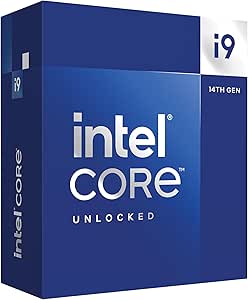 | Best LGA1700 Performance Flagship | Cores / threads: 24 (8 P-cores + 16 E-cores) / 32 | Base speed: 3.2 GHz | Maximum clock speed: Up to 6.0 GHz | VIEW LATEST PRICE | See Our Full Breakdown |
| Intel Core Ultra 7 Processor 270K Plus |  | Best for Multitasking and Overclocking | Processor series: Intel Core Ultra 7 | Model: 270K Plus | Cores / threads: 24 cores (8 P-cores + 16 E-cores) / 24 threads | VIEW LATEST PRICE | See Our Full Breakdown |
| Intel desktop processor | Socket | Cache | Memory support | Cores / threads |
|---|---|---|---|---|
| Intel Core i7-12700KF 12-Core | LGA 1700 | 25 MB Intel Smart Cache; 20 MB secondary cache | DDR4 and DDR5 | — |
| Intel Core i7-12700K Desktop P | LGA 1700 | 25 MB L3 cache | — | — |
| Intel Core Ultra 7 265K Deskto | LGA 1851 | 36 MB | DDR5 | — |
| Intel Core i7-14700KF Desktop | LGA 1700 | 33 MB | DDR4 and DDR5 | — |
| Intel Core i9-12900K Desktop P | LGA 1700 | 30 MB L3 cache | — | — |
| Intel Core i5-14400F 14th Gen | LGA1700 | 20 MB | DDR4 and DDR5 | 10 (6 P-cores + 4 E-cores) / 16 |
| Intel Core i5-14600K Desktop P | LGA1700 | 24 MB Intel Smart Cache | DDR4 and DDR5 | 14 (6 P-cores + 8 E-cores) / 20 |
| Intel Core i9-12900KF 16-Core | LGA1700 | 30 MB L3; 14 MB secondary | — | 16 (8 performance + 8 efficiency) / 24 |
| Intel Core Ultra 9 285K Deskto | LGA1851 | 36 MB Intel Smart Cache; 40 MB installed cache | DDR5 | 24 (8 performance + 16 efficient) / 24 |
| Intel Core i9-14900K Desktop P | LGA1700 | 36 MB | DDR4 and DDR5 | 24 (8 P-cores + 16 E-cores) / 32 |
| Intel Core Ultra 7 Processor 2 | — | — | DDR5 up to 7200 MT/s | 24 cores (8 P-cores + 16 E-cores) / 24 threads |
More Details on Our Top Picks
Intel Core i7-12700KF 12-Core Desktop Processor, up to 5.0 GHz, Unlocked
The Core i7-12700KF suits buyers who want a capable hybrid-core processor and already plan to install a graphics card. Its 12 cores and 20 threads handle gaming alongside streaming or other demanding work, while the unlocked multiplier leaves room for overclocking. Compared with the Core i7-12700K, it lacks integrated graphics, so it cannot provide display output or basic troubleshooting without a separate GPU. That tradeoff makes it a more focused pick for a discrete-GPU system, not a good fit for a build where graphics flexibility matters. DDR4 and DDR5 support also lets builders choose between compatible memory platforms, though the processor still requires an LGA 1700 motherboard and a suitable cooler.
Pros:- 12 cores and 20 threads suit gaming and concurrent productivity workloads.
- Unlocked multiplier allows overclocking on a compatible motherboard.
- Supports both DDR4 and DDR5 memory.
- PCIe 5.0 and PCIe 4.0 support offers flexibility for compatible components.
Cons:- Requires a discrete graphics card for display output.
- Needs an LGA 1700 motherboard, limiting compatibility with older systems.
- A cooler is needed, adding a separate component to the build.
Best for: PC builders who already have a discrete graphics card and want an unlocked processor for gaming, streaming, and general productivity.
Not ideal for: First-time builders or troubleshooting-focused users who want integrated graphics, or owners of motherboards without an LGA 1700 socket.
- Cores and threads:12 cores (8 Performance-cores + 4 Efficient-cores), 20 threads
- Maximum speed:Up to 5.0 GHz
- Socket:LGA 1700
- Cache:25 MB Intel Smart Cache; 20 MB secondary cache
- Power:125 W
- Memory support:DDR4 and DDR5
- PCIe support:PCIe 5.0 and PCIe 4.0
- Graphics:Discrete graphics card required
Our verdict“Choose the Core i7-12700KF for an unlocked, multitasking-capable build when a discrete graphics card is already part of the plan.”
Intel Core i7-12700K Desktop Processor
The Core i7-12700K offers the same 12-core, 20-thread layout and up-to-5.0-GHz turbo speed as the 12700KF, but adds Intel UHD Graphics. That difference is useful for a PC that needs to run before a graphics card is installed, or for diagnosing a GPU problem without swapping hardware. Against the less flexible 12700KF, the integrated graphics give this model a practical fallback; they are not a substitute for a dedicated GPU in graphics-heavy gaming. The unlocked design supports overclocking, but its 125 W TDP and lack of an included cooler mean buyers should plan for capable cooling. It remains tied to LGA 1700, so it is not a drop-in upgrade for older Intel systems.
Pros:- 12 cores and 20 threads support demanding applications and multitasking.
- Integrated Intel UHD Graphics provides display output without a discrete GPU.
- Unlocked multiplier supports overclocking with compatible hardware.
- Supports DDR4 and DDR5 memory on compatible LGA 1700 motherboards.
Cons:- No cooling fan is included, so a separate cooler is required.
- The 125 W TDP calls for a capable cooling setup.
- LGA 1700 compatibility excludes older motherboard platforms.
Best for: Builders who want a strong gaming and productivity CPU with display output available before buying or installing a discrete graphics card.
Not ideal for: Buyers building a cost-focused system around a discrete GPU who do not need integrated graphics, or anyone seeking a cooler included in the box.
- Cores and threads:12 cores (8 Performance-cores + 4 Efficient-cores), 20 threads
- Base clock:3.6 GHz
- Maximum turbo frequency:5.0 GHz
- Socket:LGA 1700
- Cache:25 MB L3 cache
- TDP:125 W
- Integrated graphics:Intel UHD Graphics
- Chipset compatibility:Intel 600 Series
Our verdict“Pick the Core i7-12700K over the 12700KF if integrated graphics and easier GPU troubleshooting matter to your build.”
Intel Core Ultra 7 265K Desktop Processor, 20 Cores, Up to 5.5 GHz
For a fresh build centered on Intel’s newer desktop platform, the Core Ultra 7 265K brings 20 cores, a maximum speed of 5.5 GHz, and support for DDR5 memory. Its 8 Performance-cores and 12 Efficient-cores provide more total cores than the Core i7-14700KF, though the two products use different platforms and should not be treated as interchangeable upgrades. This processor requires an LGA 1851 motherboard with an Intel 800 series chipset; it does not offer the DDR4 option available with the 14700KF. That makes it a better match for builders choosing a new motherboard and memory kit than for owners looking to reuse an LGA 1700 system. No thermal solution is included, so cooling is another part of the build to plan.
Pros:- 20 cores combine 8 Performance-cores with 12 Efficient-cores.
- Maximum speed of up to 5.5 GHz supports demanding workloads.
- Supports DDR5 memory and PCIe 5.0.
- Unlocked design supports overclocking.
Cons:- Requires an LGA 1851 motherboard with an Intel 800 series chipset.
- DDR4 memory is not supported.
- Thermal solution is not included.
Best for: Builders assembling a new Intel 800 series system who want 20 cores, DDR5 support, and an unlocked processor.
Not ideal for: Owners of LGA 1700 systems seeking a simple CPU upgrade, or builders who want to reuse DDR4 memory.
- Cores and threads:20 cores (8 Performance-cores + 12 Efficient-cores), 20 threads
- Maximum speed:Up to 5.5 GHz
- Socket:LGA 1851
- Cache:36 MB
- Processor base power:125 W
- Memory support:DDR5
- PCIe support:PCIe 5.0 and PCIe 4.0
- Motherboard compatibility:Intel 800 series chipset
Our verdict“Choose the Core Ultra 7 265K for a new DDR5-based Intel platform, not as an upgrade for an LGA 1700 build.”
Intel Core i7-14700KF Desktop Processor
The Core i7-14700KF raises the core count to 20 and the thread count to 28, giving it a stronger multitasking profile than the 12-core Core i7-12700KF. Its up-to-5.6-GHz turbo frequency and unlocked design suit demanding workloads, while support for DDR4 or DDR5 gives LGA 1700 builders more flexibility when selecting a compatible board and memory. Compared with the newer Core Ultra 7 265K, this model can fit an existing LGA 1700 setup, but it cannot move to an LGA 1851 platform. It also has no processor graphics, so a discrete graphics card is mandatory. Owners of some Intel 600 Series boards may need a BIOS update before installation, making motherboard compatibility worth checking ahead of a CPU swap.
Pros:- 20 cores and 28 threads offer more parallel capacity than the Core i7-12700KF.
- Maximum turbo frequency reaches 5.6 GHz.
- Supports both DDR4 and DDR5 memory.
- Unlocked multiplier and PCIe 5.0 support suit an adaptable performance build.
Cons:- Requires a discrete graphics card because it has no processor graphics.
- Some Intel 600 Series motherboards may need a BIOS update.
- Requires an LGA 1700 board and a suitable cooling solution.
Best for: LGA 1700 users upgrading for heavier gaming, content creation, or simultaneous workloads who have or plan to install a discrete graphics card.
Not ideal for: Builders who need integrated graphics, want to move to Intel’s LGA 1851 platform, or prefer not to check BIOS compatibility.
- Cores and threads:20 cores (8 Performance-cores + 12 Efficient-cores), 28 threads
- Maximum turbo frequency:5.6 GHz
- Socket:LGA 1700
- Cache:33 MB
- Base power:125 W
- Memory support:DDR4 and DDR5
- PCIe support:PCIe 4.0 and PCIe 5.0
- Graphics:Discrete graphics card required; no processor graphics
- Chipset compatibility:Intel 700 Series and Intel 600 Series; some 600 Series boards may require a BIOS update
Our verdict“Choose the Core i7-14700KF for a substantial core-count step up on LGA 1700 when a discrete GPU is already in the build.”
Intel Core i9-12900K Desktop Processor
The Core i9-12900K pairs 16 cores—8 Performance-cores and 8 Efficient-cores—with 24 threads and boost speeds up to 5.2 GHz. That gives it more parallel capacity than the Core i7-12700K, making it a better fit for buyers who regularly combine demanding applications or handle substantial multitasking. Its Intel UHD 770 Graphics also provide display output without a discrete GPU, unlike the 12900KF and 14700KF. The tradeoff is that this is still an LGA 1700 processor with a 125 W TDP, and it calls for robust cooling. Compared with the newer 20-core Core Ultra 7 265K, the 12900K offers integrated graphics but stays on the older socket and platform. Choose it for its specific mix of i9-class core count and graphics fallback, not simply for the tier name.
Pros:- 16 cores and 24 threads support demanding multitasking and productivity workloads.
- Intel UHD 770 Graphics provides display output without a discrete GPU.
- Unlocked multiplier supports overclocking.
- Compatible with Intel 600 and 700 Series chipsets.
Cons:- 125 W TDP calls for robust cooling.
- LGA 1700 limits upgrades from older Intel motherboard platforms.
- Its higher core count may be unnecessary for basic gaming and everyday tasks.
Best for: Power users with an LGA 1700 motherboard who want 16 cores, integrated graphics for fallback display, and capacity for demanding multitasking.
Not ideal for: Buyers prioritizing a newer LGA 1851 platform, users with modest workloads, or builders unable to accommodate robust cooling.
- Cores and threads:16 cores (8 Performance-cores + 8 Efficient-cores), 24 threads
- Base clock:3.2 GHz
- Boost clock:Up to 5.2 GHz
- Socket:LGA 1700
- Cache:30 MB L3 cache
- TDP:125 W
- Integrated graphics:Intel UHD 770
- Chipset compatibility:Intel 600 and 700 Series
Our verdict“Choose the Core i9-12900K if you need more parallel capacity than the Core i7-12700K while retaining integrated graphics on LGA 1700.”
Intel Core i5-14400F 14th Gen Desktop Processor
I’d pick the Core i5-14400F for a balanced desktop build where a separate graphics card is already part of the plan. Its 10 cores and 16 threads pair six performance cores with four efficiency cores, giving it room for gaming alongside everyday multitasking without moving up to the more power-hungry i5-14600K. Support for both DDR4 and DDR5 also lets builders reuse compatible memory or choose a newer platform configuration. The tradeoff is the F-series lack of integrated graphics: unlike the i5-14600K, it cannot provide display output or basic graphics troubleshooting without a discrete card. It also offers less headroom than that unlocked chip for tuning. The included Laminar RM1 is a useful starting point, but buyers should match cooling to their workload.
Pros:- Six performance cores and four efficiency cores support mixed gaming and multitasking workloads.
- DDR4 and DDR5 support gives builders a choice of compatible memory.
- Includes an Intel Laminar RM1 thermal solution.
- Supports PCIe 5.0 and PCIe 4.0.
Cons:- No integrated graphics, so a discrete graphics card is required for display output.
- Some Intel 600-series motherboards may need a BIOS update.
- It is not unlocked for processor overclocking.
Best for: PC builders who already have a discrete graphics card and want a capable LGA1700 processor with DDR4 or DDR5 flexibility.
Not ideal for: Builders who need display output before installing a graphics card, or who want the i5-14600K’s unlocked tuning and higher core count.
- Generation:14th Gen
- Cores / threads:10 (6 P-cores + 4 E-cores) / 16
- Maximum speed:Up to 4.7 GHz
- Cache:20 MB
- Socket:LGA1700
- Memory support:DDR4 and DDR5
- Processor base power:65 W
- Integrated graphics:None; discrete graphics required
Our verdict“Choose the i5-14400F for a flexible, discrete-graphics LGA1700 build; choose the i5-14600K if you need integrated graphics or more tuning headroom.”
Intel Core i5-14600K Desktop Processor
The Core i5-14600K suits builders who want a strong middle ground between the i5-14400F and higher-tier Core i9 chips. Its 14 cores and 20 threads, including eight efficiency cores, give demanding games and parallel tasks more room than the 14400F, while a boost frequency of up to 5.3 GHz supports responsive performance in workloads that favor speed. Because it is unlocked, buyers can tune it with a suitable motherboard and cooling setup. It also has Intel UHD Graphics 770, unlike the 14400F, which is handy for troubleshooting or running a system before adding a graphics card. That flexibility comes with a 125 W base power rating and greater cooling demands than the 14400F. It remains an LGA1700 choice, not a path to the newer Core Ultra 9 285K platform.
Pros:- 14 cores and 20 threads provide more parallel-work capacity than the i5-14400F.
- Unlocked design allows processor tuning with suitable components.
- Intel UHD Graphics 770 provides display output and a troubleshooting fallback.
- Supports both DDR4 and DDR5 memory.
Cons:- 125 W processor base power calls for a capable cooling setup.
- Some Intel 600-series motherboards may require a BIOS update.
- LGA1700 limits compatibility to the matching motherboard platform.
Best for: Enthusiast gamers and creators who want an unlocked LGA1700 CPU, integrated graphics for fallback display, and DDR4 or DDR5 options.
Not ideal for: Low-power or compact PC builders who want modest cooling needs, or buyers building a new LGA1851 system around the Core Ultra 9 285K.
- Cores / threads:14 (6 P-cores + 8 E-cores) / 20
- Maximum turbo frequency:Up to 5.3 GHz
- Cache:24 MB Intel Smart Cache
- Socket:LGA1700
- Processor base power:125 W
- Memory support:DDR4 and DDR5
- Integrated graphics:Intel UHD Graphics 770
- Overclocking:Unlocked
Our verdict“Pick the i5-14600K if you want more core capacity and tuning than the i5-14400F while keeping integrated graphics and LGA1700 compatibility.”
Intel Core i9-12900KF 16-Core Unlocked Desktop Processor, up to 5.2 GHz
The Core i9-12900KF brings a 16-core hybrid layout to builders who want a higher-tier LGA1700 option and already plan to use a discrete graphics card. Its eight performance and eight efficiency cores support up to 24 threads, giving it more parallel capacity than the i5-14600K’s 14 cores. The unlocked design also leaves room for tuning on a compatible setup. Unlike the newer Core Ultra 9 285K, however, this chip stays on LGA1700 and does not require an Intel 800-series motherboard. That may help when upgrading an existing compatible system, but it also means no integrated graphics: the 285K can provide display output without a separate card, while the 12900KF cannot. Its 125 W TDP and need for a dedicated GPU make it a less flexible fit for basic or low-power builds.
Pros:- 16 hybrid cores and 24 threads offer strong capacity for multitasking workloads.
- Unlocked design supports processor tuning.
- Works with Intel 600- and 700-series chipset motherboards.
- Up to 5.2 GHz maximum clock speed.
Cons:- A discrete graphics card is required because it has no integrated graphics.
- The LGA1700 socket excludes newer LGA1851 motherboards.
- Its 125 W TDP calls for suitable cooling and power delivery.
Best for: Owners of compatible Intel 600- or 700-series systems who want an unlocked 16-core processor and already have a discrete graphics card.
Not ideal for: Builders who need integrated graphics, want the newer LGA1851 platform, or are prioritizing a less demanding system configuration.
- Cores / threads:16 (8 performance + 8 efficiency) / 24
- Base clock speed:3.2 GHz
- Maximum clock speed:Up to 5.2 GHz
- Cache:30 MB L3; 14 MB secondary
- Socket:LGA1700
- TDP:125 W
- Compatible chipsets:Intel 600 and 700 series
- Graphics:Discrete graphics card required
Our verdict“Choose the i9-12900KF for an unlocked, high-core-count upgrade on a compatible LGA1700 system if you already have discrete graphics.”
Intel Core Ultra 9 285K Desktop Processor, 24 Cores, Up to 5.7 GHz
I’d place the Core Ultra 9 285K on the shortlist for a fresh, high-end system where creators can use its 24-core layout and newer platform features. It pairs eight performance cores with 16 efficient cores and reaches up to 5.7 GHz, while the integrated graphics and Intel AI Boost NPU add capabilities absent from the i9-12900KF. It also supports DDR5 and PCIe 5.0, but not DDR4, so existing DDR4 memory from an LGA1700 build cannot carry over. The bigger platform distinction is its LGA1851 socket and Intel 800-series chipset: unlike the i9-14900K, it requires a new motherboard rather than fitting an LGA1700 system. This is a forward-looking choice for a complete rebuild, not a drop-in upgrade. Its 125 W base power also calls for a suitable cooling plan.
Pros:- 24 cores combine eight performance cores with 16 efficient cores.
- Intel AI Boost NPU and integrated graphics add capabilities beyond the i9-12900KF.
- Supports DDR5 and PCIe 5.0.
- Unlocked design and boost speeds up to 5.7 GHz suit enthusiast configurations.
Cons:- Requires an LGA1851 motherboard with an Intel 800-series chipset.
- DDR4 is not supported, unlike the LGA1700 i9-14900K.
- 125 W processor base power requires appropriate cooling and system planning.
Best for: Creators and enthusiasts building a new Intel 800-series desktop who want 24 cores, DDR5, integrated graphics, and an AI Boost NPU.
Not ideal for: Owners of LGA1700 motherboards or DDR4 memory who want a CPU upgrade without replacing platform components.
- Cores / threads:24 (8 performance + 16 efficient) / 24
- Maximum turbo frequency:Up to 5.7 GHz
- Cache:36 MB Intel Smart Cache; 40 MB installed cache
- Socket:LGA1851
- Compatible chipset:Intel 800 Series
- Memory support:DDR5
- Processor base power:125 W
- Features:Unlocked; Intel AI Boost NPU; integrated graphics
Our verdict“Choose the Core Ultra 9 285K for a new DDR5-based Intel 800-series build, not as a low-disruption upgrade from LGA1700.”
Intel Core i9-14900K Desktop Processor
The Core i9-14900K is the high-frequency pick for buyers who want a flagship-class processor on an existing or planned LGA1700 system. Its 24 cores and 32 threads, plus a maximum clock speed up to 6.0 GHz, give it a different appeal from the Core Ultra 9 285K: it supports both DDR4 and DDR5 and fits Intel 600- and 700-series motherboards, while the 285K moves to LGA1851 and DDR5-only memory. The i9-14900K also includes Intel UHD Graphics 770, unlike the 12900KF, so a discrete card is not required for basic display output. The tradeoff is that its 125 W base power and flagship positioning call for strong cooling and a capable board. A 600-series motherboard may need a BIOS update before it can run this processor.
Pros:- 24 cores and 32 threads support demanding multitasking and creator workloads.
- Maximum clock speed up to 6.0 GHz.
- Intel UHD Graphics 770 provides display output without a discrete graphics card.
- Supports DDR4 and DDR5 memory on compatible LGA1700 motherboards.
Cons:- A suitable cooling solution and motherboard are needed for a high-end 125 W processor.
- Some Intel 600-series motherboards may require a BIOS update.
- LGA1700 limits it to the older motherboard platform rather than LGA1851.
Best for: Enthusiasts and creators who want a high-clocked 24-core CPU for an LGA1700 build and value DDR4 compatibility or integrated graphics.
Not ideal for: Builders seeking a lower-power CPU, or buyers starting a new platform who prefer the LGA1851 Core Ultra 9 285K.
- Cores / threads:24 (8 P-cores + 16 E-cores) / 32
- Base speed:3.2 GHz
- Maximum clock speed:Up to 6.0 GHz
- Cache:36 MB
- Socket:LGA1700
- Processor base power:125 W
- Memory support:DDR4 and DDR5
- Integrated graphics:Intel UHD Graphics 770
Our verdict“Pick the i9-14900K for a high-frequency, 24-core LGA1700 build with DDR4 flexibility; choose the Core Ultra 9 285K for a new LGA1851 platform.”
Intel Core Ultra 7 Processor 270K Plus
The Core Ultra 7 270K Plus suits buyers who want a high core count for demanding games, streaming, and creator workloads without stepping up to the Core Ultra 9 285K. Its 24 cores combine 8 performance cores with 16 efficiency cores, giving it more parallel capacity than the 20-core Core Ultra 7 265K. The listed 5.5 GHz boost frequency also makes it a strong fit for workloads that benefit from fast individual cores.
The tradeoff is the platform and power demand: this chip requires an LGA1851 motherboard from the Intel 800 series, and its maximum turbo power of 250 W calls for substantial cooling. It also has 24 threads for 24 cores, so buyers prioritizing thread count should compare carefully with alternatives such as the Core i7-14700KF. Choose this model for its newer platform, tuning flexibility, and blend of gaming and multithreaded capability—not for a simple drop-in upgrade.
Pros:- 24 cores, including 16 efficiency cores, support demanding multitasking and parallel workloads.
- Boosts up to 5.5 GHz for responsive performance in workloads that favor high clock speeds.
- Unlocked multiplier allows overclocking and performance tuning with a compatible Intel Z-series chipset.
- Supports PCIe 5.0 and DDR5 memory up to 7200 MT/s on the listed platform.
Cons:- Maximum turbo power of 250 W calls for robust cooling and suitable power delivery.
- Requires an LGA1851 motherboard with an Intel 800 Series chipset, limiting upgrade options from older systems.
- Its 24-thread count matches its core count, which may be a drawback for buyers comparing thread capacity with alternatives such as the Core i7-14700KF.
Best for: Enthusiast gamers and creators building a new LGA1851 system who want many cores, DDR5 support, and an unlocked processor for tuning.
Not ideal for: Owners of older Intel systems seeking a processor-only upgrade, or builders who prefer lower power draw, modest cooling, or a platform with a wider selection of existing parts.
- Processor series:Intel Core Ultra 7
- Model:270K Plus
- Cores / threads:24 cores (8 P-cores + 16 E-cores) / 24 threads
- Base clock:3.7 GHz
- Max turbo frequency:5.5 GHz
- Socket and chipset:LGA1851; Intel 800 Series
- Memory support:DDR5 up to 7200 MT/s
- PCIe support:PCIe 5.0 / 4.0
- Power:125 W base power; 250 W maximum turbo power
Our verdict“Choose the Core Ultra 7 270K Plus for a new, tunable enthusiast build that needs substantial multitasking capacity and can support its power and platform requirements.”

How We Picked
I ranked these processors by how well they fit recognizable desktop builds, weighing gaming and multi-threaded performance against power draw, cooling needs, integrated graphics, and platform requirements. Core count and boost specifications help distinguish tiers, but they do not tell the whole story: a chip that needs expensive cooling or a new motherboard may be a worse fit than a slightly slower option for a typical build.
The order favors balanced usefulness over peak specifications alone. The i7-14700KF leads for buyers with a discrete GPU and mixed workloads; the i5-14400F ranks as a practical entry point, while newer Core Ultra models earn a place for buyers building around that platform. Older 12th- and 14th-generation options remain relevant when their board compatibility and graphics needs suit the build, but I rank them below picks with a clearer fit for the widest range of buyers. Exact results depend on the motherboard, memory, cooling, workload, and firmware, so I treat stated boost clocks as a guide rather than a promise.
| Intel desktop processor | Socket | Memory support |
|---|---|---|
| Intel Core i7-12700KF 12-Core | LGA 1700 | DDR4 and DDR5 |
| Intel Core i7-12700K Desktop P | LGA 1700 | — |
| Intel Core Ultra 7 265K Deskto | LGA 1851 | DDR5 |
| Intel Core i7-14700KF Desktop | LGA 1700 | DDR4 and DDR5 |
| Intel Core i9-12900K Desktop P | LGA 1700 | — |
| Intel Core i5-14400F 14th Gen | LGA1700 | DDR4 and DDR5 |
| Intel Core i5-14600K Desktop P | LGA1700 | DDR4 and DDR5 |
| Intel Core i9-12900KF 16-Core | LGA1700 | — |
| Intel Core Ultra 9 285K Deskto | LGA1851 | DDR5 |
| Intel Core i9-14900K Desktop P | LGA1700 | DDR4 and DDR5 |
| Intel Core Ultra 7 Processor 2 | — | DDR5 up to 7200 MT/s |
Factors to Consider When Choosing Best Intel Desktop Processors
Choosing among these Intel processors is less about finding the highest model number and more about matching the chip to the whole computer. I’d settle the graphics, motherboard, and cooling plan before choosing a CPU tier; those choices can change the value of a processor more than a small specification difference.
Match the Processor to Your Workload
For gaming, a stronger graphics card often matters more than moving from a capable midrange CPU to an enthusiast model, particularly at higher resolutions. Extra cores become more useful when gaming runs alongside streaming, encoding, compiling, or other heavy tasks. Buyers who mostly browse, play games, and handle office work may not benefit from paying for a large core count. Check benchmarks for the specific applications you use rather than assuming clock speed or core count predicts every result. A balanced build can leave more room for a better GPU, quieter cooling, or larger storage. Choose a high-end chip when your regular workload can use its additional throughput, not just because it sits higher in the product range.
Budget for the Whole Platform
A processor’s purchase cost is only one part of its real build cost. Motherboard compatibility, memory type, cooler, and power supply can shift the total substantially, especially when comparing an older platform with a newer Core Ultra setup. Before buying, confirm the board supports the exact CPU and check whether a firmware update is needed. Do not assume a newer processor will fit an existing system just because both carry the Intel name. If you are upgrading, compare the cost of a compatible motherboard and memory against the cost of replacing the platform more broadly. The better choice is the one that fits the complete system without forcing cuts to components you rely on.
Know What K, KF, and F Mean for Your Build
Intel’s suffixes affect how a processor fits your setup. K models are unlocked for users who want to tune performance, while KF models are also unlocked but lack integrated graphics; F models likewise require a separate graphics card. A discrete GPU is standard for many gaming builds, but integrated graphics can help with basic display output, media tasks, or diagnosis when a graphics card fails. Buyers sometimes choose an F or KF chip to save on features they do not plan to use, then discover they have no display output during setup or troubleshooting. Confirm the suffix before ordering and account for the cost of a graphics card if your build does not already include one. Overclocking also requires a suitable motherboard and cooling, so an unlocked chip alone does not make tuning worthwhile.
Plan Cooling and Power Before Choosing a Flagship
High-performance processors can draw substantial power under sustained workloads, and their heat output depends on the motherboard’s power settings and the task being run. A small cooler that works for a modest build may lead to louder fans or reduced sustained performance with an enthusiast CPU. Check cooler compatibility, case clearance, airflow, and the motherboard’s power delivery before selecting a high-tier model. Review independent power and temperature tests that match your intended workload, since a short burst and a long render produce different demands. A good cooling setup can cost more and take more space, which may make a midrange chip the better choice for a compact or quiet PC. Do not treat the listed maximum boost clock as a guarantee that the processor will hold it continuously.
Choose a Platform for the Upgrade Path You Actually Need
A newer processor generation does not automatically mean a better upgrade decision. The Core Ultra models in this lineup may appeal to builders starting a new system, while a compatible existing motherboard can make a 12th- or 14th-generation chip a more practical upgrade. Check Intel’s platform details and the motherboard maker’s CPU support list before assuming future processors will work in the same board. Also verify memory compatibility, since changing platform can turn a CPU upgrade into a larger rebuild. If you rarely upgrade, prioritize the system you can afford and cool now rather than paying extra for a speculative path. For frequent upgraders, verify announced support and board compatibility rather than relying on assumptions based on the generation name.
Frequently Asked Questions
Should I choose the Core i7-12700K or the i7-12700KF?
Choose the i7-12700K if you want integrated graphics for basic display output, media use, or troubleshooting without a discrete GPU. The i7-12700KF is the closer fit when you already have a graphics card and do not need processor graphics. Both are unlocked models, so either requires a suitable motherboard and cooling plan if you intend to tune it. Check your exact board’s CPU support and firmware before buying, especially for an upgrade. Their practical difference for most builders is the graphics feature, not a fundamentally different role.
Can I build a working PC around an F or KF processor without a graphics card?
No: the i5-14400F and the KF models in this roundup lack integrated graphics, so you need a discrete graphics card for display output. A motherboard video port does not add graphics capability; it only passes through a signal when the processor supports integrated graphics. This can complicate first-time setup and troubleshooting if the GPU is unavailable or faulty. If you need a basic desktop before choosing a graphics card, select a processor with integrated graphics instead. Factor the GPU into the build plan before choosing an F or KF chip.
Is a Core Ultra processor a better choice than a 12th- or 14th-generation Core i7?
Not automatically: the right choice depends on the full platform, workload, and system cost. A Core Ultra 7 or Ultra 9 may suit a new build centered on its compatible motherboard and memory, while a 12th- or 14th-generation processor may make more sense if you already own a supported board. Compare results in the applications and games you actually use, along with power and cooling behavior. Include motherboard and memory costs rather than judging the CPU in isolation. Check exact compatibility before treating any processor as a drop-in upgrade.
Do I need an i9 processor for gaming?
Most gaming builds do not need an i9 by default. A capable i5 or i7 can leave more of the build budget for a graphics card, which often has a larger effect on game performance. An i9 is easier to justify when you also run demanding multi-threaded work, stream while gaming, or want high performance across several heavy tasks. It also asks more of the cooler, motherboard, and power setup. Compare game results at your target resolution and refresh rate before paying for extra CPU headroom you may not use.
What should I check before upgrading my Intel processor?
Start with the motherboard’s exact CPU support list, socket, and required firmware version; the Intel brand alone does not guarantee compatibility. Then check memory support, cooler mounting, case clearance, and whether the power supply and motherboard can handle the new chip’s demands. If the new processor lacks integrated graphics, confirm that your discrete GPU is available and working. Compare the cost of a board or memory replacement with the benefit of the upgrade. For a system used for work, plan the firmware update and component swap so you are not left without a usable PC.
Conclusion
For the broadest mix of gaming and productivity with a discrete graphics card, I’d choose the Core i7-14700KF as the best overall pick, as long as the build has suitable cooling. The Core i5-14400F is the best value fit for a straightforward system that already includes a GPU, while the Core Ultra 9 285K is the best premium option for a new build that can support its platform and cooling needs. For beginners who want integrated graphics as a fallback, I’d favor the Core i7-12700K over its KF sibling. For a newer-platform build, consider the Core Ultra 7 265K; for an upgrade, prioritize the best-performing chip your current motherboard explicitly supports. Match the processor to your graphics, cooling, and board first, and the choice becomes much clearer.