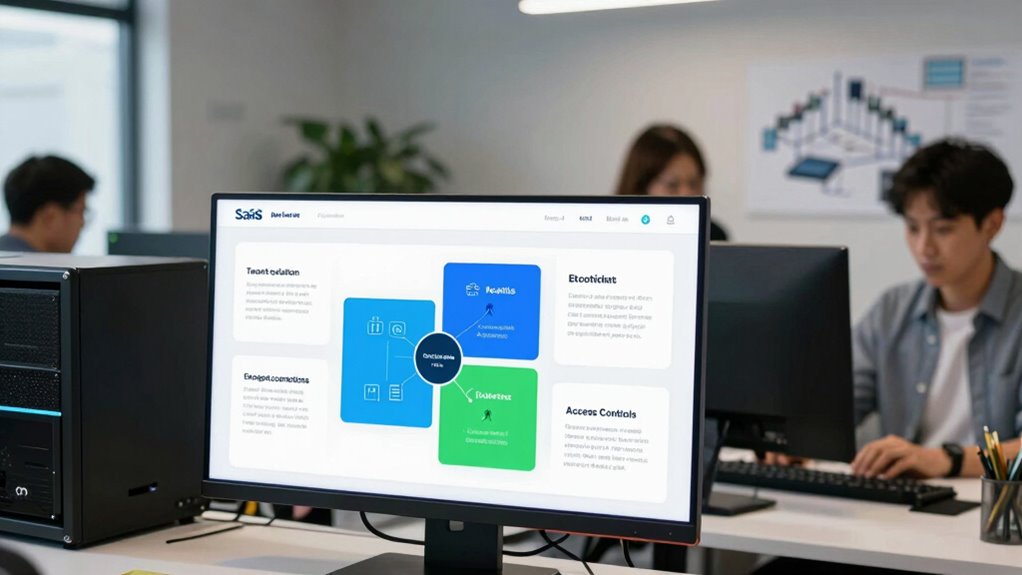

To guarantee strong tenant isolation in a multi-tenant SaaS environment, you should implement data encryption both at rest and in transit, and manage your encryption keys securely. Use network segmentation techniques like VLANs or firewalls to keep tenants separated, limiting the impact of breaches. Enforce strict access controls and authentication for users, along with regular security assessments. By combining these practices, you create a secure, reliable platform, and you’ll find even more strategies to boost your tenant isolation if you continue exploring.

Get business pricing on monitors, keyboards and dev gear
- Business-only prices and quantity discounts
- Tax-exempt purchasing
- Multiple users, one account, clear invoices
Key Takeaways
- Implement network segmentation using VLANs, firewalls, or SDN to isolate tenant environments effectively.
- Use encryption for data at rest and in transit, with secure key management to prevent unauthorized access.
- Enforce strict access controls and multi-factor authentication for tenant data and management interfaces.
- Regularly perform vulnerability assessments and security audits to identify and mitigate potential risks.
- Monitor and log tenant activities continuously to detect anomalies and ensure compliance with security standards.
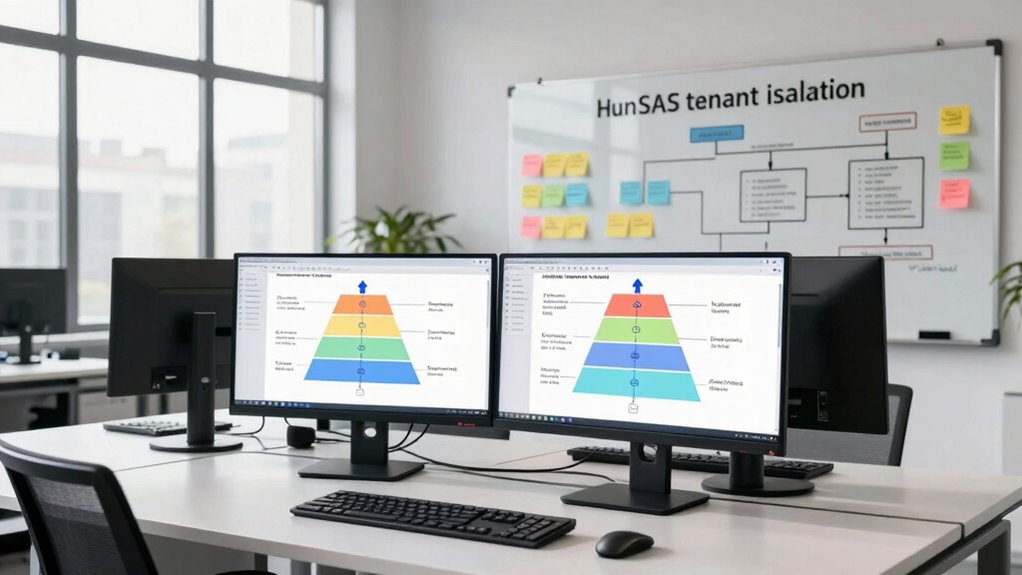
In a multi-tenant SaaS environment, guaranteeing proper tenant isolation is essential to protect data, maintain performance, and uphold trust. You need to implement strategies that prevent tenants from accessing each other’s information, which can be achieved through robust data encryption and effective network segmentation. Data encryption is one of the most powerful tools at your disposal, as it ensures that even if an attacker gains access to stored data or intercepts data in transit, the information remains unreadable without the correct decryption keys. By encrypting tenant data both at rest and in motion, you add an extra layer of security that deters unauthorized access and mitigates potential breaches. Make sure your encryption keys are securely managed and rotated regularly, so that the encryption remains effective and resilient against evolving threats.
Network segmentation is equally critical for tenant isolation. It involves dividing your network into isolated segments or subnets, each dedicated to specific tenants or groups of tenants. This approach limits the potential spread of malicious activities or breaches, ensuring that an attack on one segment doesn’t compromise the entire system. You can implement network segmentation through virtual LANs (VLANs), firewalls, or software-defined networking (SDN) solutions. Proper segmentation also simplifies monitoring and troubleshooting, as you can isolate and analyze traffic within specific segments without interference from others. This targeted approach minimizes performance degradation and helps you maintain high levels of reliability and responsiveness for all tenants. Additionally, understanding side-channel attacks can help you identify subtle vulnerabilities that could be exploited through indirect data leaks, further strengthening your tenant isolation measures. Incorporating security best practices such as regular vulnerability assessments can further reduce the risk of these types of attacks. It is also vital to understand and implement security compliance standards to ensure your tenant isolation strategies meet industry requirements. Regular vulnerability assessments and ongoing security testing are essential to stay ahead of emerging threats and reinforce your defenses. Implementing comprehensive monitoring and logging enhances your ability to detect unusual activity that may indicate a security breach early.
In addition to technical measures, enforce strict access controls and authentication protocols to restrict tenant data access only to authorized users. Regularly audit your security configurations and access logs to detect anomalies early. You should also ensure your SaaS architecture supports multi-layered security, combining encryption, segmentation, and strict access policies seamlessly. Educate your team about the importance of tenant isolation and security best practices, fostering a proactive security culture. Ultimately, your goal is to create a secure environment where tenants can operate confidently, knowing their data is protected from unauthorized access and interference.
As an affiliate, we earn on qualifying purchases.
Frequently Asked Questions
How Does Tenant Isolation Impact Overall System Performance?
Tenant isolation impacts your system’s performance by ensuring resource allocation stays fair and predictable. When you isolate tenants effectively, it reduces the risk of one tenant consuming excessive resources, which can slow down the overall system. This improves user experience, as each tenant enjoys consistent performance. Proper isolation minimizes interference, maintains stability, and helps you scale efficiently without compromising service quality for individual users.
What Are Common Challenges in Implementing Tenant Isolation?
You might face challenges with tenant isolation, especially around data segregation and access control. Guaranteeing each tenant’s data remains separate without leaks requires robust security measures. Managing access control to prevent unauthorized data access can be complex, particularly as your system scales. Balancing isolation with performance, while maintaining compliance and user privacy, often demands continuous updates and vigilant monitoring to prevent vulnerabilities and ensure seamless multi-tenant operation.
How Can Tenant Isolation Be Scaled for Growing Saas Platforms?
Scaling tenant isolation markedly simplifies by strengthening shared resources and access controls. You should streamline segregation strategies to support growth, ensuring each tenant’s data stays separate without sacrificing efficiency. Implement scalable, secure access controls that adapt as your platform expands. Automate provisioning processes to handle increasing tenants seamlessly, and leverage containerization or virtualization to isolate environments. These tactics help you maintain robust tenant isolation while accommodating your platform’s expanding footprint.
What Are the Legal Considerations Related to Tenant Data Separation?
You must guarantee legal compliance by following data privacy regulations like GDPR or CCPA, which dictate strict data separation rules. You’re responsible for implementing secure data segregation methods to prevent cross-tenant access, protecting sensitive information. Regular audits help verify adherence to these laws, reducing legal risks. Prioritize clear data handling policies and transparent communication with tenants to build trust and meet legal standards effectively.
How Does Tenant Isolation Influence Disaster Recovery Strategies?
Tenant isolation considerably influences your disaster recovery strategies by ensuring data segregation remains intact during disruptions. You need to implement robust security protocols that isolate tenant data, so if one tenant faces a disaster, others stay unaffected. This approach helps you quickly restore services without risking data breaches. Effective tenant isolation simplifies recovery processes, minimizes downtime, and maintains trust, making your SaaS platform more resilient and secure during unforeseen incidents.
data encryption at rest and in transit
As an affiliate, we earn on qualifying purchases.
As an affiliate, we earn on qualifying purchases.
Conclusion
So, here’s the irony—while you’re busy building barriers to protect each tenant, it’s easy to forget that a single lapse can expose them all. You might think you’re safeguarding their data, but one overlooked vulnerability can turn your multi-tenant paradise into a data disaster. Keep your guard up, implement those best practices diligently, and remember: in SaaS, tenant isolation isn’t just a feature, it’s your safety net. Don’t let complacency be your downfall.
multi-factor authentication hardware token
As an affiliate, we earn on qualifying purchases.
As an affiliate, we earn on qualifying purchases.
security vulnerability assessment tools
As an affiliate, we earn on qualifying purchases.
As an affiliate, we earn on qualifying purchases.
Fall Picks
fall essentials
As an affiliate, we earn on qualifying purchases.