
To create a React app with Vite and TypeScript, start by running `npm create vite@latest` and selecting the React + TypeScript template. This quick setup provides a fast, optimized build process that encourages modular, scalable code. Vite’s hot module replacement makes experimenting seamless, while TypeScript guarantees safer, clearer data handling. If you continue, you’ll discover how this setup streamlines development and elevates the overall quality of your app.
Key Takeaways
- Use Vite’s project scaffolding to quickly initialize a React + TypeScript template.
- Run `npm create vite@latest` and select React + TypeScript during setup.
- Install dependencies with `npm install` and start the development server with `npm run dev`.
- Configure TypeScript settings to enhance type safety and code quality.
- Structure your components modularly to leverage Vite’s fast refresh and TypeScript’s safety.
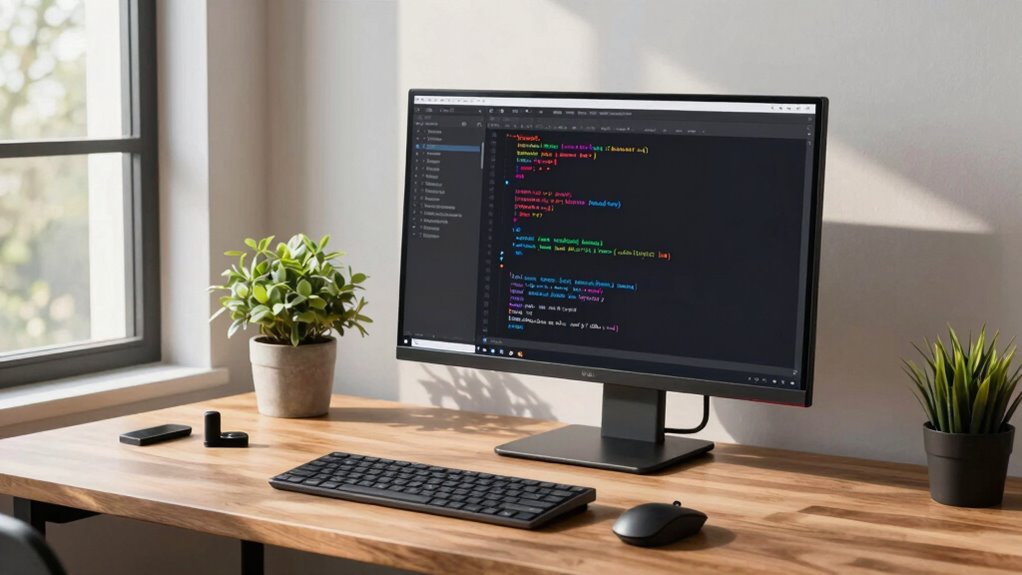
Getting started with a modern React development setup is straightforward when you use Vite and TypeScript together. Vite offers a fast, lean build process that makes setting up a React project quick and efficient, while TypeScript adds type safety, helping you avoid bugs and improve code quality. Once you initialize your project, you’ll notice how smoothly everything runs, especially when dealing with state management and API integration. These are critical aspects of any React app, and Vite with TypeScript simplifies working with both.
Getting started with React is easier than ever with Vite and TypeScript, enhancing speed, safety, and development efficiency.
For state management, you can choose from several options like React’s built-in useState and useReducer hooks or more advanced libraries such as Redux or Zustand. When you set up your project with Vite, integrating these tools is seamless because Vite’s fast hot module replacement lets you see changes instantly. This instant feedback loop encourages experimenting with different state management strategies until you find the one that best fits your app’s complexity. TypeScript makes managing state safer by providing types that prevent inconsistent data updates, reducing runtime errors and making your code more predictable.
API integration becomes a breeze too. With TypeScript, you define interfaces for the data you expect from your API, ensuring your code handles responses correctly. When fetching data, you can use modern methods like fetch or axios, and TypeScript types help you catch errors early. Vite’s fast refresh feature means you can tweak your API calls and see the results immediately, without reloading the entire app. This quick iteration cycle accelerates development, especially when handling multiple endpoints or complex data structures. Additionally, understanding that comparative advantage plays a role in resource allocation can help you optimize your API calls for efficiency.
As you develop, you’ll appreciate how Vite’s optimized build process reduces bundle sizes, keeping your app fast and responsive. You’ll also find TypeScript invaluable in maintaining code clarity, especially when working with state updates and API responses. The combination of these tools encourages best practices, such as splitting your app into modular components, type-checking your props, and ensuring API data conforms to expected formats. Moreover, staying aware of resource allocation strategies can help you prioritize features and optimize your development workflow. Recognizing how content formats influence user engagement can further guide your design and development choices.
In short, a React app built with Vite and TypeScript offers a highly productive environment for managing state and integrating APIs. It streamlines your development workflow, reduces bugs, and enhances code maintainability. With this setup, you’re equipped to build robust, scalable applications efficiently. Whether you’re adding new features or debugging existing ones, you’ll find the synergy between Vite’s speed and TypeScript’s safety invaluable, making your development experience smoother and more enjoyable.
React TypeScript development setup
As an affiliate, we earn on qualifying purchases.
As an affiliate, we earn on qualifying purchases.
Frequently Asked Questions
How Does Vite Compare to Create React App in Build Speed?
Vite generally outperforms Create React App in build speed, thanks to its modern, native ES modules and fast performance benchmarks. You’ll notice quicker startup times and faster hot module replacement, making development smoother. Vite’s streamlined plugin ecosystem also enhances performance, allowing you to customize and optimize your build process efficiently. Overall, Vite’s architecture delivers a faster, more responsive experience compared to Create React App.
Can I Add Redux or Other State Management Tools Easily?
Yes, you can add Redux or other state management tools easily to your Vite + TypeScript setup. While some might worry about integration challenges, Vite’s flexible configuration makes it straightforward. You simply install the package, set up your store, and connect it to your app. Vite’s modern build process minimizes conflicts, ensuring smooth integration and allowing you to focus on managing your app’s state efficiently.
How Do I Configure Environment Variables in Vite With Typescript?
To configure environment variables in Vite with TypeScript, you need to create a `.env` file in your project’s root. Use a `VITE_` prefix for your variables, like `VITE_API_URL`, to guarantee Vite recognizes them. In your environment setup, access these variables via `import.meta.env`. Remember, variable naming is essential—stick to the `VITE_` prefix to keep things organized and secure.
Is Vite Compatible With Existing React Projects?
You might think Vite’s compatibility with existing React projects is limited, but it actually offers strong support for legacy setups and a vast plugin ecosystem. Vite smoothly integrates with most React projects, allowing you to upgrade incrementally without major rewrites. Its flexibility and extensive plugin options make it a great choice for modernizing your app while maintaining compatibility with your current codebase.
What Are the Best Practices for Deploying a Vite + Typescript App?
To deploy your Vite + TypeScript app effectively, focus on performance optimization by enabling code splitting, minification, and caching strategies. Use Vite plugins like plugin-legacy or plugin-compress for better performance and compatibility. Make sure you build your app with `vite build`, then deploy the static files to a reliable server or CDN. Regularly update dependencies and monitor load times to keep your app fast, scalable, and user-friendly.
As an affiliate, we earn on qualifying purchases.
Conclusion
By choosing Vite with TypeScript, you speed up your development process and enhance code quality. Vite’s lightning-fast hot module replacement (HMR) can boost your productivity by up to 50%, making it ideal for rapid prototyping and scalable projects. Embracing this setup not only streamlines your workflow but also prepares you for future growth, ensuring your app stays efficient as it expands. Start today and experience a modern, efficient way to build React applications!
TypeScript code editor extensions
As an affiliate, we earn on qualifying purchases.
As an affiliate, we earn on qualifying purchases.
As an affiliate, we earn on qualifying purchases.